








In short
- Every motor vehicle on a Dutch road, or registered in the Dutch register, needs liability insurance under the Wet aansprakelijkheidsverzekering motorrijtuigen (WAM), art. 2.
- An uninsured Dutch-registered car costs €500 under the Wet Mulder (code A 915), before administration costs. The criminal route allows a second-category fine, up to €5,500.
- Foreign-registered cars are not covered by that duty if a recognised bureau guarantees the damage they cause (WAM art. 2 par. 6).
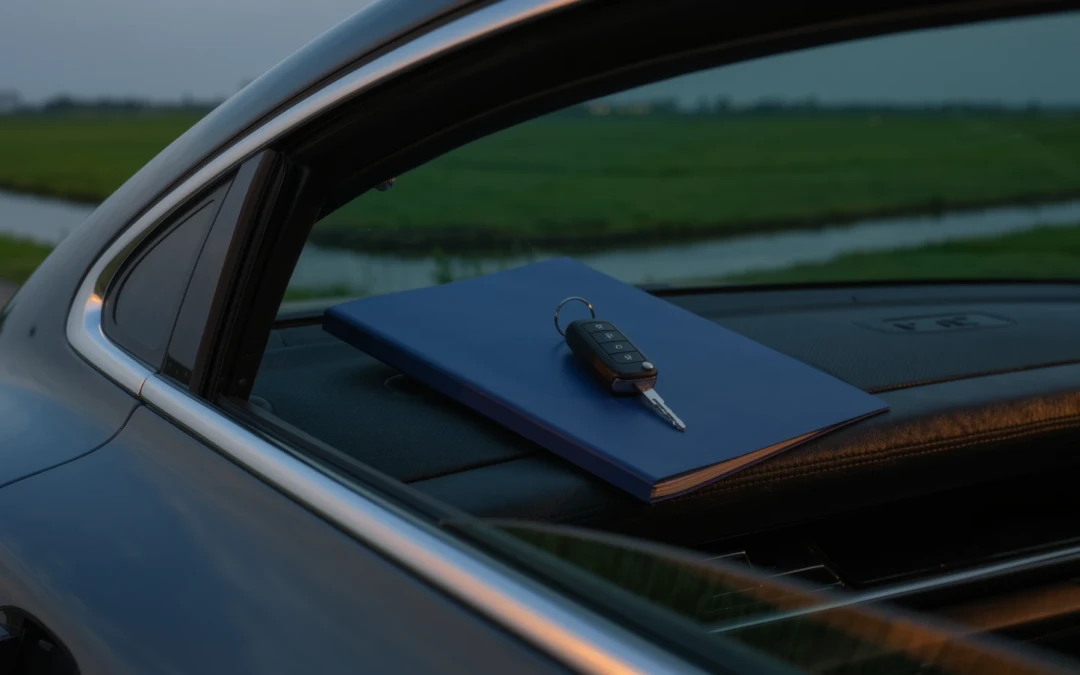
Insurance is the one document that does not sit in your glovebox as a card, yet it can cost you the most. In the Netherlands the duty comes from the WAM (valid from 24 July 2025), with fines in the Wet Mulder annex (valid from 1 September 2026) and the Wetboek van Strafrecht (valid from 1 July 2026).
The rule in detail
Article 2 paragraph 1 WAM says that the owner of a motor vehicle, and the person in whose name it is entered in the vehicle register, must take out and keep a liability insurance that meets the law. The duty applies if the vehicle is placed on a road or driven on it, if it takes part in traffic off the road, or if it is registered in the vehicle register and in someone’s name.
Paragraph 2 moves the duty to the holder in some cases, for example a car under a hire-purchase contract. Paragraph 5 says the insurer must be allowed to offer motor liability insurance in the Netherlands under the Wet op het financieel toezicht.
The insurance must cover damage to persons and property. Under article 3 it covers the holder, owner, driver and the people carried, for one single premium for the whole period, including the time the vehicle is in another member state, for events within the European Economic Area.
There is one way to end the duty for a registered car: put the vehicle out of use off the road and have the insurer report the suspension to the vehicle authority (art. 2 par. 3). The duty comes back as soon as the car is on a road again.
Foreign drivers and foreign cars
Article 2 paragraph 6 WAM says that the duty of paragraph 1 does not apply to motor vehicles that are normally kept abroad, provided that a bureau recognised by the Minister of Finance (a legal person), a group of insurers or a recognised foreign body has taken on the obligation towards injured parties to compensate damage caused by those vehicles under the WAM. Article 30 paragraph 5 says the driver is not punishable if such a bureau, group or foreign body has taken on that obligation, or if the vehicle has an exemption and a valid proof of it.
In plain words: a car with foreign plates is dealt with through the bureau system, not through a Dutch policy. I did not verify in an official source whether an officer asks to see a Green Card or any other paper, so I give no rule on that. Check with your insurer before you travel that your policy covers the Netherlands, which as an EEA country is inside the scope of article 3 paragraph 2. A car that has a Dutch plate, permanent or temporary, counts as normally kept in the Netherlands (art. 2 par. 7).
Penalties
- Administrative fine, Wet Mulder, A 915: owner, holder or registered person who does not take out and maintain the required insurance for a car in the Dutch register: €500. Mopeds, code A 902: €480. The OM states its amounts are exclusive of €9 administration costs.
- Criminal law, WAM art. 30 par. 1, 2 and 4: detention (hechtenis) of up to three months or a fine of the second category. Since 1 January 2026 the second category is €5,500, according to the editorial note in article 23 Wetboek van Strafrecht. This applies to the owner or holder, and separately to the driver.
- Art. 30 par. 6: after a conviction, or a penalty order treated the same way, the court can disqualify the person from driving for up to one year, and for up to five years if there was an earlier disqualification in the last five years.
- Art. 30 par. 7: the court can also order a payment of up to €2,723 to the Waarborgfonds Motorverkeer, as the text of the article reads.
Mistakes I see most often
- Cancelling the policy when the car is sold, but leaving the car registered in your name
- Thinking that a car standing in the street is not in use
- Forgetting that the duty also falls on the holder of a car bought on hire purchase
The maths
Do the math: One uninsured month on a Dutch-registered car: €500 + €9 administration costs = €509 for the Mulder fine alone. The criminal ceiling is €5,500, and a driving ban of up to a year is possible. Check the cost of an insurance quote in 5 minutes; nobody can quote the cost of a ban.
FAQ
Does a parked car need insurance? Yes, if it is registered, or if it stands on a road. Article 2 paragraph 1 names registration in the vehicle register as a trigger. The exception is the off-road suspension in paragraph 3.
Does the €500 apply to a car with foreign plates? The Mulder code A 915 speaks of a car that is entered in the Dutch vehicle register. Foreign-plated cars are covered by article 2 paragraph 6 and article 30 paragraph 5 WAM, as above.
Ivan’s Take
Insurance is the one thing I never haggle about. The €500 is small beside the ban and the compensation fund, and a claim without cover can finish a small business. If you bring a car in, ask your insurer for a written confirmation that the Netherlands is covered, and keep it in the car.
Sources: Wet aansprakelijkheidsverzekering motorrijtuigen (WAM), art. 1, 2, 3, 30, version valid from 24-07-2025; Wet Mulder, bijlage (A 915, A 902), version valid from 01-09-2026; Wetboek van Strafrecht, art. 23 (fine categories); Openbaar Ministerie – Boetebedragen.
Published:
More from this section
The AvtoGear weekly
Once a week: new tests, the best deals and one useful tip for your car. Nothing extra.
