








In short
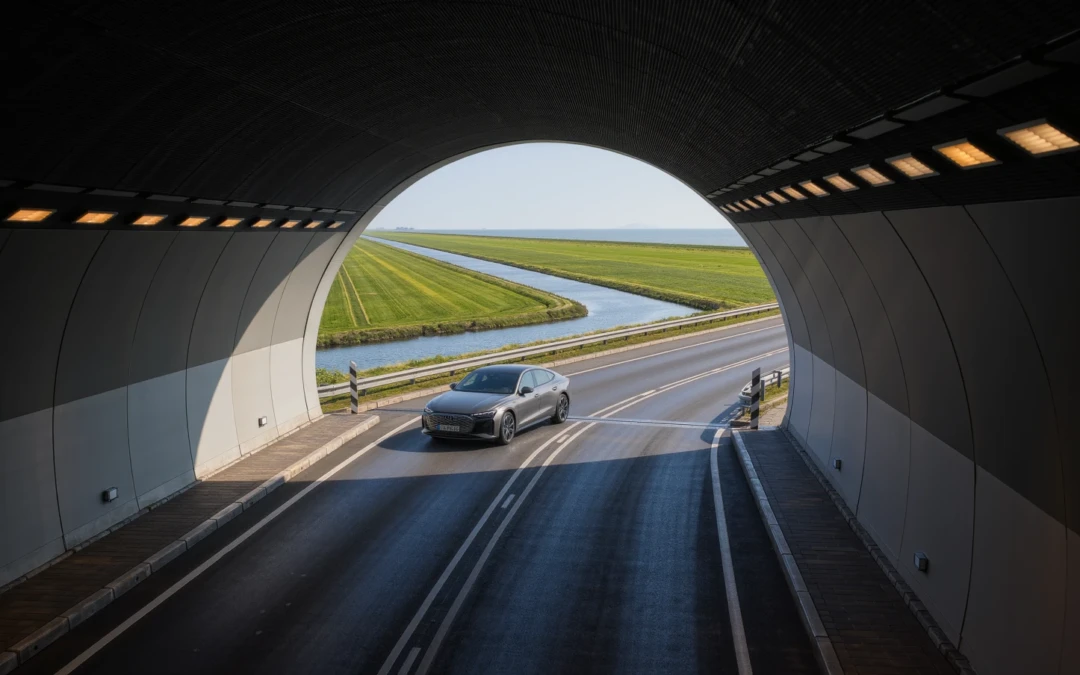
- The Westerscheldetunnel has been toll-free since 30 December 2024 for categories 1, 2 and 5, the vehicles lower than 3 metres. Category 3 (up to 12 m long, over 3 m high) pays €18.20 at the standard tariff.
- Height is measured with everything on the vehicle, including a roof box. Only bicycles on a roof carrier of a passenger car are left out.
- Diesel passenger cars can be refused in four low-emission zones (Amsterdam, Arnhem, The Hague, Utrecht). Entry against the sign costs €130 under Wet Mulder code R 572 e.
Drivers ask me where to buy the Dutch vignette. The sources I read name no vignette for cars. The one road charge I could verify on the operator’s own pages is the Westerscheldetunnel in Zeeland, and the other thing that matters is the city zones. Here is the picture as of 13 November 2026, from the tunnel operator and from the official site milieuzones.nl.
The Westerscheldetunnel: who pays
The N.V. Westerscheldetunnel states that the tunnel is partly toll-free: traffic in categories 1, 2 and 5 (lower than three metres) passes toll-free since 30 December 2024. The Dutch state and the province of Zeeland signed the agreement on 20 November 2023. The barriers at the toll plaza stay, to stop paying traffic and to slow traffic down.
The tariff table of the operator lists five categories, per passage. Category 1 is under 6 m long and under 3 m high, category 2 is over 6 m long and under 3 m high, category 3 is under 12 m long and over 3 m high, category 4 is over 12 m long and over 3 m high. For categories 1, 2 and 5 the price is €0.00. Category 3 pays €18.20 at the standard tariff, €11.00 with a T-tag (the operator’s tag) and €9.10 with the frequent-user discount. Category 4 pays €25.00 at the standard tariff, €15.00 with a T-tag and €12.50 with the discount.
The category matters for camper vans and cars with a roof box. The operator says the height and length of the complete vehicle decide, and that mirrors, antennas, trailers, load, beacon lights and cooling units count. Only bicycles on the roof carrier of a passenger car fall outside the measurement. The height border is 3 metres. A roof box falls under the operator’s word load.
Low-emission zones: the car side
The official site milieuzones.nl says that four cities have a low-emission zone for diesel passenger cars and vans: Amsterdam, Arnhem, The Hague and Utrecht. Vehicles on a fuel other than diesel may always enter a low-emission zone. In Arnhem, since 1 June 2026, the van zone was replaced by a zero-emission zone, and the low-emission zone stays for diesel passenger cars with at least emission class 5.
From 1 January 2026, low-emission zones are marked with a new traffic sign. Municipalities place the new sign within the first six months of 2026. The old sign shows the emission class that may enter. The new sign shows the emission class that may not enter. Read the plate carefully. The site also offers a plate check for emission class, which does not take account of local exemptions.
Since 1 January 2025, several municipalities have introduced zero-emission zones for vans and trucks. Vans and trucks in them must emit nothing. These zones do not apply to normal passenger cars. The only official site for exemptions is the RDW.
Fines
- R 572 e, driving a passenger car, van or bus into a road closed by sign C22e because of emission requirements (low-emission or zero-emission zone) (art. 62 with sign C22e RVV 1990): €130
The amounts come from the Wet Mulder annex, valid from 1 September 2026, for passenger cars. The OM states that its amounts are exclusive of €9 administration costs. I did not verify how enforcement works for cars with foreign plates, so I give no rule on it.
Mistakes I see most often
- Looking for a vignette or toll sticker for a normal passenger car
- Reading the new low-emission sign as the old one, which means the opposite
- Paying a site that sells exemptions: milieuzones.nl warns that the only official site for zero-emission exemptions is the RDW
The maths
Do the math: A van at 3.1 metres through the Westerscheldetunnel: €18.20 each way at the standard tariff, €36.40 return. A car under 3 metres: €0.00. Diesel into a low-emission zone against the sign: €130 + €9 = €139, for one minute of not reading a sign.
FAQ
Do I need a vignette in the Netherlands? The official sources I read name none for cars. The only road charge I verified is the Westerscheldetunnel, and it is free for vehicles under 3 metres.
Does my roof box count for the tunnel? Yes. The operator counts load and accessories, and leaves out only bicycles on a roof carrier of a passenger car.
Can my petrol car enter a low-emission zone? According to milieuzones.nl, vehicles on a fuel other than diesel may always enter.
Ivan’s Take
I like the Dutch tunnel rule: if you are low, you drive through for nothing. The only trap is the 3-metre line. Measure the car with the box on the roof before you leave, not at the plaza. For the cities, I check the sign and the plate check once, before the trip, and I never trust a site that sells a permit.
Sources: N.V. Westerscheldetunnel – Tarieven (tariff table, categories, measurement); N.V. Westerscheldetunnel – Gedeeltelijk tolvrij (since 30-12-2024); milieuzones.nl – Locaties milieuzones; milieuzones.nl – Verkeersregels (new sign from 1 January 2026); Wet Mulder, bijlage (R 572 e), version valid from 01-09-2026; Openbaar Ministerie – Boetebedragen.
Published:
More from this section
The AvtoGear weekly
Once a week: new tests, the best deals and one useful tip for your car. Nothing extra.
