








In short
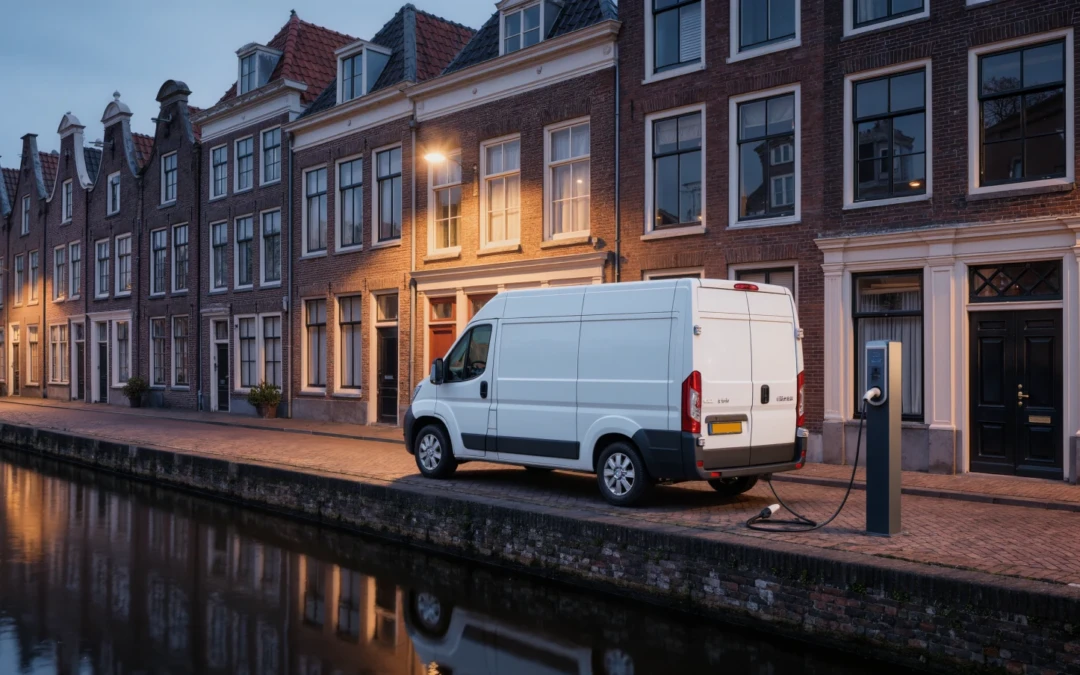
- Dutch zero-emission zones (art. 86e RVV 1990) close city centres to vans and lorries that are not emission-free. Vans first registered from 1 January 2025 must be zero-emission to enter.
- Euro 5 vans may enter only until 31 December 2026. Euro 6 vans have until 31 December 2027, though the government has decided to extend this by a year once the rule is formally changed.
- Entering a closed zone costs €130 for a van and €320 for a lorry in 2026, plus administration costs. Cameras read the plate.
If you deliver to Dutch cities in a diesel van, the calendar is tight. On 1 January 2027 the transition for Euro 5 vans ends. Here is the rule from the traffic code, the fines and what I could and could not verify.
The rule
Under art. 86e RVV 1990 (version of 1 July 2026), the closure shown by sign C22e with the zero-emission subplate applies to vans (bedrijfsauto’s) and lorries, except emission-free vehicles. Passenger cars are not covered by this article. They fall under the diesel low-emission zones, which are a separate rule. The zones are set by municipalities. Since 1 January 2025 the first cities, among them Amsterdam, Rotterdam, Utrecht, Den Haag and Eindhoven, have a zone, and others follow up to 2030.
Transition dates in the traffic code
- Vans of emission class 5: allowed until and including 31 December 2026 (art. 86e(3)). From 1 January 2027 they are barred.
- Vans of emission class 6 or better: allowed until and including 31 December 2027 (art. 86e(4)).
- Until 31 December 2029: vehicles aged 40 years or more, wheelchair-accessible vehicles and some special lorries; also class 6 tractor units first admitted from 1 January 2017 and class 6 lorries first admitted from 1 January 2020 (art. 86e(5)).
- The class 5 and class 6 dates, and those for tractor units and lorries, do not apply to vans and lorries first registered after 31 December 2024 (art. 86e(7)). They must be emission-free.
The official zero-emission zone site says the government decided to extend the Euro 6 van date by one year to 1 January 2029, but that this is not official until the RVV is amended. Until then the current dates apply. Euro 4 or lower vans have no access, says the same site.
Cities and start dates
The official site lists, among others: Amsterdam, Rotterdam, Utrecht, Den Haag, Eindhoven, Leiden, Delft, Gouda, Maastricht, Nijmegen, Tilburg, Zwolle and Assen from 1 January 2025; Dordrecht, Zaanstad and Schiphol from 1 January 2026; Arnhem from 1 June 2026; Alphen aan den Rijn from 1 July 2026; Venlo from 1 January 2027; Almere and Deventer from 1 January 2028; Apeldoorn and Ede from 1 January 2030. Check the municipality before you drive.
Fines (Wahv annex, 2026)
- Van in a zero-emission zone (feitcode R 572 e): €130.
- Lorry (R 572 d): €320.
- Administration costs come on top.
Enforcement is automatic by plate recognition, says the official site. The government reported on 24 September 2026 that 11,217 polluting vehicles drove into a zero-emission zone from May to August 2026, 47% more than the 7,642 of a year earlier. An unpaid fine rises by 50% and then by 100% more under art. 23 and 25 Wahv.
Foreign drivers
The Wahv counts a registration in a foreign register as a plate and puts the fine on the registered keeper (art. 1(2) and 5). The official zone site has a page for foreign vehicles, but I found no foreign-specific rule there beyond the emission class and first-registration date, so use your Euro class and registration date. I also found no official statement on collecting these fines abroad.
Exemptions and a warning
Some vehicles are exempt by plate, others need a dispensation. The only official place to apply is the RDW. The official site warns about websites that sell a dispensation and charge fees: they are not official.
Mistakes I see most often
- Planning 2027 deliveries with a Euro 5 van.
- Reading the Euro class from the brochure, not from the registration.
- Paying an unofficial site for a dispensation.
Do the math: ten recorded entries by a Euro 5 van from 1 January 2027 are 10 × €130 = €1,300 before administration costs. A late fine can then rise by 50% and 100% more.
FAQ
Does this apply to my passenger car? Not under art. 86e. Diesel passenger cars have their own low-emission zones.
Is the Euro 6 van date now 2029? Not yet in law. The government has decided it, but the current RVV date is 31 December 2027 until the rule is changed.
Where do I check my vehicle? On the official zero-emission zone site and with your plate at the RDW.
Where to check
Art. 86e RVV 1990 on wetten.overheid.nl, the official zero-emission zone site opwegnaarzes.nl and milieuzones.nl, the Rijksoverheid news of 24 September 2026 and Stb. 2025, 413.
Ivan’s Take
A van with a Euro 5 plate is the one to worry about. January 2027 is weeks away, and a camera does not care that your customer is waiting. If you plan to deliver in a Dutch city, check the city and your registration now, and do not pay a website for a dispensation.
Sources: Reglement verkeersregels en verkeerstekens 1990 (RVV 1990), art. 86e (wetten.overheid.nl); Op weg naar ZES: toegangsregels en overgangsregelingen zero-emissiezones (Rijksoverheid initiatief); Op weg naar ZES: buitenlandse voertuigen; Milieuzones in Nederland (official); Staatsblad 2025, 413 (Wahv annex, feitcodes R 572 d and e); Rijksoverheid: zero-emission zone offences May-August 2026 (24-09-2026).
Published:
More from this section
The AvtoGear weekly
Once a week: new tests, the best deals and one useful tip for your car. Nothing extra.
