








In short
- A tow bar carrier won every category in the ADAC test: handling, crash safety and fuel use.
- At 130 km/h the extra fuel use was 6.3% (tow bar), 34.2% (roof) and 44.3% (tailgate).
- If your car has no tow bar, the roof is the second choice. The tailgate carrier is the weakest.
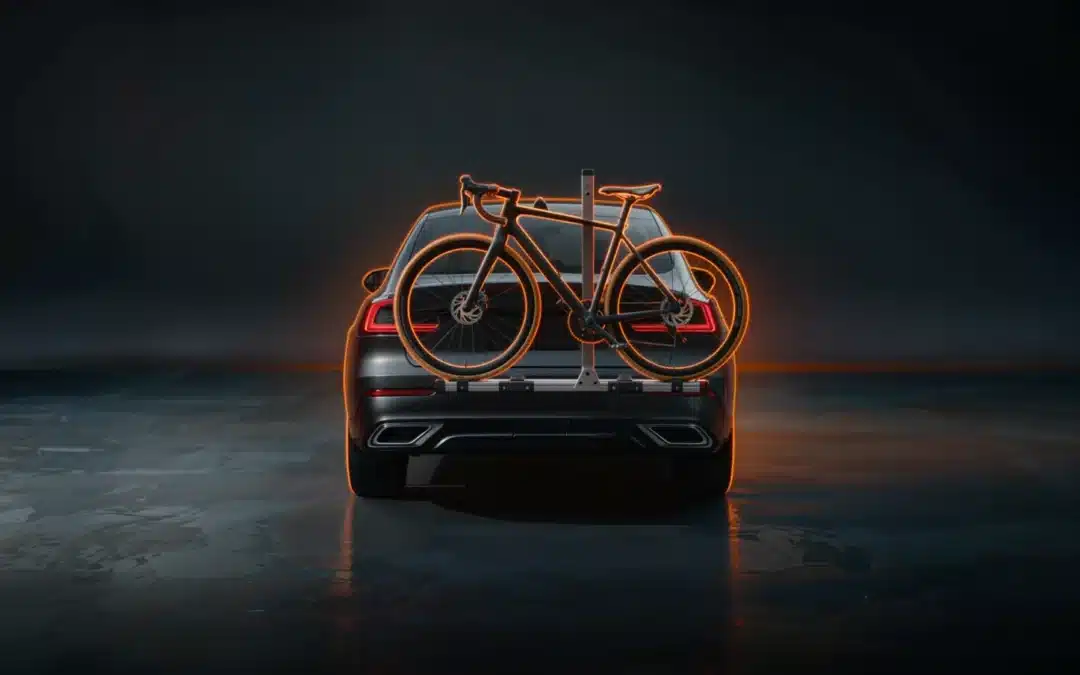
Bikes on the car: tow bar, roof or tailgate? One of them costs you almost nothing in fuel. Another one can drop your e-bike on the road. ADAC compared all three in 2022.
How ADAC tested
ADAC picked one system from the upper price range for each type. It checked handling, safety and extra fuel use. The test included a 30 km/h city crash, full braking and an evasive manoeuvre.
Limit: it is one carrier per type, not a ranking of brands. Use it to choose the system, not the model.
Tow bar carrier: the winner
- Comes fully pre-assembled. One person can fit it and use it right away.
- Low loading height. Loading e-bikes is easy.
- Tilt function: you can still open the boot with the bikes on.
- Double theft protection: for the carrier and for the bikes.
- Max load 30 kg per rail (check the nose weight of your car, it can be lower).
- Only downside: the car needs a tow bar.
Roof carrier: the middle
- Almost no assembly. The cross bar sits on the roof rails.
- Loading is hard. With a tall car like an SUV you need two people.
- Max load only 20 kg per rail in the test.
- Weak point in the crash: the T-slot of the cross bar. With a 22.4 kg e-bike (about 10% overload) the aluminium profile collapsed and the bike fell off the roof.
Tailgate carrier: the weakest
- It has to be assembled first. That can take a while.
- The boot is blocked while the bikes are on. The tailgate dampers cannot lift the extra weight.
- Crash: the whole carrier with the bikes can fold backwards and hit the ground. The tailgate gets dents and scratches.
- Max load 25 kg per rail.
- Loading e-bikes is awkward, because the plate and lights must not be covered.
Braking and evasive tests were fine for all three. Nothing slipped. But the carrier changes how the car drives.
The fuel bill
- Tow bar: up to 6.3% more at 130 km/h
- Roof: 34.2% more
- Tailgate: 44.3% more
Roof and tailgate stand in the wind. The tow bar carrier hides mostly behind the body. The trend was already clear at 100 km/h.
Mistakes to avoid
- Ignoring the load limits. Old e-bikes are heavy. Check the carrier limit, the roof load and the nose weight.
- Putting a heavy e-bike on the roof alone. Do it with two people or choose another system.
- Buying a tailgate carrier without a clear manual. Wrong assembly is the main risk. If unsure, let a dealer fit it.
- Forgetting plate and lights. Neither may be hidden by the carrier.
Do the math: Say your car uses 7 l/100 km at 130 km/h and fuel costs €1.80 per litre (my assumption, check your price). On 500 km that is 35 litres. Tow bar: +6.3% = 2.2 l = about €4. Roof: +34.2% = 12 l = about €22. Tailgate: +44.3% = 15.5 l = about €28. Do two holiday trips a year and the difference between tow bar and roof is already more than €35.
FAQ
Which is the best bike rack? The tow bar carrier. It won every ADAC category.
I have no tow bar. What now? The roof is the middle option. Keep to the load limit and load with two people. The ADAC crash result shows why a 10% overload is a bad idea.
Can I carry e-bikes on the roof? You can, but it is the least comfortable and, in the test, the weakest case for a heavy bike. A tow bar carrier is easier on your back and safer.
Ivan’s Take
If you have a tow bar, buy a tow bar carrier. Done. It is easiest, safest and cheapest to run. No tow bar? Roof is the fallback, tailgate only if you have no other choice. And always respect the weight limits.
Sources: ADAC – Fahrradträger im Vergleich.
Published:
More from this section

The AvtoGear weekly
Once a week: new tests, the best deals and one useful tip for your car. Nothing extra.
