








In short
- ADAC tested the emergency braking of six current cars at night against three dummies wearing reflective clothing (published 27 October 2026).
- All six stopped for an adult in a normal safety vest. Almost all failed with road-worker clothing and with a child wearing reflectors and a school bag.
- A vest still costs a few euros and makes you far more visible to the human driver. The fix for the cars is software, not new hardware.
Your car brakes by itself when someone steps out in front of it. That is the promise. The ADAC checked it at night with the clothing that is supposed to make people safer, and the result is uncomfortable. The more reflective the pedestrian, the more confused some systems got.
The short answer: In the ADAC night test all six cars stopped for an adult in a normal vest, but almost all failed with reflective workwear and with a child wearing reflectors and a school bag.
What ADAC tested
Six current cars: Mercedes-Benz CLA, Dacia Duster, Tesla Model Y, Hyundai Tucson, Opel Astra Sports Tourer and BYD Seal. Some use only a camera (Duster, Model Y). Others combine camera and radar (CLA, Seal).
Three scenarios in the dark. An adult dummy in a normal shop-bought safety vest. A dummy in certified high-visibility workwear, the kind road workers, paramedics and police wear. A school child with a backpack and reflective clothing. Each car ran at its own reference speed, so the cars are not ranked against each other. The method follows the Euro NCAP night tests.
The results
- Adult in a normal vest: all six cars detected the dummy and avoided the collision. The vest made no difference.
- Certified workwear: almost all cars did not recognise the person or reacted far too late and could not stop.
- Child in dark clothing: all cars detected it and braked.
- Child with reflective clothing and a school bag: almost every system failed to brake or braked too late. ADAC’s photo shows the BYD Seal would have missed the child completely.
- Mercedes CLA: the only car not fooled by the reflective child clothing. With the workwear it also struggled: late warning, and a partial brake that did not fully avoid the impact.
ADAC’s explanation: the systems seem to be confused by low-mounted reflectors. The person is not classified as a person. That is a software problem, not a sensor problem, so the club says carmakers can fix existing cars with an update.
What it means for you as a driver
Do you drop the vest? No. ADAC is clear on this. A vest makes you much easier to see for the human behind the wheel, and that gain is far bigger than the risk of a confused assistant.
The real lesson is for the driver. Emergency braking is a backup, not a co-pilot. In fog and heavy rain it also hits its limits. At night near schools, roadworks and bus stops, you brake. Not the car.
- Slow down near roadworks at night. Workers in certified high-vis clothing are exactly the case most cars failed.
- Watch for kids in the morning dark of November to February. School bags often carry reflectors low down.
- Ask your dealer whether a software update for the emergency braking system is available. ADAC says the fix is possible over software.
- Keep your camera and radar area clean. Salt film on the windscreen or a dirty radar badge makes things worse.
Your vest: what to carry
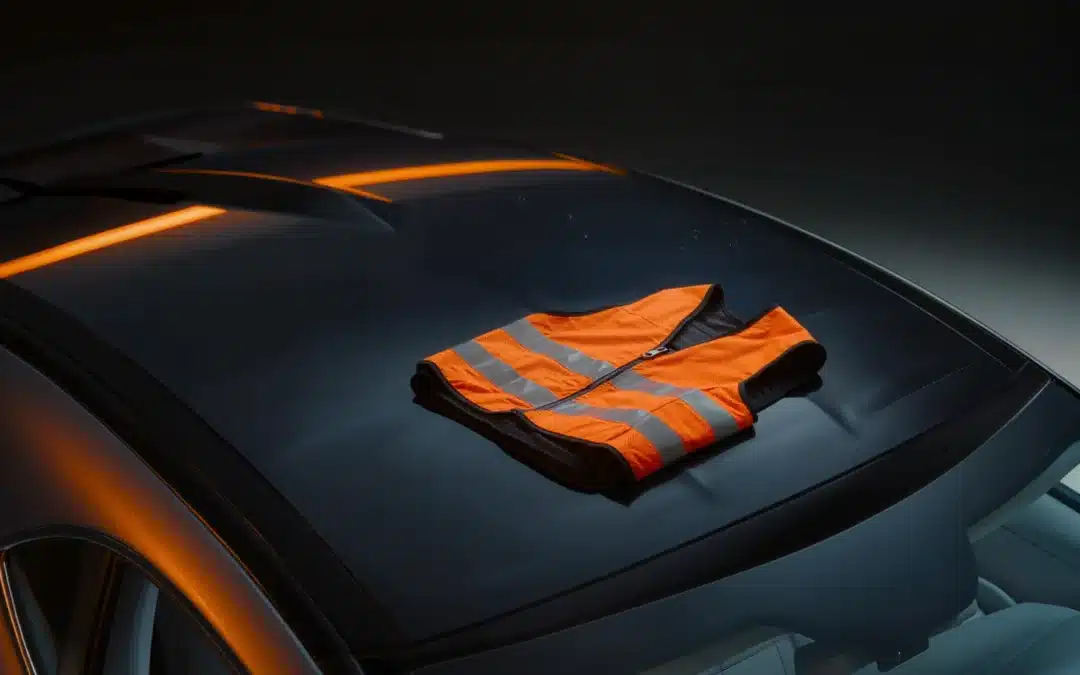
Buy vests marked EN ISO 20471. In Germany a vest in the car has been mandatory since July 2014, and not carrying one costs €15. Many countries want the driver to wear it the moment they step out on a motorway. One per seat makes sense, because everyone gets out after a breakdown.
Keep it within reach of the driver’s seat, not under the luggage in the boot. A vest you cannot reach does nothing.
Do the math: A certified vest costs a few euros. The German fine for not having one is €15. Four vests for a family car cost about the same as one or two fines, and they work for years. A software update for the braking system, if your brand releases one, is usually done during a normal service.
Mistakes to avoid
- Trusting the assistant at night. ADAC showed that the hardest cases are exactly the people you most want it to see.
- Leaving the vest in the boot. Grab it before you open the door.
- Thinking a camera-only car is worse by default. In this test the problem was classification, and the camera-plus-radar BYD Seal also missed the child.
- Ignoring software updates. If your carmaker releases one for the assistance systems, install it.
FAQ
Should my child stop wearing reflectors? No. ADAC says pedestrians and children should not give up high-visibility clothing in the dark season. Human drivers see them much earlier.
Which car did best? The Mercedes CLA was the only one that braked for the child with reflective clothing. With workwear it also reacted late.
Does Euro NCAP test this? Euro NCAP has tested pedestrian detection at night since 2016 and varies its tests since 2026. Clothing is not one of the variations.
Ivan’s Take
I like emergency braking. It saves real money in parking-lot dents and worse. But this test shows it is a backup, so at night near roadworks and schools I drive as if the car had none. Keep the vests within reach, and ask your dealer about a software update.
Sources: ADAC: Notbremsassistenten bei reflektierender Kleidung (27.10.2026).
Published:
More from this section
The AvtoGear weekly
Once a week: new tests, the best deals and one useful tip for your car. Nothing extra.
