








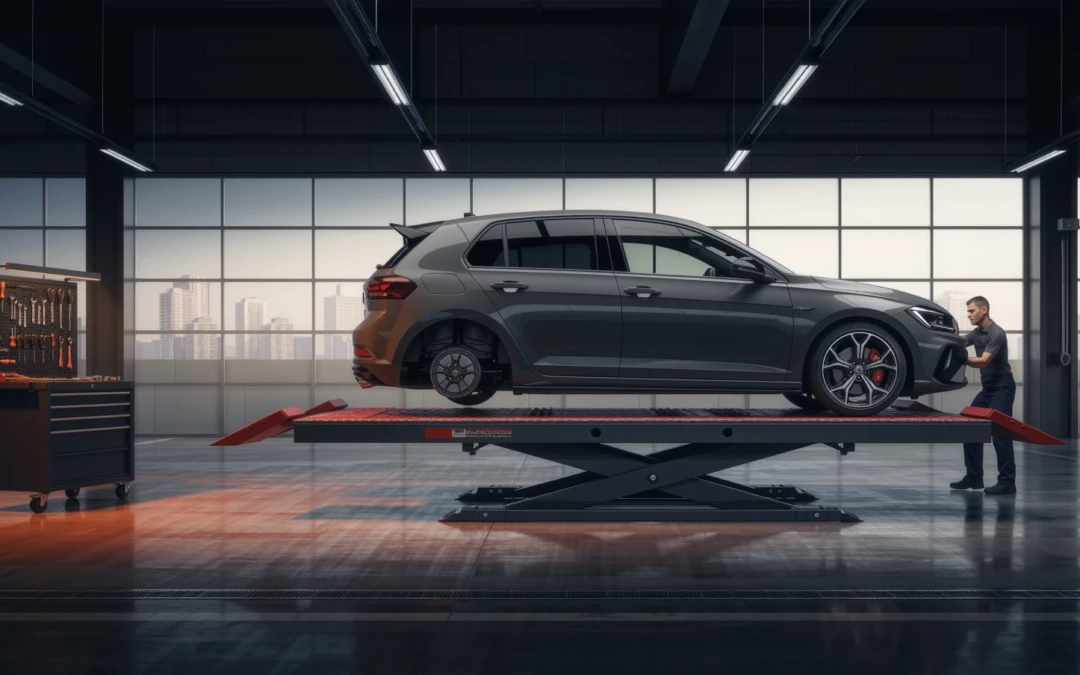
In short
- Decreto-Lei n.º 184/2026 of 16 September 2026 approves the Regulamento da Transformação de Veículos and takes effect 60 days after publication, that is mid-November 2026.
- Key numbers: an individual modification approval is valid 1 year, a general one 5 years; the inspection approval certificate is valid 90 days.
- Money: the owner pays the inspection costs. The decree names no fine for an owner or driver; its listed offences target the companies that carry out modifications.
If you lower the suspension, change the lights or fit a tow bar, this regulation is the one that matters. I read the full text. Here is what it requires, and where it stays silent.
What counts as a modification
The regulation covers vehicles of categories M, N, O and L registered in Portugal (art. 1). A modification is any alteration, replacement, addition, body-building or removal on a registered vehicle that changes its characteristics or may change what was checked at type approval (art. 2). It must not reduce road safety or environmental protection, and the vehicle must match its type approval or the approved modification (art. 3).
Article 4 lists the changes that need approval: identification, engine, transmission, axles, suspension, steering, brakes, frame and body, lighting and light signalling, mechanical coupling systems, masses and dimensions, and anything that appears in the vehicle identification document. The request goes to IMT, which may first require a project; the procedures for each change come from a government portaria.
What is banned
- Removing, in whole or in part, any element of the emission control system, or altering or blocking its normal working, so that emissions rise (art. 8, n.º 1).
- Fitting parts that do not meet the type-approval rules, or replacing a type-approved part with one that does not meet them or is not meant for that vehicle. Exceptions: prototypes, research, or discontinued spare parts with IMT authorisation (art. 8, n.º 2 and 3).
- Selling components without the mandatory type approval that raise emissions, and advertising acts that break these rules (art. 8, n.º 4 and 5).
- Swapping the body on monocoque cars and quadricycles (art. 5, n.º 3). Changing the chassis number needs IMT authorisation or a court decision (art. 5, n.º 1).
Which parts you may use
Changes to safety or environmental systems may only use original-brand parts or recognised brand-name parts. Other modifications may use rebuilt, used or not model-specific parts if they are in good condition and keep the vehicle safe (art. 11). The person doing the work must guarantee this.
The process: general or individual approval
- A general approval covers many vehicles and can only be requested by a recognised modifier. An individual approval covers one vehicle and the owner or an agent requests it (art. 6).
- Validity: 1 year for individual, 5 years for general approvals. IMT can refuse when changes are substantial compared with the type approval (art. 6).
- The file includes a project, a report from an IMT-designated technical service or the manufacturer, and a certificate that the work matches the project. Documents must be in Portuguese or translated (art. 15 and 16). Requests go through an electronic platform (art. 17).
- After the work, the owner presents the documents at IMT. If the vehicle identification data change, the document is replaced at no extra cost (art. 21 and 22).
Inspection after the change
Whether an inspection is needed follows from art. 4 n.º 4 and the portaria. The inspection checks that the work was done correctly and issues an approval certificate, which can be digital and lasts 90 days (art. 19). If the vehicle fails, you get a report of the non-conformities and must present it again. The owner pays the inspection costs; missing an IMT inspection means paying a new one. On the scheduled day the vehicle may drive without passengers or cargo to the inspection, carrying the appointment document (art. 20).
Fines: what the text does and does not say
Article 23 makes serious economic offences of false declarations, tampered test results and similar acts by the modifier, under the economic offences regime (Decreto-Lei 9/2021). I found no fine in this decree for an owner whose accessory lacks approval. The concrete consequence it describes is a failed inspection and a new presentation. Until the implementing rules exist, the rules now in force still apply where they do not conflict (art. 6, n.º 2).
Mistakes I see most often
- Buying a part online without checking it has type approval for your model.
- Believing a workshop invoice replaces IMT approval.
- Touching the exhaust or particulate filter. Art. 8 n.º 1 bans anything that raises emissions.
Do the math: The numbers: 60 days to take effect, 1 year or 5 years of approval, 90 days for the inspection certificate, 0 euro of owner fines named. The real cost: the inspection fee, plus the price of redoing work that fails.
FAQ
Do I need approval for a tow bar? Mechanical coupling systems are on the list of art. 4. Check the procedure in the portaria before you fit one.
Can I use second-hand parts? Yes, outside safety and environmental systems, if they are in good condition (art. 11, n.º 2).
Does this apply to foreign-registered cars? Art. 2 gives IMT competence for vehicles with Portuguese registration. I found no rule for foreign plates in the text.
Ivan’s Take
Good news for tuners who want clarity: one process, one platform, a paper trail. Bad news for the cowboys. My rule is simple: if the part has type approval for your car, you are on safe ground. If it does not, ask IMT before you buy it, not after.
Sources: Decreto-Lei n.º 184/2026, de 16 de setembro (Diário da República); IMT – Instituto da Mobilidade e dos Transportes.
Published:
More from this section
The AvtoGear weekly
Once a week: new tests, the best deals and one useful tip for your car. Nothing extra.
