








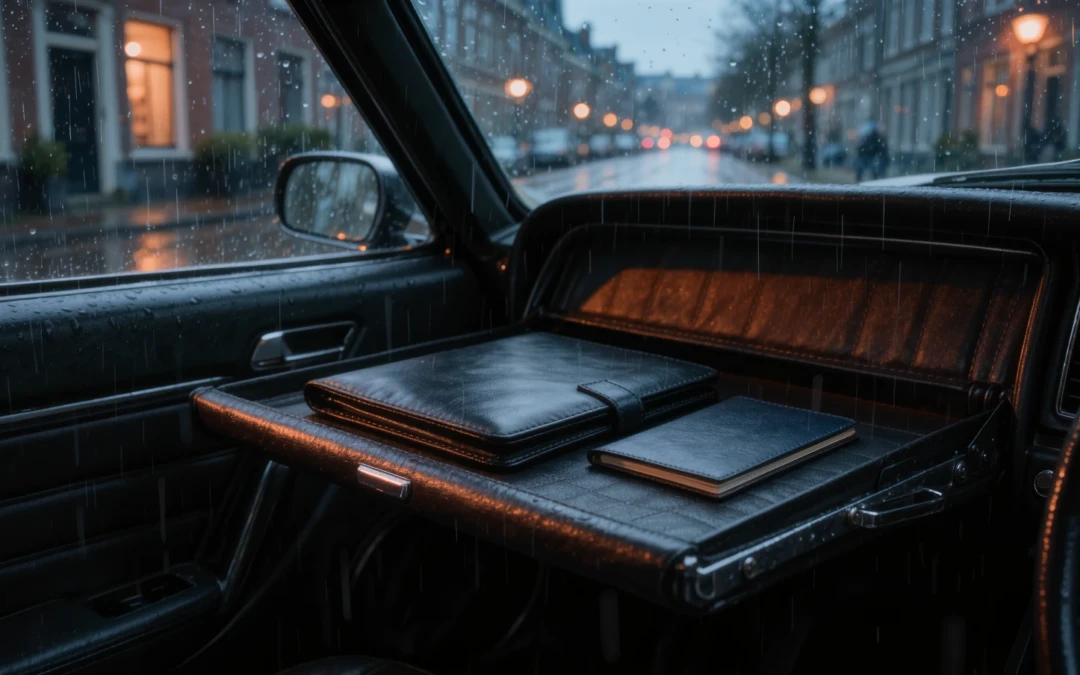
In short
- A driver must stop and show the registration papers and the driving licence on the first demand of an officer (Wegenverkeerswet 1994, art. 160).
- Fines in the current Wet Mulder annex: €110 for not showing the licence, €65 for the registration papers (cars, before administration costs).
- Anyone aged 14 or over must also show an ID document on first demand (Wet op de identificatieplicht, art. 2). A valid driving licence is on the list of ID documents.
You can be stopped anywhere in the Netherlands, also on a quiet rural road, and the officer will ask for your papers. The rule is simple, but the details differ for Dutch residents, tourists and people who just moved to the country. Here is what the law says, read in the consolidated texts valid in November 2026.
The rule in detail
Article 107 of the Wegenverkeerswet 1994 (WVW 1994) says that the driver of a motor vehicle on the road needs a driving licence for the category of that vehicle. The licence must meet the legal format, must not have lost its validity and must be legible. The consolidated text I read is valid from 1 September 2026.
Article 160, paragraph 1 WVW 1994 says what you have to hand over when an officer demands it and orders you to stop. On the first demand, the driver of a motor vehicle must stop and show properly:
- the designated parts of the registration certificate (kentekenbewijs) of the vehicle, and of the trailer if you tow one
- the driving licence, or the licence issued to you outside the Netherlands, and an international driving permit if one was issued to you abroad
- a driver qualification certificate, an exemption decision or a disabled parking card, but only if the situation requires one of these
The law talks about ‘properly’ showing the documents, which in practice means that the officer can read them. A licence that is unreadable can be an offence on its own, because article 107 requires a legible licence.
Foreign drivers and rental cars
Article 108 WVW 1994 lists who does not need a Dutch licence. A driver who lives outside the Netherlands and is in international traffic may drive with a valid licence issued abroad for the right category. Where an international agreement binding the Netherlands requires it, an international driving permit is needed as well. A person who lives in the Netherlands and holds a licence from a country outside the EU/EEA and Switzerland may use it until 185 days have passed since settling here.
The Dutch government states that driving licences issued in other EU countries are valid in the Netherlands, and that a Dutch licence is valid in all EU countries. For a rental car, the licence must be on you. Keep the registration papers of the rental car in the glovebox together with your licence.
Identification
Under article 2 of the Wet op de identificatieplicht, everybody aged 14 or over must show an ID document on the first demand of a police officer or of an inspector with that power. Article 1 lists the documents, including a valid passport, a Dutch identity card, and in certain cases a valid driving licence. The text I read is valid from 1 October 2026. Do not rely on the licence alone: carry your passport or identity card as well.
Fines
The amounts come from the annex of the Wet administratiefrechtelijke handhaving verkeersvoorschriften (Wet Mulder), consolidated version valid from 1 September 2026. The category column for cars and other motor vehicles on more than two wheels is used. The Public Prosecution Service (OM) states that the amounts are exclusive of €9 administration costs.
- K 150 c, not showing the driving licence on first demand (art. 160 par. 1 under b WVW 1994): €110
- K 150 a, not showing the registration certificate (art. 160 par. 1 under a WVW 1994): €65
- K 025, driving while the registration certificate is not properly legible (art. 36 par. 3 under d WVW 1994): €65
- K 030 a, number plate of a motor vehicle not properly visible (art. 40 par. 1 WVW 1994): €190
These are administrative fines for light offences. Driving without having the right licence at all is a different matter and is not the same as failing to show it. I did not verify a figure for it, so none is given here.
Mistakes I see most often
- Leaving the registration papers at home because ‘the car is registered online’
- Taking only the card from the wallet and leaving the passport at the hotel
- Believing that an old, scratched or damaged card is still legible enough
The maths
Do the math: Both documents forgotten: €110 + €65 = €175 before the €9 administration costs. A card holder or a plastic sleeve for the glovebox costs a few euros. Checking the wallet before you start the engine takes ten seconds.
FAQ
Can I show my documents later at a police station? The text of article 160 says ‘on the first demand’. I found no rule in the law texts I read that gives you extra days, so do not count on it.
Is a driving licence from my own EU country enough? Yes, according to the Dutch government, licences issued by other EU countries are valid in the Netherlands.
Do I need an international driving permit? Only where an international agreement binding the Netherlands requires it for your licence, as stated in article 108 WVW 1994.
Ivan’s Take
The fines are small, but a roadside check is a bad place to find out your wallet is empty. I keep the licence and the registration papers in one place and add a passport copy in the glovebox of every car I drive abroad. For a tourist, that is the cheapest insurance against an argument you cannot win.
Sources: Wegenverkeerswet 1994, art. 107, 108, 160 (wetten.overheid.nl); Wet administratiefrechtelijke handhaving verkeersvoorschriften (Wet Mulder), bijlage, version valid from 01-09-2026; Wet op de identificatieplicht, art. 1 and 2; Openbaar Ministerie – Boetebedragen (administration costs EUR 9); Rijksoverheid – Europese afspraken rijbewijs.
Published:
More from this section

The AvtoGear weekly
Once a week: new tests, the best deals and one useful tip for your car. Nothing extra.
