








In short
- Since 13 April 2024 every new public charger in the EU must let you pay ad hoc. New chargers from 50 kW need a card reader or contactless terminal, and older 50 kW+ chargers must follow from 1 January 2027.
- An ADAC check in July 2025 found ad hoc prices up to 62% higher than the same operator’s own app or card price.
- One free charging card plus one app can save you €80 or more on a single long trip.
Driving an electric car to the Alps, the Adriatic or across the Balkans? The car is ready. The question is how you pay at the plug. Ten years ago you needed a wallet full of operator cards. Today the EU forces chargers to take your bank card. But paying by bank card is often the most expensive way to charge. Here is what to pack and which cards to carry, so the trip doesn’t cost more than petrol would.
The short answer: Take one free roaming charging card, the app of the main fast-charging network on your route and a Type 2 cable; use the bank card only as plan B.
What the EU rule (AFIR) gives you
The Alternative Fuels Infrastructure Regulation, AFIR for short, applies in every EU country since 13 April 2024. For you as a driver it means three things.
- Ad hoc charging everywhere. Every public charger installed since 13 April 2024 must let you charge without a contract, using a common payment card or a card stored in your phone.
- Card readers at fast chargers. New chargers with 50 kW or more must have a card reader or a contactless terminal. From 1 January 2027 this also applies to older 50 kW+ chargers, which must be retrofitted if needed. Below 50 kW a static QR code is enough.
- The price before you plug in. At 50 kW+ the ad hoc price per kWh must be shown at the station, on a screen or a sticker. Charging card providers must show you all price components before the session and may not charge extra for cross-border roaming.
The law also sets a charging site every 60 km along the main TEN-T motorway network, with at least 400 kW total power since the end of 2025. In practice some corridors in the east and south are still catching up, so plan your stops anyway.
Why the bank card is the expensive option
How much more do you pay without an app? ADAC checked motorway chargers in Germany in July 2025. EWE Go charged 52 cents per kWh with its app or free charging card and 84 cents by contactless credit card. EnBW charged 59 cents to contract customers and 87 cents ad hoc. The gap reached up to 62%.
There is a second trap. ADAC found that many ad hoc sessions block a pre-authorisation of up to €150 on your card. Depending on your bank, the money comes back only days later. Three charging stops a day and you can have €450 frozen on a holiday card.
Which charging card or app to carry
In August 2026 Auto Bild published a big app and tariff test with the market analysts Charging Radar and P3, data as of 1 July 2026. They compared 12 independent providers, five car makers and three networks with limited roaming. The winner among the independent providers was the EnBW mobility+ Ladetarif M with 79 of 100 points. EnBW also took second and third place with its S and L tariffs. Among the car makers Porsche won, and IONITY won among the networks with limited roaming.
The good news: even the last places still scored satisfactory. So no app is a disaster. What matters is the price model in the countries you drive through. Our simple setup:
- One roaming card or app with no monthly fee as the base. It covers most networks across Europe.
- The app of the big fast-charging network on your route, for example IONITY on the main motorways, if you charge there more than twice.
- A subscription only for the trip month. Monthly tariffs with a lower kWh price pay off on long trips. Many can be cancelled monthly, so check the terms before you sign.
- Your bank card as plan B, ideally a debit card with low foreign fees, and only when the app fails.
Cables and plugs to pack
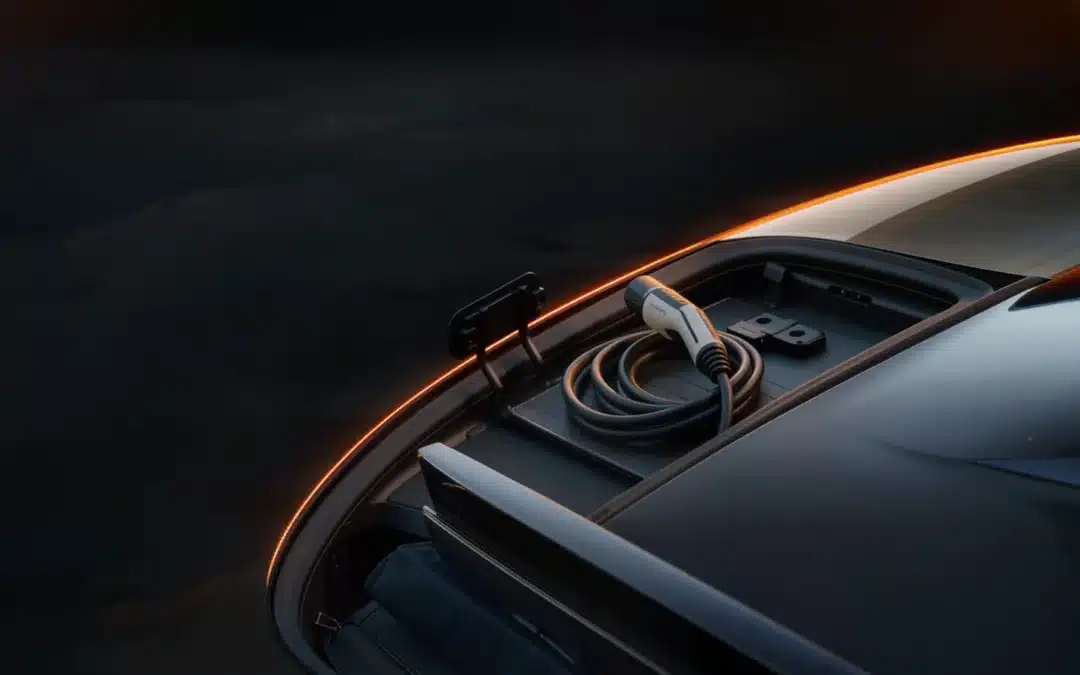
On a road trip you charge mostly at DC fast chargers. Those have their own CCS cable fixed to the station. You need nothing. Your own cable matters at hotels, car parks and slow AC chargers in towns.
- Type 2 cable (Mode 3). Most public AC posts in Europe have only a socket. Without your own Type 2 cable you can’t use them. Choose a length of 5 m or more, so you can reach the post from a bad parking spot.
- Portable charger for a household socket (Mode 2). The emergency plan. At 10 A and 230 V it gives about 2.3 kW, so roughly 10 to 15 km of range per hour. Slow, but enough overnight at a holiday house.
- Socket adapters. Your Schuko plug doesn’t fit Swiss or Italian wall sockets. Buy adapters made for continuous high load from the maker of your portable charger. Never use a cheap travel adapter or a cable drum for charging.
Step by step before you leave
- Install two charging apps at home, register them and add a payment method. Doing it at a dead charger with weak signal is no fun.
- Order physical charging cards two weeks in advance. Apps sometimes fail without mobile data.
- Plan the route with the car’s planner or a charging app and note a backup charger for every stop.
- Check if your mobile plan includes roaming in every country on the route. Switzerland, Serbia and Bosnia and Herzegovina are outside the EU.
- Pack the Type 2 cable at the top of the boot, not under the suitcases.
Mistakes to avoid
- Charging to 100% on the motorway. Above about 80% most cars charge much slower. You pay for waiting time, and some operators add a per minute fee.
- Ignoring blocking fees. Many networks charge per minute once the session is over. Leave the car at a charger during lunch and the bill grows.
- Trusting only the bank card. It is the simplest way to pay, not the cheapest.
- One app for everything. If its server goes down, you are stuck. Always carry a second one.
Do the math: A 1,500 km trip with a car using 18 kWh per 100 km needs about 270 kWh. At EWE Go’s ad hoc price of 84 cents that is about €227. With the free card at 52 cents it is about €140. You save €87 with a card that costs nothing. At EnBW prices the gap is 87 versus 59 cents, or about €235 versus €159. Prices from the ADAC check in July 2025; check the current price in the app before you go.
FAQ
Can I pay with my bank card at every charger in Europe? Not yet. Since April 2024 every new public charger must allow ad hoc payment, and new 50 kW+ chargers need a card reader. Older fast chargers have until 1 January 2027. Slow AC posts may use a QR code instead.
Do I pay extra for roaming abroad? Under AFIR, charging card providers may not add a surcharge for cross-border roaming. The price can still differ by operator and country, so check it in the app before you plug in.
Do I need my own cable on a road trip? For fast chargers no, the cable is fixed. For hotels, car parks and town AC posts you need a Type 2 cable. A portable charger for household sockets is your emergency plan.
Ivan’s Take
I would never go abroad with only a bank card. One free roaming card, one app of the main network on the route and a Type 2 cable in the boot. That costs you nothing extra and keeps €80 or more in your pocket on a single long trip.
Sources: Nationale Leitstelle Ladeinfrastruktur (AFIR); Auto Bild / ADAC check: ad hoc charging; Auto Bild / Charging Radar / P3: charging app test 2026; EUR-Lex: Regulation (EU) 2023/1804 (AFIR).
Published:
More from this section

The AvtoGear weekly
Once a week: new tests, the best deals and one useful tip for your car. Nothing extra.
