








In short
- Regulation 58(8) allows goods on the roof only with a rack strong enough for the load, goods fixed securely to it, a height of no more than 4 m from the ground and total weight within the permitted maximum.
- Regulation 50(16): the load may not go beyond the width of the body, more than 10% beyond the vehicle’s length or above 4 m, and may not endanger anyone.
- Fixed fines: €25 for a roof load that breaks the conditions, €50 for a load that projects or is dangerous.
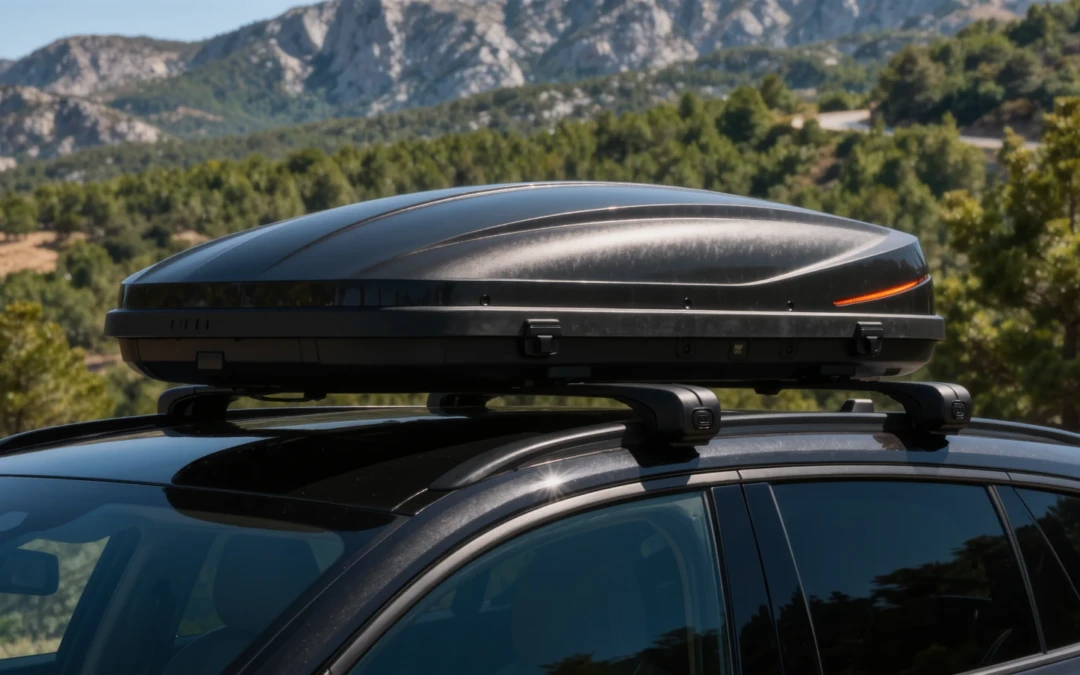
Cyprus means beaches, mountains and a lot of gear. A roof box, bike carrier or surfboards on the car make the trip, until the load becomes a hazard or a fine. The two regulations are short and specific.
The rule in detail
Both rules come from the Motor Vehicles and Road Traffic Regulations of 1984. I read them in the Road Transport Department consolidation of March 2010. The 2018 amending regulations that I could read changed other paragraphs of Regulation 58 and did not touch 58(8). I could not read every later gazette, so check the current text.
Regulation 58(8): the person who drives, or is in charge or control of, a motor vehicle must not carry any goods on the roof, nor allow or tolerate that, unless all of these are true:
- the roof is fitted with a rack of such construction and strength that it can support the maximum weight of the load allowed on it;
- the goods are fixed securely to the rack and the weight is spread as far as possible over the whole roof area;
- the height of the load does not exceed 4 metres from the ground; and
- the total weight of passengers and goods does not exceed the maximum weight allowed under the regulations.
Regulation 50(16): except with the Registrar’s permit, given in exceptional cases, a load carried by a motor vehicle must not:
- extend beyond the width of the vehicle body;
- extend more than 10% beyond the total length of the vehicle;
- exceed 4 metres in height from the ground;
- be carried in a way that can endanger the driver, passengers or third parties, or damage property;
- be uncovered if it includes loose material such as sand, gravel, lime, grain or straw, which must be carried under a protective cover. Spillable loads need special safety measures.
For motorcycles the load must not extend beyond the width of the handlebars, beyond the overall length of the motorcycle or above the rider’s shoulders.
The texts speak of goods on the roof and of loads. They do not mention roof boxes or bike carriers by name, so my reading is that a box on crossbars counts as goods fixed to a rack, and that a bike on a rear carrier is a load under 50(16). Check the rack and carrier manuals for the weight rating; the regulation ties your limit to the maximum permitted.
Fines
The amounts come from Table II (vehicles – driving) of the Out-of-Court Settlement of Offences Law 47(I)/1997, consolidated text on cylaw.org with amendments listed up to 105(I)/2026.
- Carrying goods on the roof without meeting the set conditions (Reg. 58(8) and Reg. 72): €25 fixed fine.
- Loads that project or are dangerous (Reg. 50(16) and Reg. 72): €50 fixed fine.
- The table lists no penalty points for these offences.
The Police may serve a written notice within 45 days of the offence. No prosecution can start until 105 days have passed from service. If the fine is not paid within 90 days, it rises by half of its amount (art. 5(1) and 6(3) of Law 47(I)/1997).
Foreign drivers and rental cars
The rules apply to every vehicle on a Cypriot road. If you arrive with a roof box or bike rack, the same conditions apply. For a rental car, I found no special rule; the driver, or the person in charge of the vehicle, is the one the regulation addresses, so check the rack before you set off.
Mistakes I see most often
- Strapping luggage straight to a bare roof. Regulation 58(8) requires a rack of suitable strength.
- Counting only the roof box weight. The total weight of passengers and goods must stay within the permitted maximum.
- Letting a surfboard, ladder or pipes stick out at the rear. Over 10% beyond the vehicle length, or sideways beyond the body, breaks 50(16).
Do the math: A roof load that breaks the conditions is €25, or €37.50 after 90 days. A projecting or dangerous load is €50, or €75 after 90 days. A set of proper straps costs less than one fine, and a load that comes loose costs far more.
FAQ
Can I carry things on the roof in Cyprus? Yes, but only with a rack strong enough, goods fixed securely, a height up to 4 m from the ground and the total weight within the limit (Reg. 58(8)).
How far can a load stick out? Not beyond the width of the body and not more than 10% beyond the vehicle’s total length (Reg. 50(16)).
What are the fines? €25 for a roof load that breaks the conditions and €50 for a projecting or dangerous load (Table II of Law 47(I)/1997).
Where to check
Regulations 50(16) and 58(8) of the Motor Vehicles and Road Traffic Regulations 1984 (Road Transport Department consolidation, March 2010); Law 47(I)/1997, Table II and articles 5 and 6, on cylaw.org.
Ivan’s Take
Rack first, load second. A proper rack, tight straps and a load that stays inside the car’s outline are cheap compared with a €50 fine, and far cheaper than what a loose box does to the car behind you. Check the weight rating on the rack, not only on the box.
Sources: Regulations 50(16) and 58(8), Motor Vehicles and Road Traffic Regulations 1984 (RTD consolidation, March 2010); Law 47(I)/1997 Out-of-Court Settlement of Offences, Table II, arts 5-6 (cylaw.org).
Published:
More from this section


The AvtoGear weekly
Once a week: new tests, the best deals and one useful tip for your car. Nothing extra.
