








In short
- At a junction of equal roads you give way to vehicles coming from your right (Road Traffic Act, art. 48). On a road signed as the priority road, everyone else gives way (art. 50).
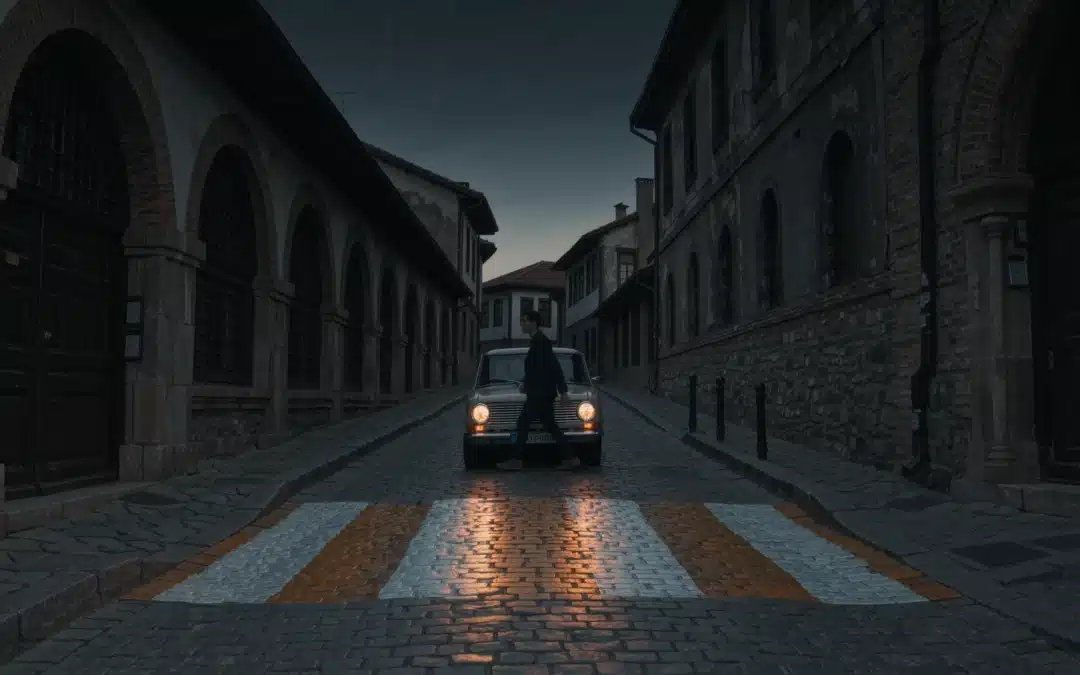
- Approaching a pedestrian crossing you must let pass anyone who signals, has stepped on or is crossing, by slowing or stopping (art. 119).
- Not giving way on a crossing costs €76.69. A repeat costs €153.39 and a month without the right to drive (art. 183(5) and (6)).
Most junction mistakes come from one wrong assumption: that the other driver will stop. The Act says who must. It also says what a crossing asks of you, and since September 2025 the fines are higher. Here are the rules and the numbers.
Junctions: who gives way
- Approaching any junction, your speed must let you stop and give way to those who have priority (art. 47).
- At a junction of equal roads, you give way to vehicles on or approaching from your right. A driver of a non-rail vehicle gives way to rail vehicles, whatever their position or direction (art. 48).
- Where one road is signed as the priority road, drivers on the other roads give way to traffic on it (art. 50(1)). If a sign shows that the priority road turns, the drivers on it follow the equal-roads rule between themselves (art. 50(2)).
- A driver leaving an unpaved road onto a paved road gives way to vehicles and pedestrians on the paved road (art. 49).
- You may not enter a junction even on a green light if the traffic ahead will force you to stop inside it or block cross traffic (art. 50а).
Pedestrian crossings
Article 119 sets the core duties for drivers of non-rail vehicles:
- Approaching a crossing, give way to pedestrians who signal that they will cross, who have stepped on the crossing or who are crossing it. Slow down or stop (art. 119(1)).
- When passing a vehicle that has stopped at a crossing, drive at a speed that lets you stop for pedestrians (art. 119(2)).
- A driver who is turning must give way to pedestrians (art. 119(4)).
A pedestrian can signal with an arm held up or across the road (art. 32(1)). If a pedestrian standing on the verge or pavement signals that they want to cross, you must stop, without creating danger for traffic (art. 120(2)).
At a crossing controlled by a traffic light or an officer, you stop before the crossing on a stop signal. After a go signal you let through pedestrians still on it. You may not enter the crossing unless you are sure you will not have to stop on it (art. 120(1)).
Take extra care near children and people with visual or hearing impairments, and slow down, even to an emergency stop if needed (art. 116 and 117). When a group leader shows the “Stop! Children” signal, drivers must stop and wait (art. 118).
After a crash with a pedestrian on a marked crossing, a driver who was speeding or broke another traffic rule relevant to the crash cannot count the pedestrian as a contributing party (art. 119(5)).
Fines
The Act prints the fines in leva, so the euro amounts are converted at the official rate of 1.95583 leva per euro, since Bulgaria uses the euro from 1 January 2026.
- Not giving way when passing a pedestrian crossing: €76.69 (150 leva), art. 183(5), point 2
- The same offence a second time: €153.39 (300 leva) and one month without the right to drive, art. 183(6)
- Not stopping at a “Stop” sign, joining traffic wrongly, changing lanes wrongly or not respecting another road user’s priority: €51.13 (100 leva), art. 183(4), point 14
- Breaking priority or sign rules in a way that creates immediate danger: €102.26 (200 leva), art. 179(1), point 5
- Causing a crash through such a violation, if it is not a crime: €153.39 (300 leva), art. 179(2)
Roundabouts
I found no article on roundabouts in the Act. The entry rules there come from road signs and the signing regulation, which I could not read for this article. I do not state a roundabout rule that I could not check. Follow the sign at the entry.
Foreign drivers and rental cars
These rules apply to every driver. If you come from a country where the car on the right does not always have priority, remember art. 48 on equal roads. In a rental car, slow down early near crossings in towns. I could not verify in the Act how a fine reaches a foreign driver.
Mistakes I see most often
- Assuming the pedestrian will wait. The Act asks the driver to slow down or stop.
- Overtaking a car that has stopped at a crossing without being able to stop.
- Entering a junction on green into a queue and blocking the crossing road.
Do the math: First time not giving way on a crossing: €76.69. Second time: €153.39, exactly double, plus a month on foot. Waiting a few seconds for the pedestrian is the cheap option.
FAQ
Who gives way at a junction with no signs? If the roads are equal, you give way to vehicles from your right (art. 48).
Must I stop for a pedestrian waiting at the kerb? If the pedestrian signals that they want to cross the crossing, yes, without creating danger (art. 120(2)).
Does a green light let me enter any junction? No. Art. 50а bans entering if you will have to stop inside it or block cross traffic.
Where to check
Read the Road Traffic Act, art. 47 to 50а, 116 to 120, 179 and 183, on lex.bg or in the State Gazette (dv.parliament.bg).
Ivan’s Take
Priority is not a contest. At a crossing the Act asks you to be the one who slows down, and the second offence costs double. I treat every zebra as a place where I may need to stop and I keep my speed to suit. It costs nothing and it is easier on the nerves.
Published:
More from this section
The AvtoGear weekly
Once a week: new tests, the best deals and one useful tip for your car. Nothing extra.
