








In short
- Art. 76 of the Road Traffic Act forbids lights other than those provided by the Act and the acts under it. Fog lights are allowed only in strongly reduced visibility (Art. 74).
- The Act names no fine for aftermarket lights. Its general fine for a breach with no other penalty is 50 leva, €25.56 (Art. 185).
- The technical inspection lists a lamp or light source that is not compatible with the headlamp, or that does not comply, as a defect.
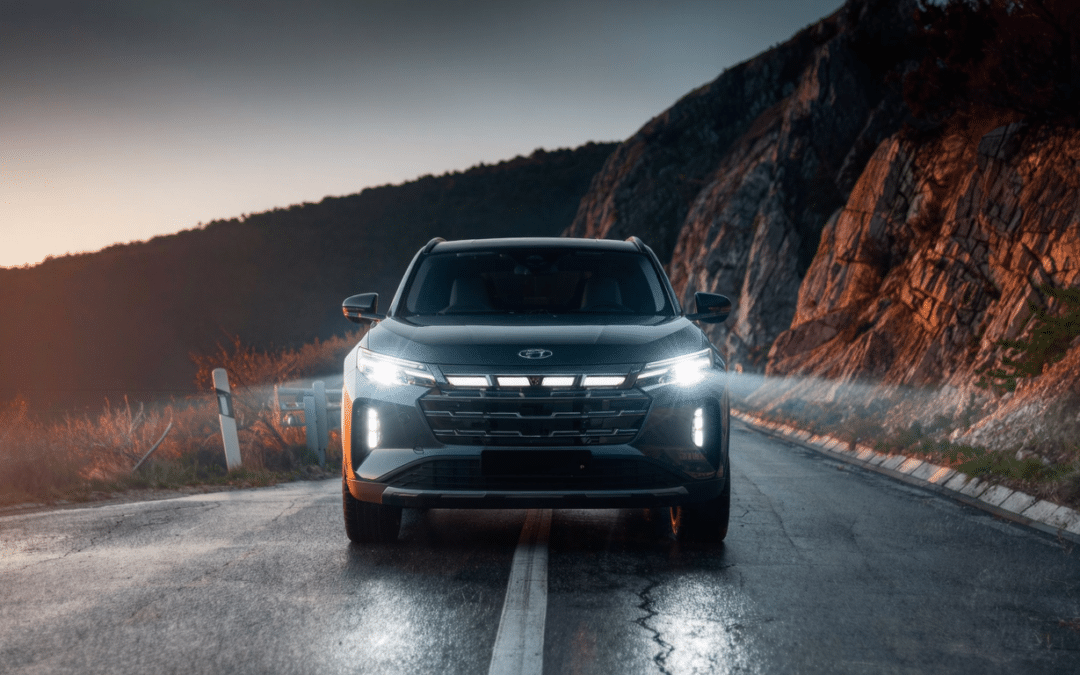
A set of bright white LED bulbs, a pair of fog lights or a light bar on the grille. Cheap to buy, easy to fit. In Bulgaria two rules and one inspection table decide whether it is a problem. Here is what is written, and where my reading stops.
The rules in detail
The Road Traffic Act (ЗДвП) has these rules about lights:
- Art. 70(1): at night and in reduced visibility a motor vehicle must have low or high beams, side lights and the rear plate light switched on
- Art. 74(1): additional fog lights may be used only in significantly reduced visibility, from fog, snowfall, rain or similar conditions, and not on their own
- Art. 74(2): an additional red rear fog light is used only when visibility is under 50 metres
- Art. 76: it is forbidden to use lights other than those provided in the Act and in the normative acts issued under it
Art. 76 is the one that matters for aftermarket lights. It does not list products. It says that the lights must be the ones the Act and its ordinances provide for.
Retrofit LED and xenon bulbs
The Act does not mention LED retrofit bulbs or xenon conversion kits. I found nothing that bans them by name. The inspection ordinance gives a more concrete test.
The headlamp section of the defect table in Annex 5 to Ordinance Н-32 lists, among others:
- A lamp, emitted colour, position, brightness or marking that does not comply with the requirements
- Products on the lens or on the light source that visibly reduce the brightness or change the emitted colour
- A light source and a lamp that are not compatible with each other
- Beam aim that is not within the limits set in the requirements
- For gas-discharge lamps, a headlamp cleaning device that does not work, where it is mandatory
The third point is the one that describes the typical retrofit: a bulb that does not fit the headlamp it sits in. The requirements those items refer to are the vehicle approval rules, which I could not read in an official source here. So I do not claim that a given LED kit is legal or illegal. Ask for the approval marking of the product and check that it is meant for your headlamp.
Extra lights and light bars
The Act does not mention light bars or off-road light pods. The only extra lights it describes are the fog lights in Art. 74. Art. 76 then closes the list: other lights are forbidden. My reading is that a light bar switched on in traffic runs into Art. 76. That is my reading of the text, not an official interpretation. A cover on the bar and switching it off on public roads is the safe path.
Fines
- Breach of Art. 76 or Art. 74: the Act names no specific fine. Its general provision, Art. 185, sets a fine of 50 leva, which is €25.56 at the official rate of 1.95583, for breaches for which no other penalty is provided. I found no official source on how it is applied to lights, so this is the general fallback
- Driving a technically faulty vehicle (Art. 179(6)): 50 leva (€25.56) for minor, 200 leva (€102.26) for significant and 500 leva (€255.65) for dangerous faults. I could not verify which category the authorities give to headlamp conversions
- Owner or official who lets a vehicle with a construction changed without the required permit on the road (Art. 179(1) item 3): 200 leva, €102.26. Whether a lighting change counts as a construction change needs the ordinance on vehicle modifications (Н-3), which I could not read
The authorities may also stop the vehicle temporarily from traffic if it has a dangerous defect or a construction changed without permit, until the problem is removed (Art. 171).
The technical inspection
Ordinance Н-32 sorts faults into three groups (Art. 37). A significant fault means the vehicle may drive on public roads only to a place of repair and needs a repeat inspection. A dangerous fault means the registration is temporarily withdrawn and the vehicle may not drive until it is fixed and re-inspected. I could not verify the group for a non-compliant retrofit, so I do not name one.
Mistakes I see most often
- Fitting a bright LED bulb into a halogen reflector and leaving the aim as it was
- Driving with a light bar on in traffic
- Having no papers for the parts
Do the math: Do the math: the general fine is €25.56. A retrofit classed as a significant fault keeps the car from normal driving until fixed, and a construction change without a permit means €102.26 for the owner. A set of original bulbs costs less than a repeat inspection.
FAQ
Are LED retrofit bulbs legal in Bulgaria? The Act does not mention them. The inspection table lists a light source that is not compatible with the headlamp as a defect. I cannot say more without the approval rules.
Can I use a light bar on the road? The Act does not mention light bars. Art. 76 forbids lights other than those it provides. Switch it off and cover it on public roads.
Is there a fine for extra lights? The Act names none for this. The general fine in Art. 185 is 50 leva (€25.56).
Ivan’s Take
I do not play games with lights. A bright bulb that blinds the driver in front of you is a risk for everyone, and the paperwork for it is not worth the saving. Original or approved parts, correct aim, and the light bar for the track, not the road.
Sources: Road Traffic Act (ЗДвП), consolidated text up to State Gazette No. 55/16.06.2026, mvr.bg, Art. 70, 74, 76, 171, 179, 185; Ordinance Н-32 on periodic inspections of road vehicles, Art. 37 and Annex 5 item 4.1 (Road Administration, rta.government.bg).
Published:
More from this section

The AvtoGear weekly
Once a week: new tests, the best deals and one useful tip for your car. Nothing extra.
