








In short
- The vignette costs CHF 40 (about €43.37) per vehicle and covers a calendar year plus December before and January after: 14 months (Art. 6 and 8 NSAG).
- You can pay with a sticker on the inside of the windscreen or with an e-vignette linked to your number plate (Art. 6a to 7a NSAG).
- Using a motorway without a valid vignette, or with a wrongly placed sticker, is a fixed fine of CHF 200 (about €216.87), and you must buy the vignette on the spot.
The Swiss vignette is the one toll every visitor meets. It is cheap, it is the same for a week or a year, and the control is automatic. If you get it wrong, the fine is five times the price. Here are the federal rules in the versions in force on 17 November 2026.
The rule: who pays and how much
The Federal Act on the Levy for the Use of National Roads (NSAG, SR 741.71, version of 1 August 2023) applies to motor vehicles and trailers registered in Switzerland or abroad that use national roads of the first and second class (Art. 2 and 3). The vehicles that pay the heavy-vehicle fee are excluded (Art. 3 para. 2). The levy is CHF 40 (Art. 6). Driver and, subsidiarily, the keeper are liable (Art. 5). Exemptions in Art. 4 include rigid trailers, motorcycle trailers and sidecars.
The levy is for one calendar year and is not refunded. The vignette entitles you to use the roads from 1 December of the previous year to 31 January of the following year (Art. 8). As of 17 November 2026, the 2026 vignette stays valid until 31 January 2027, and the 2027 vignette runs from 1 December 2026.
Sticker or e-vignette
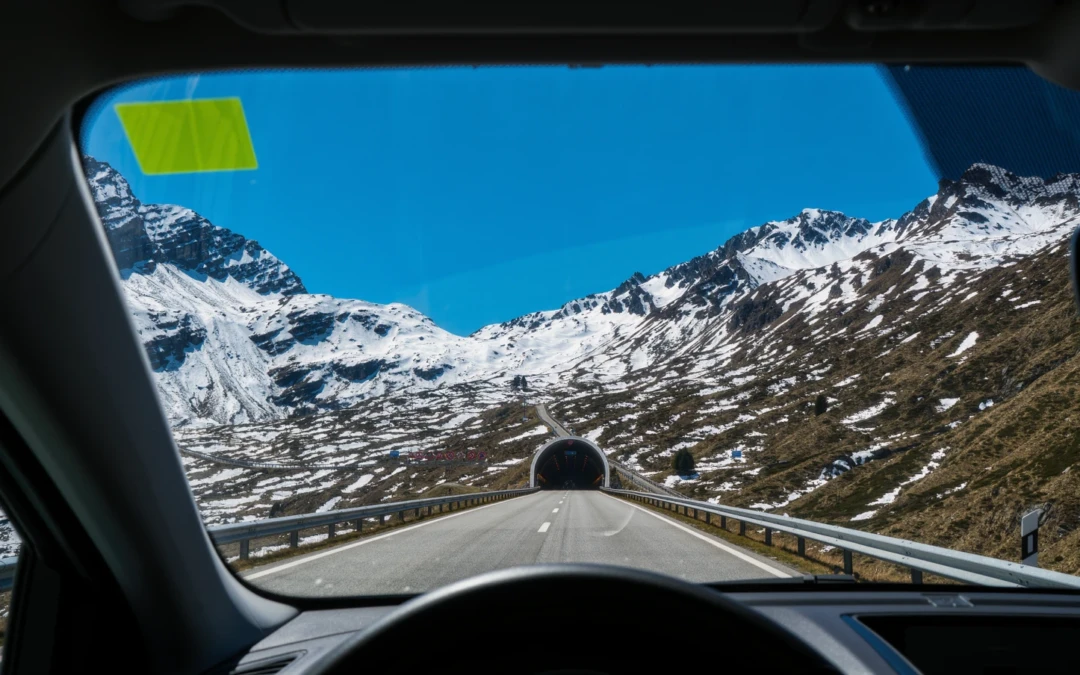
- Sticker (Art. 7 NSAG, Art. 3 NSAV): stick it directly on the vehicle, undamaged, before first use in the period. On a car with a windscreen it goes on the inside of the windscreen, at a place clearly visible from outside. Elsewhere it goes on an easily accessible part that cannot be exchanged. It is void if it is removed after correct attachment, removed from the backing without being stuck on the vehicle, manipulated, or not stuck with the original adhesive.
- E-vignette (Art. 7a NSAG): register your number plate before the first use in the period. The levy then counts as paid for every vehicle that may lawfully drive with that plate. If you change plates, the keeper can transfer the e-vignette to the new plate (Art. 5 NSAV).
- Windscreen replaced (Art. 4 NSAV): you must fit a new sticker before using a national road. The Federal Office for Customs and Border Security (BAZG) replaces it against the old sticker and the invoice, or refunds the cost of the new one if the insurer does not.
The BAZG says you should buy the vignette before entering Switzerland. The e-vignette is sold at e-vignette.ch, the sticker through automobile clubs and, exceptionally, at certain customs offices at the border (vignette.ch).
Controls and fines
Controls are made by the BAZG and the cantons, including automated cameras that compare plates with the e-vignette register (Art. 11 NSAG, Art. 7 and 8 NSAV). Staff can stop vehicles and ask for identity papers in a suspected offence.
- Using a national road without the vignette required for the period (OBV Annex 2, no. 6001; Art. 14 para. 1 NSAG): CHF 200 (about €216.87).
- Using it with a sticker that is not stuck directly on the vehicle, not in the prescribed place, or damaged (no. 6002): CHF 200 (about €216.87).
Euro amounts use the Swiss National Bank’s daily rate of 17 November 2026: 1 EUR = 0.9222 CHF. In an offence you must pay the levy at once (Art. 9 NSAV), and a loose sticker must be fixed to the vehicle at once. Anyone without a Swiss domicile who contests the levy, or does not pay immediately, must deposit the amounts or give security (Art. 12 NSAG; Art. 10 of the Fixed Fines Act, OBG). The BAZG prosecutes offences it finds at the border (Art. 15 NSAG).
Foreign drivers and rental cars
The levy applies to vehicles registered abroad exactly as to Swiss ones (Art. 3 para. 1). A rental car with Swiss plates may already carry one. I did not find an official rule on who must check it, so look for the sticker or ask the rental company before you drive.
Mistakes I see most often
- Putting the sticker where it is not clearly visible from outside, or leaving it loose on the dashboard.
- Registering the wrong plate for the e-vignette, or forgetting to transfer it after a plate change.
- Believing the 2026 vignette is valid only until 31 December. It runs to 31 January 2027.
Do the math: Vignette CHF 40 (about €43.37). Caught without one: fine CHF 200 plus the vignette CHF 40, so CHF 240 (about €260.25). That is six times the price, and the e-vignette takes minutes online before you cross the border.
FAQ
Is the Swiss vignette valid for one year or 14 months? The levy is for one calendar year, and the vignette entitles you to use national roads from 1 December of the year before until 31 January of the year after (Art. 8 NSAG).
Do I need a vignette for a trailer? Trailers fall under the levy (Art. 3). Art. 4 lists exemptions, among them rigid trailers and motorcycle trailers. If unsure, ask the BAZG.
Can I pay for the vignette at the border? The BAZG says the sticker is sold exceptionally at certain customs offices, but advises buying before entry. The e-vignette is sold at e-vignette.ch.
Where to check
Federal law on fedlex.admin.ch: NSAG (SR 741.71), NSAV (SR 741.711), OBV (SR 314.11), OBG (SR 314.1), read in the versions in force on 17 November 2026. Official information: vignette.ch and e-vignette.ch.
Ivan’s Take
At CHF 40, the vignette is the best-value paper on this list, and the CHF 200 fine for skipping it is a self-inflicted mistake. I buy the e-vignette at home, before the trip, and screenshot the confirmation. No sticker to peel, no windscreen to worry about.
Sources: Nationalstrassenabgabegesetz NSAG (SR 741.71), Stand 1.8.2023; Nationalstrassenabgabeverordnung NSAV (SR 741.711), Stand 1.8.2023; Ordnungsbussenverordnung OBV (SR 314.11), Stand 1.8.2026; Ordnungsbussengesetz OBG (SR 314.1), Stand 1.1.2025; BAZG: Nationalstrassenabgabe (Vignette); SNB: Devisenkurse (Tageskurs 17.11.2026, 1 EUR = 0.9222 CHF).
Published:
More from this section
The AvtoGear weekly
Once a week: new tests, the best deals and one useful tip for your car. Nothing extra.
