








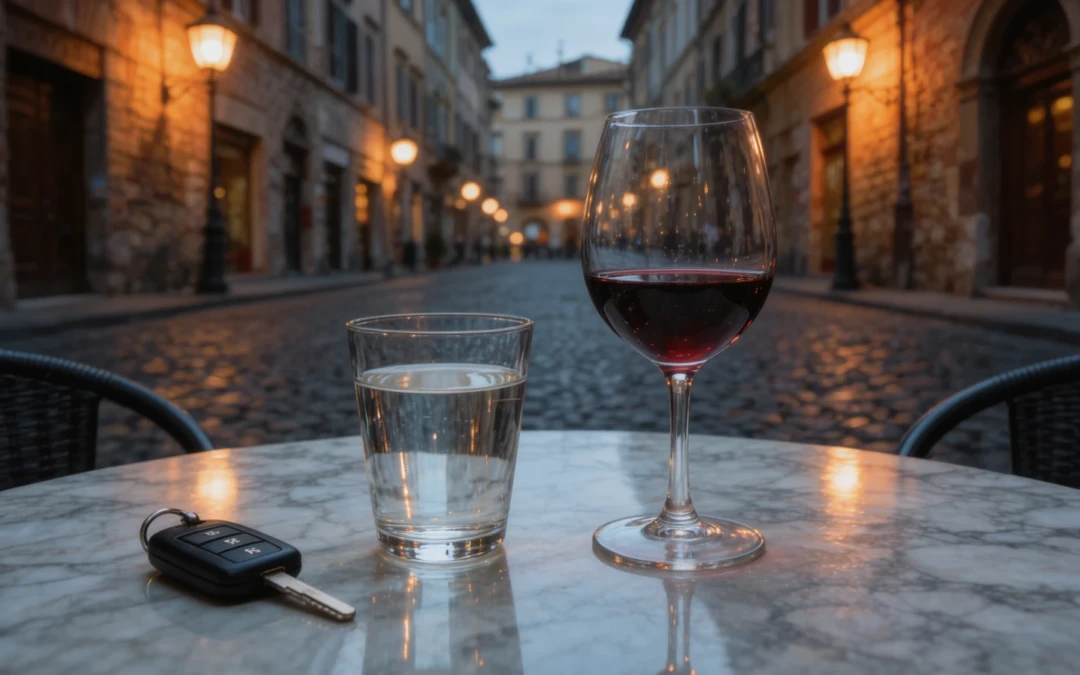
In short
- The general limit in Italy is 0.5 g/l of alcohol in the blood. Under-21s, drivers in their first three years with a B licence and professional drivers must be at 0.0 (art. 186 and 186-bis CdS).
- Above 0.8 g/l drink-driving is a crime: fine of €800 to €6,000, arrest of up to one year, suspension of up to two years and, above 1.5 g/l, confiscation of the car.
- Since 14 December 2024 driving after taking drugs is punished even without proof that you were impaired: €1,500–6,000, arrest of 6 months to 1 year and 1–2 years without a licence (art. 187).
Italy treats a glass too many very differently depending on the number. Up to 0.8 g/l it is an administrative offence with a heavy fine. Above that it goes to a criminal court. Here is what the Codice della Strada says, in the consolidated text on Normattiva updated to 24 April 2026.
The rule in detail
A driver is considered drunk above 0.5 grams of alcohol per litre of blood (art. 186, para. 6). Police may use portable devices for a first, non-invasive check, and then a full test, also at the nearest police office (para. 3–4). After an accident, hospitals can take the measurement at police request (para. 5).
Zero tolerance applies to four groups (art. 186-bis, para. 1): drivers under 21, drivers in the first three years of a category B licence, professional drivers of people or goods, and drivers of vehicles over 3.5 t, buses and articulated vehicles. For them any amount above 0.0 and up to 0.5 g/l is an offence.
Drugs. The reform in force from 14 December 2024 rewrote art. 187. The law now punishes anyone who drives ‘after having taken narcotic or psychotropic substances’. The words about being in a state of impairment were removed. Police can test saliva samples, analysed by certified laboratories (para. 2-bis).
Penalties for alcohol
- 0.5–0.8 g/l: €543–2,170, licence suspended 3–6 months, 10 points (art. 186, para. 2a).
- 0.8–1.5 g/l: criminal fine €800–3,200 and arrest up to 6 months, suspension 6 months–1 year (para. 2b).
- Above 1.5 g/l: criminal fine €1,500–6,000, arrest 6 months–1 year, suspension 1–2 years and confiscation of the vehicle, unless it belongs to someone else – then the suspension is doubled. A repeat within two years means the licence is revoked (para. 2c).
- Causing an accident while drunk: all penalties doubled and the car detained for 180 days. Above 1.5 g/l the licence is always revoked (para. 2-bis).
- Refusing the test: the same penalties as above 1.5 g/l, suspension 6 months–2 years and confiscation (para. 7).
- Zero-tolerance groups, 0.0–0.5 g/l: €168–672, 5 points, doubled if you cause an accident. Above 0.5 their penalties are raised by one third to one half (art. 186-bis, para. 2–3).
Between 22:00 and 07:00 the criminal fine is increased by one third to one half (art. 186, para. 2-sexies). Since the 2024 reform, a conviction for more than 0.8 g/l also puts EU codes 68 (‘no alcohol’) and 69 (‘alcolock only’) on an Italian licence: at least two years for 0.8–1.5 g/l and at least three years above 1.5 g/l (para. 9-ter).
Penalties for drugs
- Criminal fine €1,500–6,000 and arrest 6 months–1 year, suspension 1–2 years, 10 points (art. 187, para. 1).
- Confiscation of the vehicle on conviction, unless it belongs to someone else (then suspension doubled).
- Licence revoked for a repeat within three years and for drivers of heavy vehicles and buses.
- Causing an accident: penalties doubled and licence revoked (para. 1-bis). Night between 22:00 and 07:00: fine up by one third to one half (para. 1-quater).
Foreign drivers and rental cars
The limits, the criminal penalties and the confiscation apply to everyone who drives in Italy, whatever licence you hold. The suspension stops you driving in Italy. The alcolock codes are written on licences issued in Italy (art. 186, para. 9-ter). If the rental car is confiscated or detained, the law protects owners who had nothing to do with the offence – but then your suspension is doubled.
Mistakes I see most often
- New drivers counting on 0.5. In the first three years with a B licence the limit is zero, at any age.
- Thinking a refusal is safer. Refusing the test is punished like the worst category, above 1.5 g/l.
- Driving ‘the morning after’ a party with drugs. Since December 2024 the law no longer requires proof that you were impaired.
Do the math: The math: 0.9 g/l at 01:00, no accident. Criminal fine from €800, plus one third to one half for the night: at least €1,067. Plus 6–12 months without a licence, 10 points and, with an Italian licence, at least two years with an alcolock. Against that: one taxi ride back to the hotel.
FAQ
Can I drink one glass of wine and drive in Italy? If you are over 21, have held your B licence for more than three years and do not drive professionally, the limit is 0.5 g/l. How one glass affects you varies. If you are a new driver, the answer is no.
Does the 30% early-payment discount apply? No for 0.5–0.8 g/l, because it carries a licence suspension (art. 202). Above 0.8 g/l it is a crime decided by a court.
Do I need to be ‘high’ to be fined for drugs? No. Since 14 December 2024 art. 187 punishes driving after having taken narcotic or psychotropic substances.
Where to check
Normattiva, the official database of Italian law: Codice della Strada (D.Lgs. 285/1992), articles 186, 186-bis, 187, 202 and the points table of art. 126-bis, consolidated version updated to 24 April 2026.
Ivan’s Take
My rule in Italy is simple: if I drive, I do not drink. Not one glass. A criminal record, a confiscated car and an alcolock for two years are not worth any dinner.
Sources: Normattiva – Codice della Strada, art. 186 (Guida sotto l'influenza dell'alcool); Normattiva – Codice della Strada, art. 186-bis (under 21, neopatentati, professionals); Normattiva – Codice della Strada, art. 187 (Guida dopo l'assunzione di sostanze stupefacenti); Normattiva – Codice della Strada, art. 202 (reduced payment); Normattiva – Codice della Strada, art. 126-bis and points table.
Published:
More from this section
The AvtoGear weekly
Once a week: new tests, the best deals and one useful tip for your car. Nothing extra.
