








In short
- On 7 January 2026 the UK government published its first road safety strategy in over a decade. The target: 65% fewer deaths and serious injuries by 2035, 70% for children under 16.
- It opened consultations on a lower drink-drive limit in England and Wales, 3 penalty points for not wearing a seat belt, mandatory eye tests for drivers aged 70+ and a minimum learning period for learners.
- None of these is law yet. All consultations closed on 11 May 2026 and the government is still analysing the feedback. Today you can still be fined up to £500 (€598.45) for no seat belt, with no points.
Big announcements about drink-driving and older drivers made headlines in January 2026. A lot of drivers now think the rules already changed. They did not. Here is what is proposed, what is law today and why it matters to you.
What the strategy is
The Department for Transport launched the Road Safety Strategy on 7 January 2026. It uses the Safe System approach: road design, vehicle safety, enforcement and education work together. A new Road Safety Investigation Branch will study collision patterns, and the strategy mandates 18 new vehicle safety technologies, including autonomous emergency braking and lane-keeping assistance.
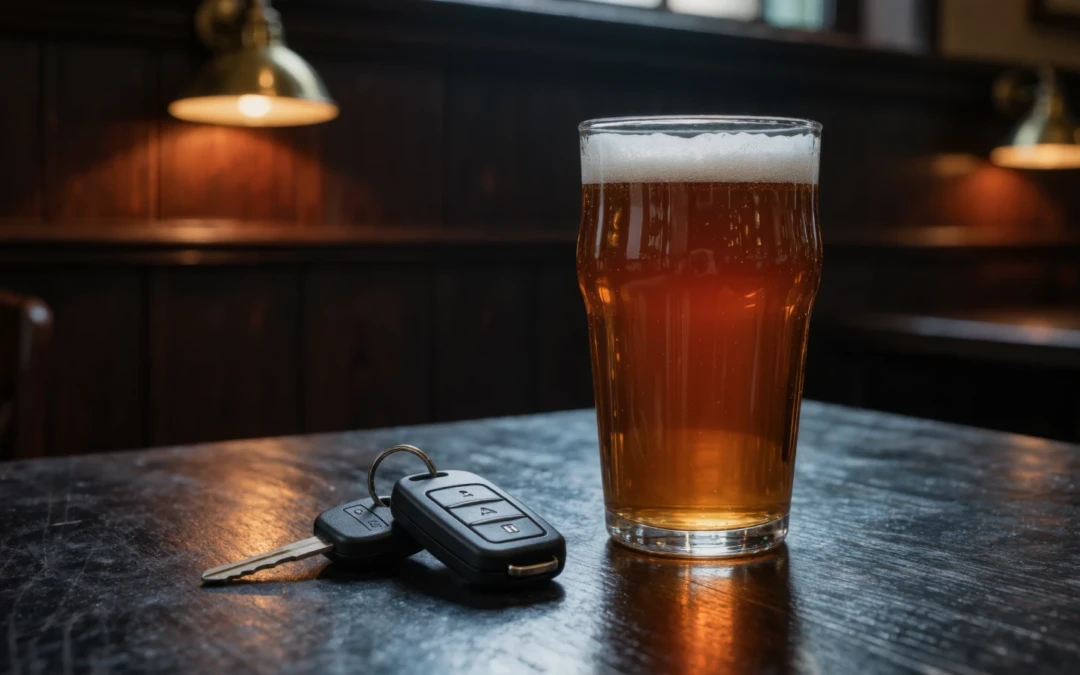
Proposal 1: drink and drug driving
The consultation “Proposed changes to penalties for motoring offences” asks whether the limit in England and Wales should be lowered and whether novice drivers should have a lower limit. It also asks about:
- suspending the licence of a suspected drink or drug driver until court,
- seizing vehicles of people arrested for drink or drug driving,
- alcohol ignition locks (alcolocks) as part of rehabilitation,
- random breath testing in England and Wales, mirroring Northern Ireland.
Today the limit in England, Wales and Northern Ireland is 35 micrograms of alcohol per 100 ml of breath (80 mg per 100 ml of blood). In Scotland it is 22 micrograms (50 mg). The consultation notes that Northern Ireland plans to cut its limit to the Scottish level, with 9 micrograms of breath for novice and professional drivers. The minimum ban for drink-driving is 1 year, or 3 years for a second conviction within 10 years.
Proposal 2: seat belts and other offences
- 3 penalty points for drivers who do not wear a seat belt, and for drivers who do not make sure children under 14 are belted or in a child seat. Today it is not an endorsable offence.
- 5 to 10 points for failing to stop for police.
- Points or vehicle seizure for no MOT, no vehicle tax, no current keeper and false or “ghost” number plates.
- Higher minimum penalties for driving uninsured. Today the fixed penalty is £300 (€359.07) and 6 points.
Proposal 3: eye tests at 70 and learner drivers
In Great Britain your licence expires at 70 and must be renewed at most every 3 years, with a self-declaration that you meet the eyesight standard. The government consulted on replacing that with mandatory eye tests at renewal for drivers aged 70 and over. A separate consultation asks about a minimum learning period of 3 or 6 months before a learner can take the practical test.
What it means for foreign drivers
Today the national limits apply to everyone driving in the UK, whatever licence you hold. Remember that crossing from England into Scotland drops the limit from 35 to 22 micrograms of breath. Any new limit for England and Wales would also apply to visitors once it becomes law.
Mistakes I see most often
- Believing the England and Wales limit already changed. It has not. It is still 35 micrograms of breath.
- Thinking a seat belt fine has no risk. Today it can be up to £500. If 3 points come in, a new driver with 2 such offences would hit 6 points, and new drivers lose their licence with 6 points within 2 years of passing.
- Ignoring Scotland. The lower 22 microgram limit has applied there since 2014.
Do the math: The math: no seat belt today = up to £500 (€598.45) and 0 points. Under the proposal you would also get 3 points. Four such offences in 3 years would add up to 12 points, which can mean a totting-up ban. A seat belt costs nothing to click.
FAQ
When will the new drink-drive limit start? No date exists. The consultation closed on 11 May 2026 and GOV.UK says the government is analysing the feedback.
Do I need an eye test to renew my licence at 70 now? No. Today you make a legal declaration that you meet the eyesight standard. Mandatory testing is only a proposal.
Will learners need 6 months before the test? Not yet. The government consulted on 3 or 6 months, plus possible minimum supervised hours and a syllabus.
Where to check
GOV.UK: Road Safety Strategy (7 January 2026) and the press release, the consultations “Proposed changes to penalties for motoring offences”, “Introducing mandatory eyesight testing for older drivers” and “Introducing a minimum learning period for learner drivers”, plus “The drink drive limit”, “Seat belts: the law” and “Penalty points”. Euro amounts use the Bank of England rate of 11 November 2026: £1 = €1.1969.
Ivan’s Take
Most of this is common sense, and Scotland has shown the lower limit works without drama. My advice is simple: drive today as if the Scottish limit already applied everywhere. Zero drinks before driving costs you nothing.
Sources: GOV.UK: Road safety strategy (7.1.2026); GOV.UK press release: Thousands of lives to be saved under bold new Road Safety Strategy; DfT consultation: Proposed changes to penalties for motoring offences; DfT consultation: Introducing mandatory eyesight testing for older drivers; DfT consultation: Introducing a minimum learning period for learner drivers; GOV.UK: The drink drive limit; GOV.UK: Seat belts: the law; GOV.UK: Penalty points (endorsements).
Published:
More from this section
The AvtoGear weekly
Once a week: new tests, the best deals and one useful tip for your car. Nothing extra.
