








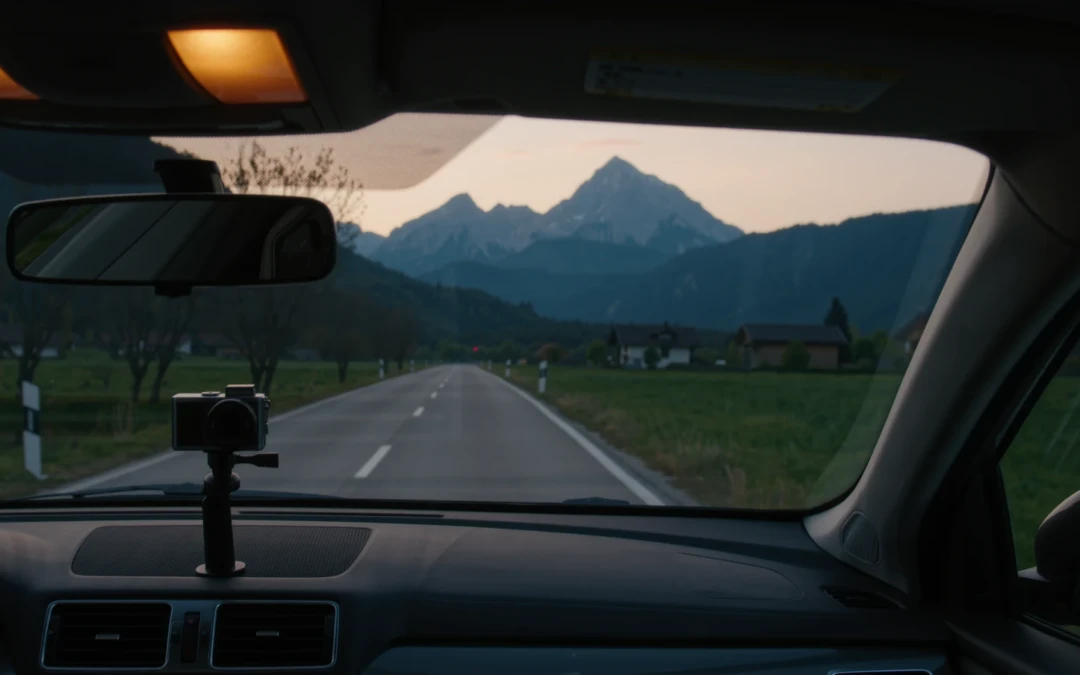
In short
- On 1 October 2026 the Slovenian Information Commissioner (IP RS) said a dash cam is lawful only “in very rare cases”.
- No traffic-law article covers dash cams, so the GDPR and the video-surveillance rules of ZVOP-2 apply.
- Recording without a legal basis must stop immediately; the opinion warns of misdemeanour, civil and criminal liability.
Many drivers fit a dash cam “just in case”. In Slovenia the data-protection regulator has now looked at exactly that habit, and its answer is stricter than most people expect. The opinion is not a law, but it shows how the authority reads the law.
What the Commissioner actually said
The opinion is titled “Use of a camera for continuous recording of driving (dashcam)”. It is dated 1 October 2026, number 07121-1/2026/969, and is published on ip-rs.si. It is a non-binding opinion, not a court ruling. Its main points:
- Dash cams are not regulated by a specific law. The general rules apply: the GDPR and the video-surveillance provisions of ZVOP-2.
- Use is lawful “only in very rare cases”.
- The household exemption (GDPR Art. 2(2)(c)) covers you only if the camera records no public areas and no third persons. A windscreen camera films the road, other cars and pedestrians, so in most cases the exemption does not apply.
When you need a legal basis
If the camera records public space or other people, you need a legal basis under GDPR Art. 6(1). The Commissioner went through the options:
- Consent: impossible in practice. You cannot ask every driver and pedestrian you film.
- Legitimate interest: collecting evidence for a possible accident “most likely” does not outweigh the privacy of the people filmed.
- Public task: relevant for public-law bodies only.
Data minimisation matters too. The opinion names fire and rescue vehicles on dangerous runs as an example where recording can be proportionate. A camera used only to clarify accident circumstances is hard to justify.
If you record anyway
- Without a legal basis, recording must stop immediately. The opinion calls continued recording unlawful processing that can lead to misdemeanour sanctions, civil liability and criminal liability.
- A visible notice about the surveillance is required, with a URL where the information is available (ZVOP-2 Art. 76, GDPR Art. 13). Public areas fall under ZVOP-2 Art. 80.
- In a separate opinion of 3 April 2026 (07121-1/2026/324) the same authority stated that registration numbers are personal data. A plate in your footage is personal data.
We found no ZPrCP article that mentions dash cams, and so no dash-cam fine in the traffic law. The risk comes from data-protection law, not from the traffic fines list. The opinion gives no euro amounts, so we give none.
Foreign drivers and rental cars
The opinion speaks about recording in general. It does not single out visitors or rental cars, and we found no separate Slovenian rule for them. If a rental car has a camera, the same questions apply to whoever uses it: who is filmed, and on what legal basis.
Mistakes I see most often
- Thinking “it is only for my own protection” makes it household use. The opinion ties the exemption to what the camera films, not to your motive.
- Posting clips online with readable plates or faces.
- Believing a sticker solves everything. A notice is required, but it is not a legal basis.
Do the math: The traffic-fines list has no dash-cam line, and the opinion names no amount. What you risk is not a €40 ticket but a data-protection problem and footage whose lawfulness can be questioned. The cost of not filming: €0.
FAQ
Is a dash cam illegal in Slovenia? The opinion does not use that word. It says use is lawful only in very rare cases and that no specific law regulates it. Where there is no legal basis, recording must stop immediately.
Is the opinion binding? It is a non-binding opinion of the data-protection authority. It shows how the authority reads the GDPR and ZVOP-2.
What about a camera that films only the cabin? The opinion says the household exemption applies only if no public areas and no third persons are recorded. A camera facing the road records public areas.
Where to check
ip-rs.si: opinion of 1 October 2026, no. 07121-1/2026/969. ZVOP-2 Arts. 76 and 80 and GDPR Arts. 6 and 13, as cited in the opinion. ZPrCP on pisrs.si, consolidated text in use from 30 October 2026.
Ivan’s Take
My take: a gadget sold as insurance should not need a legal opinion first. In Slovenia it does. If you drive there, read the Commissioner’s opinion before you press record, and never post clips online.
Sources: IP RS: opinion on dashcam use, 1 Oct 2026, no. 07121-1/2026/969; PISRS: Zakon o pravilih cestnega prometa (ZPrCP), NPB 14.
Published:
More from this section
The AvtoGear weekly
Once a week: new tests, the best deals and one useful tip for your car. Nothing extra.
