








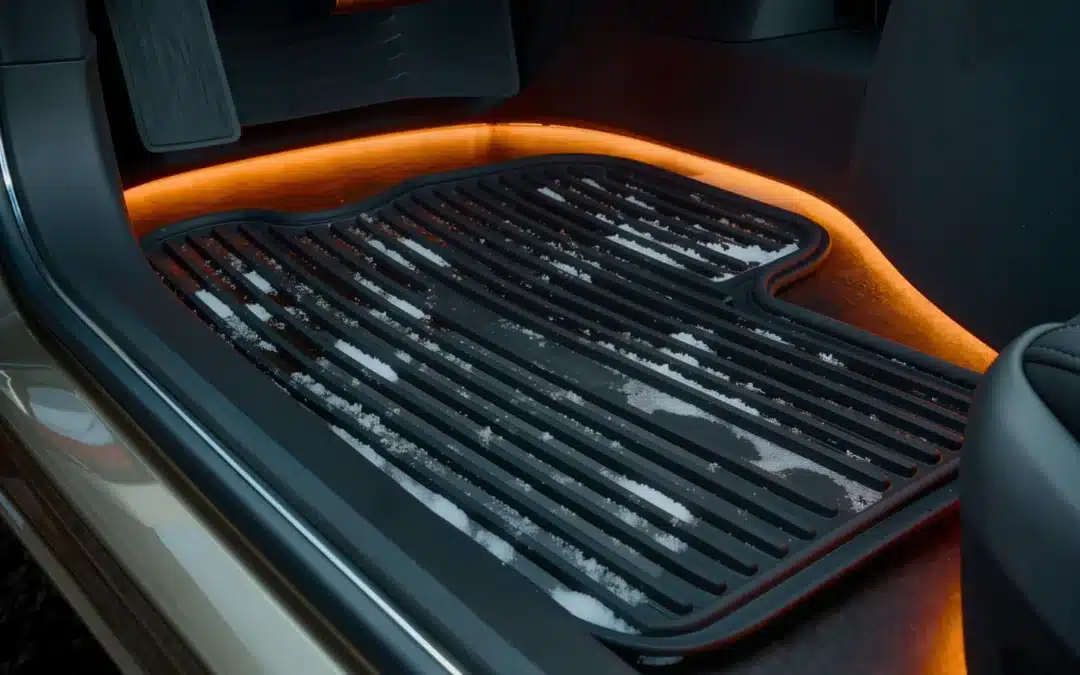
In short
- Rubber mats with a high edge are the safe default for winter. Textile mats are warmer for the eye, but they soak up water and salt.
- Wet carpet under a mat causes mould, fogged windows and smell. VW warns it can even damage electronics under the seats.
- Do the math: a set of mats costs less than one deep interior clean. Just fix them with the clips so they never slide under the pedals.
Snow melts off your boots and lands on the carpet. Every single trip. After two weeks the floor is wet, the windows fog up and the car smells like a wet dog. So which mat stops that: rubber or textile? Short answer: rubber for winter. Here is why, and when textile still makes sense.
The short answer: Rubber mats keep meltwater, mud and salt off the carpet. Textile mats suit the other three seasons.
What to look for
- A high edge (a tray shape). Meltwater and mud stay in the mat, not on the carpet.
- A non-slip underside. VW names this as a key feature of its winter mats.
- Custom fit for your model. Universal mats leave gaps and move around.
- Fixing points. The mat must lock into the clips on the driver side.
- Easy to clean. You should be able to pull it out, tip it and rinse it in a minute.
Rubber mats
Rubber is the winter standard. VW says it plainly on its accessory page: rubber mats keep out wet, mud and road salt, and you rinse them off and dry them fast. You tip the water out, wipe, done.
The catch? If you forget to empty the tray, the water sloshes over the edge on the next braking. Also, in summer a rubber mat can trap condensation under it. Take it out when the season ends.
Textile mats
Velour and loop-pile look better and feel warmer. Loop-pile holds dirt well. The price you pay is time: textile takes up water, and it dries slowly in a cold car. Salt stays in the fibres. Used all winter, it is the worst choice for a daily commuter.
Textile is fine in spring, summer and autumn. A good plan is two sets: rubber from November to March, textile for the rest.
Step by step: set up for winter
- Vacuum the old carpet and let it dry completely.
- Order mats made for your exact model and year.
- Check the retaining clips on the driver side. Clip the mat in until it clicks.
- Never stack a second mat on top of the first one. It can slide under the pedals.
- Empty and rinse the mats every week during snow season.
- Dry the mats before you put them back. Leave the doors open for ten minutes.
Mistakes to avoid
- Driving with wet mats for weeks. VW warns about mould, fogged windows and possible damage to electronics.
- Buying universal mats for a cheap price and then fighting with them every day.
- Putting a rubber mat over a textile one. The top one will creep.
- Washing mats and putting them back wet.
- Ignoring the pedal area. If a mat touches the pedals, stop and fix it.
Do the math: Example with round numbers, check the prices in your shop. Say a custom rubber set costs €40 and lasts 6 winters. That is about €7 per winter. A professional interior clean to fight mould and smell can easily cost several times more, and you may need it again. The mats pay for themselves the first time you skip that visit.
FAQ
Do rubber mats damage the carpet? No. They protect it. Just empty the water and take them out for a wash now and then.
Can I use rubber mats all year? Yes, but they can trap moisture in summer. Lift them from time to time and check the carpet.
Are universal mats OK? Only as an emergency. A custom fit is safer because it locks into the clips and has no gaps.
Ivan’s Take
Rubber for winter, no discussion. Buy the custom-fit set with a high edge, clip it in and rinse it weekly. Keep the nice textile mats for spring.
Sources: Volkswagen accessories: floor mats.
Published:
More from this section


The AvtoGear weekly
Once a week: new tests, the best deals and one useful tip for your car. Nothing extra.
