








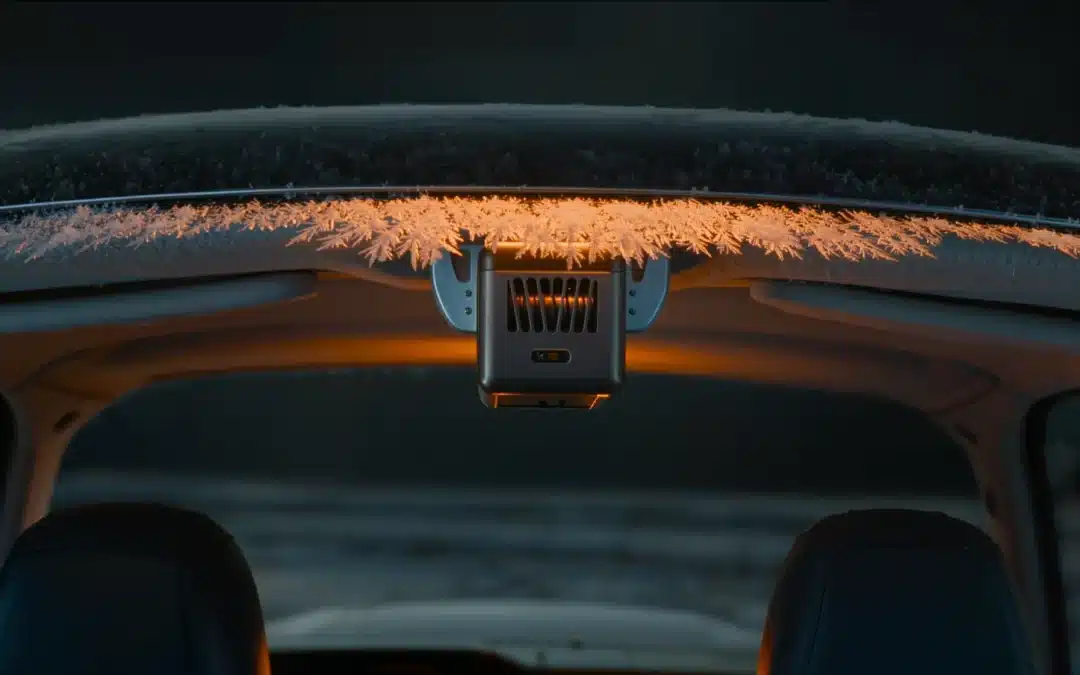
In short
- A fuel-fired parking heater warms the cabin and clears the glass before you get in. It runs on the car’s own petrol or diesel.
- In an ADAC cold-chamber test it took a car from minus 10 to 21 °C in 12 to 18 minutes. It burns about 0.5 litres per hour.
- Retrofitting costs from about €1,000 (ADAC) and roughly €1,300 to €1,800 for a VW Golf (Auto Bild).
Frozen windscreen, ice-cold seats, fogged glass after 200 metres. Every winter morning, the same ritual. A parking heater ends it. The car is warm and clear when you open the door. The catch? It is not a gadget. It is a real heater wired into your fuel line, and it costs well over €1,000. Here is what you get for the money, and when it is worth it.
How a parking heater works
The common type is a water heater. It takes a small amount of fuel from your tank, burns it in its own burner and heats the coolant. The car’s own fan then blows warm air into the cabin.
There are two ways to connect it. The island solution heats only the small heater circuit, so only the cabin gets warm. It needs less energy and suits short trips. The inline solution is connected to the big coolant circuit and also warms the engine. ADAC warns that an inline heater needs the carmaker’s approval. Fit the wrong one and you can get error messages from the engine control unit.
You start it with a timer, a remote with up to 1,000 metres range, or an app. Some systems calculate the start time from the outside temperature.
What the ADAC test showed
ADAC put three heaters in a cold chamber at minus 10 °C. Target: 21 °C inside.
- Webasto petrol heater in a Mazda CX-3 (inline, heats the engine too): 18 minutes.
- Eberspächer diesel heater in an Audi A6 (island solution): 12 minutes.
- Webasto electric heater on a 230 V socket, limited to 3 kW: 60 minutes.
Fuel use for the tested 5 kW units: about 0.5 litres per hour. ADAC’s advice is clear: 15 minutes of heating is enough even in very cold weather. Longer runs only waste fuel and battery.
One honest minus. ADAC measured that the heaters emit a lot of particles, especially when they switch on and off. That is also where the typical smell comes from. They are approved under ECE R122, which has no particle number limit.
Webasto or Eberspächer?
These are the two big names. Auto Bild also lists Truma, Defa and Calix. In function, Webasto and Eberspächer are very close. Both make petrol and diesel units, both offer remotes and apps.
So the brand is not the real choice. The real questions are: which kit is approved for your exact model, island or inline, and which installer near you has done your car before. Ask the heater maker for the vehicle-specific kit and get a fixed full price from the workshop.
What it costs
- ADAC: from about €1,000 depending on the car.
- Auto Bild: about €1,300 to €1,800 for a VW Golf. Bigger cars cost more because they need a stronger unit and the job is harder.
- Already have a fuel-fired auxiliary heater from the factory? ADAC says it can often be upgraded to a full parking heater for a few hundred euros.
Installation often takes several days. Trim comes off, new lines run to the tank, battery and fan, the control unit joins the car’s electronics. Makers and workshops strongly advise against doing it yourself.
The cheaper alternatives
- Electric engine preheater: much cheaper and easy to fit, but it needs a socket next to the car. ADAC and ÖAMTC found it must run at least 50 to 60 minutes.
- Air heater: common in vans and campers. It does not heat the coolant, uses its own fan and can run all night.
- Electric car? Use the built-in preconditioning from the app while it is still plugged in.
Mistakes to avoid
- Short trips after long heating. ADAC rule of thumb: drive at least as long as the heater ran, or the starter battery slowly goes flat.
- Running it for 30 minutes or more. 15 minutes does the job.
- Fitting an inline heater without the carmaker’s approval.
- Warming up the engine by idling instead. ADAC measured that a petrol car would need 38 minutes and a diesel 28 minutes of idling for a warm cabin, wasting 0.6 to 0.8 litres. It is banned in Germany and you risk a fine.
- Retrofitting an old car near the end of its life. The money will not come back.
Do the math: 15 minutes at 0.5 litres per hour is about 0.13 litres per start. At an assumed €1.70 per litre that is about €0.21 per morning. 100 frosty mornings cost you around €21 in fuel per season. The real price is the installation: €1,300 to €1,800 for a Golf. Spread over 8 winters, that is €160 to €225 a year for never scraping ice again. Part of it comes back: a pre-warmed engine skips the cold start, and Auto Bild notes the heater adds value to the car.
FAQ
Can I fit it myself? No. You work on fuel lines and the car’s electronics. ADAC says this is a job for specialist workshops.
Will it kill my battery? Only if you heat long and drive short. The burner, pump and fan run on electricity. Keep heating at 15 minutes and drive at least as long.
Island or inline? Island if you mainly want a warm cabin and clear glass, and you drive short trips. Inline if you also want to protect the engine from cold starts and your carmaker approves it.
Ivan’s Take
I would fit one only if the car sleeps outside all winter and I keep it for years. Then €1,500 buys a warm, clear car every single morning, and that is real safety, not luxury. For a city car with 5 km trips, buy a good scraper and keep the money.
Published:
More from this section


The AvtoGear weekly
Once a week: new tests, the best deals and one useful tip for your car. Nothing extra.
