








In short
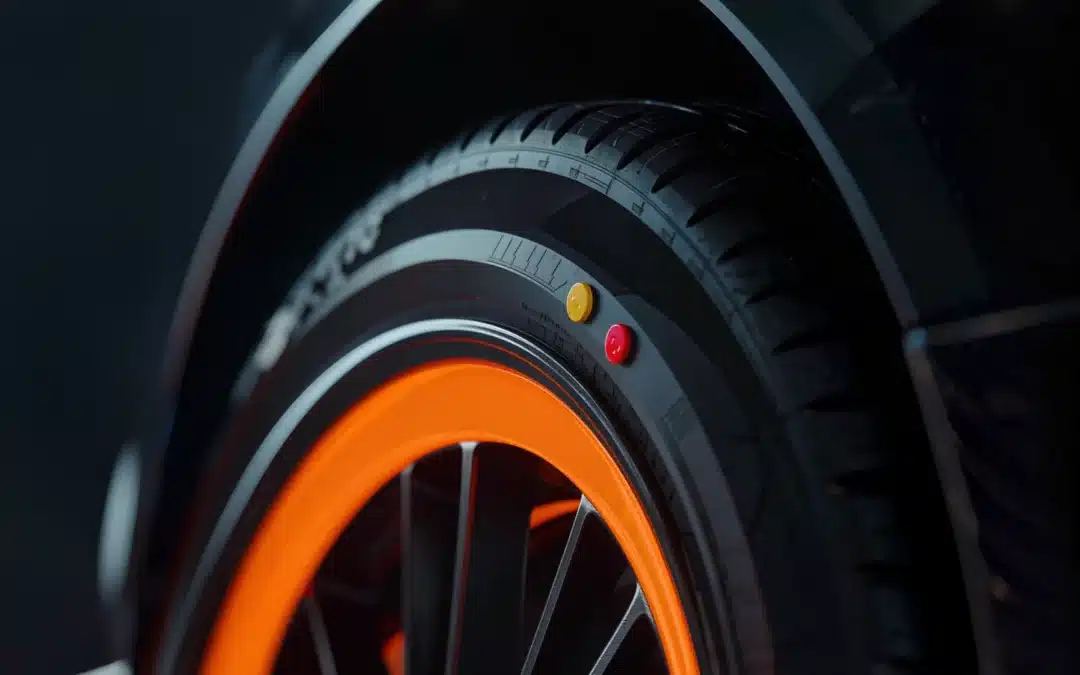
- The small yellow and red dots on a tyre sidewall are fitting marks from the manufacturer. They are not safety warnings.
- Yellow marks the lightest point of the tyre. Red marks the point where the tyre pushes hardest on the road as it turns.
- Money angle: a good fitter matches the dots to the wheel for free. A badly matched tyre can mean vibration, more balancing weight and a second visit.
You buy new tyres and spot a yellow dot and a red dot on the sidewall. A defect? No. They are instructions for the person who fits the tyre. Here is what they say.
The short answer: The yellow dot marks the lightest point of the tyre and the red dot marks where it pushes hardest on the road; fitters use them to match the tyre to the wheel.
What the dots are
No tyre is perfectly even. Tyre makers check each one and mark the sidewall where it deviates most. A wheel has its own small errors too. The idea is simple: fit the tyre so the errors cancel out instead of adding up.
The dots are painted on and can wear off. They say nothing about age, grade or condition.
Yellow dot: the lightest point
Yellow marks the lightest point of the tyre, as set by the manufacturer. A wheel is usually heaviest at the valve stem. So the fitter lines up the yellow dot with the valve. Light meets heavy.
The result: less balancing weight on the rim.
Red dot: where the tyre pushes hardest
Red marks the point of maximum radial force variation. That is how much the tyre pushes against the road as it turns under load. The fitter lines it up with the wheel’s point of minimum radial runout, the low spot.
If it ends up in the wrong place, you can feel vibration in the cabin. A wheel and tyre shop manager writing for Carscoops says the red dot matters more than the yellow one.
What to ask at the tyre shop
- Ask if the fitter matches the dots to the wheel. It takes a minute.
- Yellow dot to the valve. Red dot to the low spot of the wheel.
- After fitting, watch for vibration. If you feel it, go back and ask them to check.
Do the math: This is an example, not a quote: if a shop charges €10 to balance one wheel, a second visit for four wheels costs €40. Asking the fitter to match the dots costs €0 and can save that visit. I have no verified shop price, so put your own number in.
Limits and mistakes
- Some tyres carry only one dot, or none. Then there is nothing to match.
- The dots do not replace balancing. The wheels still need to be balanced.
- Dots do not tell you how old the tyre is. For that, read the DOT date code.
- A bent rim or a worn tyre will not be fixed by clever dot placement.
Pros and cons of asking for dot matching
- Pro: it is free and takes a minute.
- Pro: less balancing weight and a smoother ride.
- Con: no guarantee. Some shops skip it, and some tyres have no dots.
- Con: it is not a safety rule, so do not pay extra for it.
Who should care
Anyone buying new tyres or changing seasonal wheels who wants a smooth ride at the first attempt. If you only drive short city trips at low speed, you will hardly notice.
FAQ
What do the red and yellow dots on a tyre mean? They are fitting marks from the manufacturer, not safety warnings. The yellow dot marks the lightest point of the tyre and the red dot marks where it pushes hardest on the road.
How should the dots be lined up when fitting a tyre? Yellow dot goes to the valve and red dot to the low spot of the wheel. Ask the fitter to match them; it takes a minute and is free.
Do the dots tell me how old the tyre is? No. The dots say nothing about age, grade or condition; for age, read the DOT date code. Some tyres carry only one dot, or none.
Ivan’s Take
Worth a two-minute question. The dots are not a defect and not a safety warning. They are a free way to get a better fit. Ask for it, and do not pay extra for it.
Sources: Carscoops.
Published:
More from this section



The AvtoGear weekly
Once a week: new tests, the best deals and one useful tip for your car. Nothing extra.
