








In short
- Check tyre pressure on cold tyres, every two to four weeks, with your own gauge. Not once a year before the holiday.
- Auto Bild tested six gauges in 2026: Flaig 1.4 (€54), AstroAI 1.7 (€11), Michelin 5.0. The Michelin showed 0.0 bar.
- 0.4 bar too low costs up to 0.3 l per 100 km. At 15,000 km that is roughly €75 a year in fuel, plus faster tyre wear.
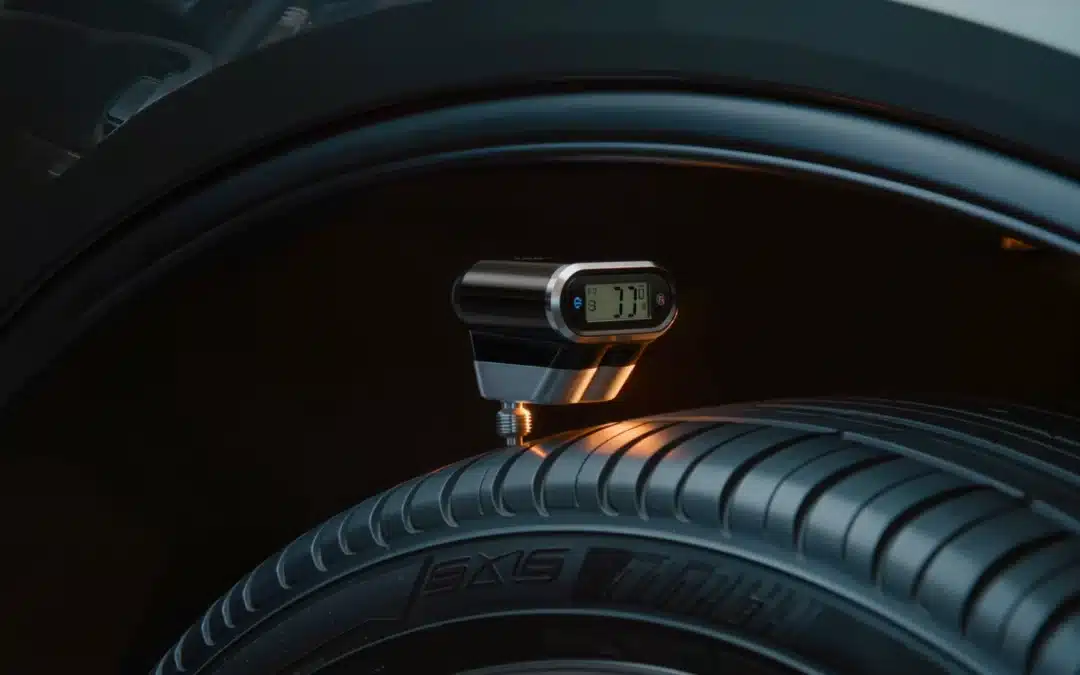
How much air is in your tyres right now? Most drivers have no idea. The petrol station gauge is often off, the dashboard warning only wakes up when you are already well below target. A good gauge costs €11. Here is how to use it and what the numbers mean.
The short answer: Check tyre pressure on cold tyres, every two to four weeks, with your own gauge. Not once a year before the holiday.
Why a few tenths of a bar matter
ADAC says half a bar too little already changes how the car drives. The braking distance can grow, the car corners worse, and at high speed the tyre can burst. At about 0.4 bar under target, wear goes up and rolling resistance adds up to 0.3 litres per 100 km.
Too much pressure is no fix. The ride gets harder and the tread wears unevenly in the middle.
Where to find the right number
The carmaker sets it, not the tyre brand. Look here:
- Sticker on the B-pillar when you open the driver’s door
- Inside the fuel flap
- Glovebox sticker
- Owner’s manual
Front and rear can differ. Summer and winter tyres usually share the value, but the table lists it per tyre size. Check the size on your sidewall.
How to measure it right
- Measure cold: before you drive, or after the car stood for a few hours. ADAC suggests around 20 degrees outside as the ideal.
- Unscrew the valve cap and press the gauge head straight on. If it keeps hissing, reposition it.
- Read the value. Compare with the sticker. Add or release air until it matches.
- Do all four wheels. The spare too, if you have one.
- Screw the caps back on. They keep dirt out of the valve.
Warm tyres read higher. Drive 20 minutes on the motorway and your numbers are useless. If you must correct warm, add about 0.2 to 0.3 bar over the sticker value and recheck cold later.
Loaded car, holiday, motorway
Load changes the target. ADAC says the right pressure can vary by up to 1 bar between empty and fully loaded. Many stickers give a second column for full load. Use it before the family trip. Some makers also ask for more pressure at sustained high speed.
ADAC’s expert also notes that makers often list only the comfort minimum. Adding 0.2 bar barely changes comfort but cuts fuel use, without losing safety. Stay inside what your sticker allows.
Gauge test: what to buy
Auto Bild tested six pressure gauges, published October 2026. Prices are the ones listed in the test.
- Flaig with bleed valve: grade 1.4 (very good), €54.05. All-metal body, very accurate results, lets you release air. The case is cheap plastic.
- AstroAI digital: grade 1.7 (good), €10.96. Lit display, switches between bar and psi, LED at the head. Best value in the test. No case.
- ATsafepro: grade 2.1 (good), €17.66. Rubber sleeve, good precision.
- Mannesmann: grade 3.3 (satisfactory), €3.28. Reads 0.1 bar too low, scale not in bar.
- Qwork: grade 3.6 (sufficient), €6.99. Up to 0.5 bar deviation.
- Michelin with tread depth gauge: grade 5.0 (poor), €37.30. Pressure measurement did not work.
My pick for most drivers is the AstroAI. Buy the Flaig only if you want a tool for life and a bleed valve. A brand name on the box guarantees nothing, as the Michelin shows.
Mistakes to avoid
- Trusting only the dashboard. A tyre pressure monitoring system is mandatory on new cars in the EU since November 2014. ADAC says it does not replace your own check.
- Measuring after a long drive.
- Using the number printed on the tyre sidewall. That is the maximum, not the target.
- Paying for nitrogen. A fill costs about €10, air is already around 78 percent nitrogen, and a sound tyre loses about 0.1 bar in three months either way (ADAC).
- Skipping the spare.
Do the math: Your tyres run 0.4 bar low and the car uses 0.3 l more per 100 km. At 15,000 km a year that is 45 litres. At €1.70 a litre (my example price) you burn about €76 a year for nothing, and wear the tyres faster. The AstroAI costs €10.96. It pays for itself in under two months. A Michelin that shows 0.0 bar costs €37.30 and saves you nothing.
FAQ
How often should I check tyre pressure?
ADAC says every two weeks. Auto Bild says every four weeks. Pick one and stick to it. Always before a long trip.
Is the petrol station air machine accurate?
Often good enough, but not always. Check the result with your own gauge once. Then you know.
Does the pressure change with the seasons?
Yes. Cold weather lowers it. Recheck when the temperature drops sharply, like now in November.
Ivan’s Take
A €11 gauge beats most things you can buy for the car. Check every month, cold, with the sticker value, and add 0.2 bar if you drive a lot. Skip the gadgets with big brand names unless they have a test grade behind them.
Sources: Auto Bild: Reifen-Luftdruckprüfer im Test; ADAC: Der richtige Reifendruck.
Published:
More from this section
The AvtoGear weekly
Once a week: new tests, the best deals and one useful tip for your car. Nothing extra.
