








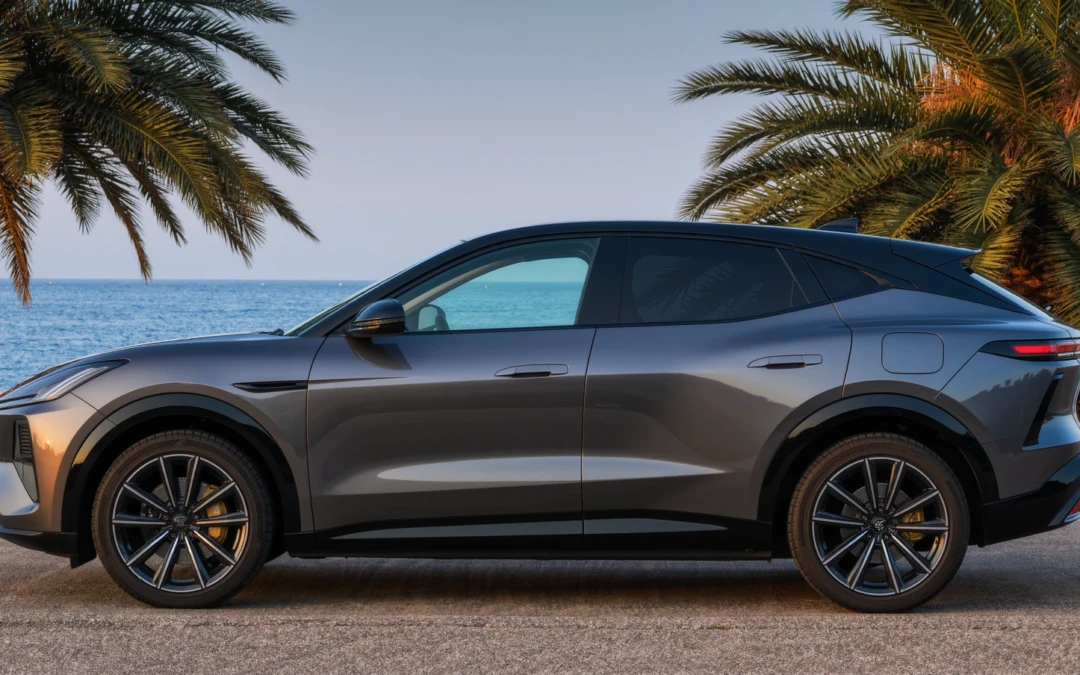
In short
- The windscreen and the side windows at the driver’s level may not be darkened afterwards (Rulebook on vehicle conditions, Art. 68(3)).
- Other windows may be darkened with no limit on the total light attenuation, but the vehicle must have two exterior side mirrors (Art. 68(4)).
- I found no fine that names tinted windows, so I do not assign one. The official route to a problem is a police-ordered control technical inspection (Art. 266).
Tint is where drivers copy the rule of the country they come from. Montenegro’s rule is short, and it is clearer than most: front glass stays clear, rear glass is free. Here is what the text says and what it does not say.
The rule in detail
The rule is in Article 68 of the Rulebook on the detailed conditions that vehicles in road traffic must meet (Official Gazette 2/15, amended by 73/23 and 62/24), issued under Article 242 of the Law on Road Traffic Safety. The windscreen and all other glass must allow full visibility without noticeable distortion of objects, must not alter the colours of traffic lights and signs, and must be resistant to weather and abrasion (para. 2).
Paragraph 3 says the windscreen and the side windows at the driver’s level cannot be subsequently darkened (“naknadno zatamnjena”). Paragraph 4 says the other windows on the vehicle may be darkened, without a limit on the total value of light attenuation, as long as two exterior side mirrors are fitted.
The word “subsequently” matters. In my reading it targets darkening added after production, for example a film. Factory glass is not “subsequent”. That is my reading, not an official interpretation.
The rule on mirrors adds a related point. Where the total light attenuation through the rear window is above 50%, or the body design makes an interior mirror unusable, the vehicle must have at least two exterior side mirrors (Art. 71).
Paragraph 5, as changed in 2024, exempts vehicles owned or used by the Government General Secretariat, the Ministry of Interior, the National Security Agency, the road traffic inspection of the transport ministry and the Military Intelligence Service.
Penalties: what I did and did not find
The articles with fines in the Law on Road Traffic Safety (Art. 315–326, with the 2026 ranges) list many offences. I did not find a point that names tinted glass. The law has a general provision on vehicles that do not meet the conditions of Article 242, but I do not apply a general fine to a specific accessory, because that would be a guess.
- Control technical inspection (Art. 266): a police officer or road traffic inspector can send a vehicle for it when there is reasonable doubt that it is technically defective. Only a vehicle that can move can be sent.
- Cost (Art. 267): the owner pays for the control inspection, except when the vehicle was sent by the police and found technically correct.
- Ignoring the order (Art. 319 pt 28): €300–600, and the 2026 text provides a 60-day ban on driving for this point.
- Annual inspection before registration (Art. 264): the vehicle goes to the technical inspection station before the registration request.
I did not read the inspection station’s checklist, so I cannot tell you whether tint is on it.
Foreign drivers and rental cars
I did not find a special rule for foreign-registered vehicles on glass. Article 283 says foreign-registered vehicles need valid registration documents, plates and the international sign, and must meet the ecological requirements for exhaust gases and noise. It does not mention glass either way.
A rental car comes with its factory glass, so this rarely matters to you. It matters if you add film to a rental car. Do not do it. The rental contract will cover the cost of restoring the glass.
Mistakes I see most
- Putting film on the front side windows because the rear ones are legal. Paragraph 3 covers the side windows at the driver’s level.
- Removing the exterior mirrors or relying on the interior mirror with dark rear glass. Paragraph 4 requires two exterior side mirrors when other windows are darkened.
- Assuming a foreign tint certificate settles it. I found nothing in the texts about foreign certificates.
The math
Do the math: No fine is named for tint in what I read, so the money is in the inspection. If a police officer orders a control inspection and your car is correct, you pay nothing. If you ignore the order, it costs €300–600 plus a 60-day driving ban, which the law makes mandatory for this point. Removing a film before the trip costs less than that.
FAQ
Can I tint the rear windows? Yes. Article 68(4) of the rulebook lets other windows be darkened without a limit, if two exterior side mirrors are fitted.
What about the front side windows? The side windows at the driver’s level cannot be subsequently darkened (Art. 68(3)).
Is there a percentage limit? For the other windows the text says there is no limit on the total value of light attenuation. For the windscreen and driver-level windows, the rule is not a percentage. It is a ban on later darkening.
Where to check
Rulebook on the detailed conditions that vehicles in road traffic must meet, Official Gazette of Montenegro 2/15, 73/23, 62/24 (Art. 68, 71); Law on Road Traffic Safety, Official Gazette 33/12, 58/14, 14/17, 66/19 and 111/2026 (Art. 242, 264, 266, 267, 283, 319), at sluzbenilist.me. The amendment of the rulebook of May 2026 (Official Gazette 71/2026) deals with dimensions and masses and does not change Article 68.
Ivan’s Take
Montenegro’s rule is simple, and I like simple. Leave the front glass the way the factory made it, and be careful with anything dark at the back. If you drive at night in the mountains, you want the least tint you can live with. A police officer will not argue with a clear windscreen.
Sources: Pravilnik o bližim uslovima koje moraju da ispunjavaju vozila u saobraćaju na putevima (Sl. list CG 2/15); Pravilnik o izmjeni Pravilnika o bližim uslovima … (Sl. list CG 62/24); Zakon o bezbjednosti saobraćaja na putevima (Sl. list CG 33/12, 58/14, 14/17, 66/19); Zakon o izmjenama i dopunama Zakona o bezbjednosti saobraćaja na putevima (Sl. list CG 111/2026).
Published:
More from this section
The AvtoGear weekly
Once a week: new tests, the best deals and one useful tip for your car. Nothing extra.
