








In short
- The law does not name roof boxes or bike racks. It sets limits for any load: within the vehicle’s load capacity, secured, not covering lights or number plates, and not over the allowed dimensions (Law, Art. 111).
- Overhang: at most 1 m at the front, and at the back at most one sixth of the vehicle length and never more than 1.5 m. Overhang must be marked (Art. 112).
- Fines since 7 August 2026: €300–600 plus 2 penalty points for overloading or an unsecured load, €150–400 plus 1 point for uncovered loose load or unmarked overhang.
Summer on the Adriatic means roof boxes, bikes on the back and surfboards. Montenegro does not have a special rule for any of them. It has a general rule for every load, and that rule is clear.
The rule in detail
Article 111 of the Law on Road Traffic Safety says a vehicle in traffic may not be loaded: 1) over the load capacity written in the registration certificate or the maximum axle load set by the manufacturer; 2) over the axle load set by technical norms or the maximum total mass; 3) over what the road allows under a traffic sign; 4) so that the vehicle with the load exceeds the maximum allowed dimensions.
The load must be placed and secured so that it stays in the position set at loading and so that it: does not endanger other road users or damage the road; does not reduce the stability of the vehicle or make driving harder; does not reduce the driver’s visibility; does not fall, spill or drag along the road; does not cover the lights, number plates and other prescribed marks; and does not pollute the environment. Loose load must be covered.
The roof limit itself is not in the law. It is the vehicle manufacturer’s figure for the roof, and I did not read it in any official text for this article. Check your manual.
Dimensions and overhang
- Width (Rulebook on vehicle conditions, Art. 16): 2.55 m for ordinary vehicles, including variable equipment for carrying load and all devices on the vehicle. Mirrors and similar indirect-vision systems are not counted.
- Height (Art. 17): 4.00 m maximum for motor and trailer vehicles, including the load equipment and devices on the vehicle.
- Front overhang (Law, Art. 112): the load on a motor vehicle may extend at most 1 m beyond the front of the vehicle.
- Rear overhang (Art. 112): at most one sixth of the vehicle length and at most 1.5 m, and the rest of the load must rest on the loading space.
- Marking (Art. 112): load that extends beyond the rear must be marked. On vehicles other than trucks and trailers that means red cloth, and in reduced visibility a red light or red reflective material. Load that sticks out more than 0.40 m sideways beyond the outer edge of the front or rear lights must be marked with a white light and a reflector at the front and a red light at the back.
Over-dimension or overweight vehicles need an oversize transport permit (Art. 114). The 2026 amendment changed the definition: the permit is needed when the load or the vehicle cannot be reduced by simple dismantling to the allowed mass, axle load or dimensions.
Fines
The ranges of the penalty articles were raised by the amendment of Official Gazette 111/2026, in force since 7 August 2026.
- Overloaded vehicle, or load over allowed dimensions (Art. 319 pt 8): €300–600 and 2 penalty points.
- Load not placed and secured as Article 111(2) requires, including a load that covers lights or number plates (Art. 319 pt 9): €300–600 and 2 penalty points.
- Loose load not covered (Art. 321 pt 15): €150–400 and 1 penalty point.
- Overhang beyond the Article 112 limits or not marked (Art. 321 pt 16): €150–400 and 1 penalty point.
Where the offence causes immediate danger or a crash, extra points apply under the same articles. I did not read the points thresholds, so I do not quote them.
Foreign drivers and rental cars
The rules speak of the driver and the vehicle in traffic on the road. They do not distinguish by nationality. A rental car has its own load limits in the registration certificate. Ask the rental company before fitting a roof box, because the rental contract may forbid it.
Mistakes I see most
- A bike rack that hides the rear number plate or tail lights. Article 111(2) bans a load that covers lights and number plates.
- Strapping a surfboard or long items so they stick out far behind without marking. Article 112 sets the limits and the marking.
- Treating the roof box as “part of the car”. The height limit of 4 m in Article 17 includes devices on the vehicle.
The math
Do the math: Overloading or an unsecured load costs at least €300 plus 2 points, double the old minimum of €150 under the 2019 text. An unmarked overhang costs at least €150 plus 1 point. A strap or a red cloth is the cheap part of the trip.
FAQ
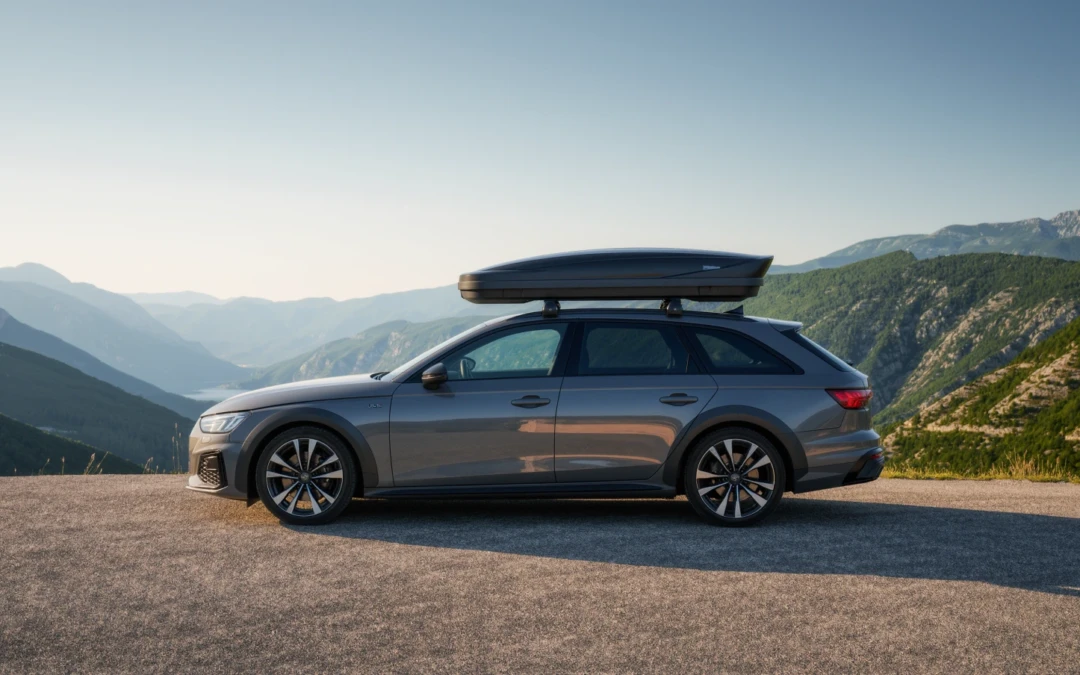
Is a roof box legal? The law does not ban it or name it. A roof box is a load under Article 111, so it must be secured, within the allowed dimensions and must not cover lights or plates.
Can the bikes cover my number plate? No. Article 111(2) bans a load that covers the lights, number plates and other prescribed marks. Use a rack that leaves them visible.
How far can my load stick out? At the front 1 m. At the back at most one sixth of the vehicle length and at most 1.5 m, marked as the law requires.
Where to check
Law on Road Traffic Safety, Official Gazette of Montenegro 33/12, 58/14, 14/17, 66/19 and 111/2026 (Art. 111, 112, 114, 319, 321); Rulebook on the detailed conditions that vehicles in road traffic must meet, Official Gazette 2/15 and amendments (Art. 16, 17), at sluzbenilist.me.
Ivan’s Take
Most of my packing advice is common sense, and the law agrees. Keep the plate and the lights visible, tie everything down, stay inside the manufacturer’s roof limit and measure the height with the box on before you enter a garage or tunnel. You pay once for straps. You pay many times for a fine.
Sources: Zakon o bezbjednosti saobraćaja na putevima (Sl. list CG 33/12, 58/14, 14/17, 66/19); Zakon o izmjenama i dopunama Zakona o bezbjednosti saobraćaja na putevima (Sl. list CG 111/2026); Zakon o izmjenama i dopunama Zakona o bezbjednosti saobraćaja na putevima (Sl. list CG 66/19); Pravilnik o bližim uslovima koje moraju da ispunjavaju vozila u saobraćaju na putevima (Sl. list CG 2/15).
Published:
More from this section
The AvtoGear weekly
Once a week: new tests, the best deals and one useful tip for your car. Nothing extra.
