








In short
- A dash cam is not banned in Sweden. What matters is whether you stay inside the private exemption from GDPR and the Camera Surveillance Act.
- IMY says the exemption does not apply if you plan to spread the footage to a wider circle, for example on social media.
- Keep recordings no longer than needed (IMY rule of thumb: three days) and never post footage to identify a suspect.
Sweden is relaxed about a dash cam as a gadget, but strict about what you do with the footage. The authority that decides is IMY, the Swedish Authority for Privacy Protection. Below is what its guidance on car cameras says (page last updated 17 December 2025) and what the traffic rules add on top.
The rule in detail
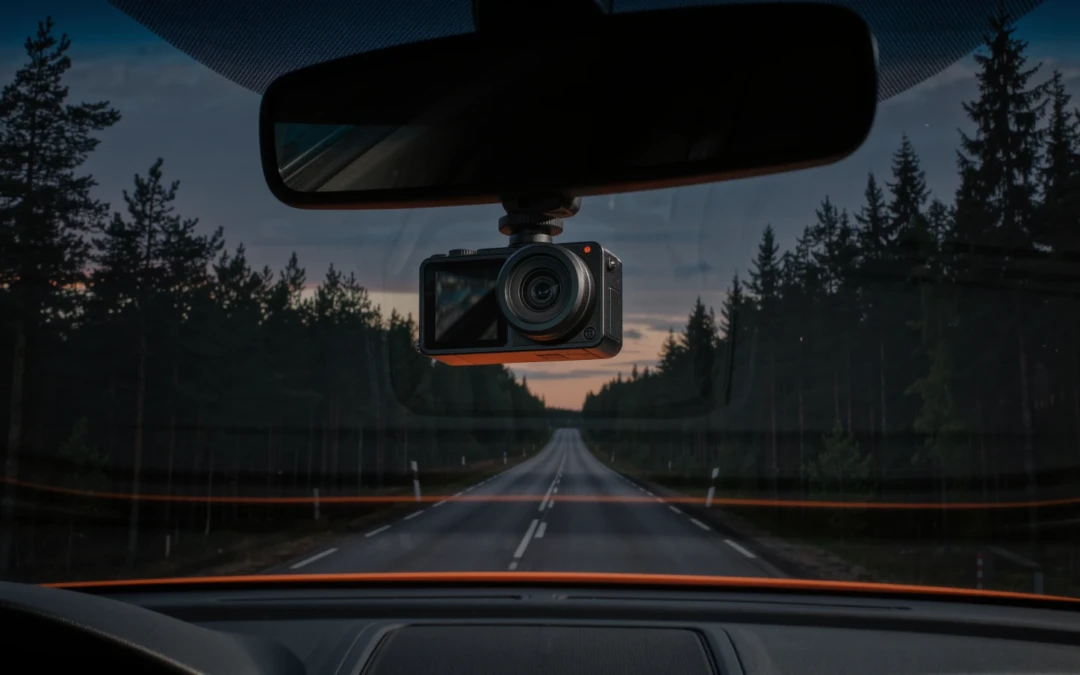
IMY describes dash cams as cameras mounted in or by the windscreen to document accidents or crimes for insurance purposes, or just for fun. Whichever camera you use, you must first decide whether the so-called private exemption (privatundantaget) applies. If it does, you do not have to follow the GDPR or the Camera Surveillance Act (kamerabevakningslagen).
The test is the purpose of the filming. IMY gives one clear example: if the purpose is to spread the material to a wider circle of people, for instance by posting it on social media, the private exemption does not apply.
A camera in or on a vehicle will inevitably process personal data, mainly recordings of people who can be identified. If the exemption does not apply, you are the data controller and must be able to show that you follow the GDPR and the Camera Surveillance Act.
If the private exemption does not apply
- Legal basis: IMY says the most common one is a balancing of interests. You weigh your need to film against the intrusion into other people’s privacy. The privacy interest is higher where many people move and close to people’s homes.
- Information: you must tell the people you film that you process personal data, including how long it is stored, who is responsible, your legal basis and the rights of the people in the picture.
- Storage: you may not keep the material longer than necessary for the purpose. IMY says three days is a good rule of thumb.
- Sharing: material from camera surveillance is as a rule covered by confidentiality. You may not post it on social media to identify a possible offender. You may hand it to law-enforcement authorities such as the police if it is needed to investigate a crime that can lead to a prison sentence.
What the vehicle rules add
The Traffic Ordinance (Trafikförordning 1998:1276, consolidated up to SFS 2026:1052) says in chapter 4, section 10 e that a driver may use a mobile phone or other communication equipment only if it does not impair the driving, and never in a way that means holding it in the hand. A camera that is fixed and records on its own is fine. Handling a phone that you use as a camera is not.
The Transport Agency’s rules for cars first used from 1 July 2010 (TSFS 2016:22, consolidated up to TSFS 2025:8) say a vehicle may not have any device that can cause disturbing reflections or glare for other drivers. Mount the camera so that it does not reflect light towards the road.
Fines
I found no fixed penalty for owning or using a dash cam in the Prosecutor General’s list of fixed-penalty fines (ordningsbot, SFS 2024:1084). It is a data-protection question, not a traffic offence, and I did not find an official amount for it, so I do not give one. The one traffic amount that touches the topic is the phone:
- Driving while using a hand-held phone or other hand-held communication equipment (Trafikförordningen 4 kap. 10 e §): 1,500 SEK (about €136 at the Riksbank rate of 11.0628 SEK per euro on 12 November 2026).
Foreign drivers and rental cars
IMY’s guidance does not distinguish by nationality and I found no separate rule for visitors. If you film in Sweden with your own camera, treat the guidance above as the standard, also in a rental car: the camera is yours, so the responsibility is yours.
Mistakes I see most often
- Posting a near-miss clip with identifiable people or cars on social media. By IMY’s example that takes you outside the private exemption.
- Keeping months of footage just in case, instead of a short loop.
- Using a phone in the hand as a camera while driving, which is the 1,500 SEK offence.
Do the math: A dash cam with a loop recording costs you nothing in fines. A phone in your hand costs 1,500 SEK (about €136), and that is more than many cameras cost. Buy the camera, fix it to the windscreen, and the money question disappears.
FAQ
Is a dash cam legal in Sweden? IMY does not ban it. Its guidance says that whether the GDPR and the Camera Surveillance Act apply depends on whether the private exemption covers your purpose.
Can I give the footage to the police? Yes. IMY says you may hand material to law-enforcement authorities if it is needed to investigate a crime that can lead to a prison sentence.
Can I post a video of a bad driver online? IMY says you may not spread surveillance footage on social media to identify a potential offender.
Where to check
IMY, imy.se, section Kamerabevakning, page Bilkameror. Trafikförordningen 4 kap. 10 e § on riksdagen.se. Fixed-penalty list: aklagare.se, Ordningsbotskatalog.
Ivan’s Take
I would put a dash cam in a Swedish car tomorrow, with a short loop and one rule: the footage goes to the insurer or the police, never to Facebook. The camera is cheap. A privacy dispute over a viral clip is not worth the likes.
Sources: IMY – Bilkameror (car cameras); Trafikförordning (1998:1276) – riksdagen.se; Ordningsbotskatalog – aklagare.se; TSFS 2016:22 – Transportstyrelsen; Riksbank exchange rates.
Published:
More from this section

The AvtoGear weekly
Once a week: new tests, the best deals and one useful tip for your car. Nothing extra.
