








In short
- The Código da Estrada contains no winter-tyre or snow-chain obligation. What it regulates is lights, speed and grip.
- Lights are mandatory in daytime when snow, fog, heavy rain, smoke or dust reduce visibility (art. 61); wrong use costs €30 to €300.
- Not moderating speed on wet, muddy or low-grip roads costs €120 to €600 (art. 25).
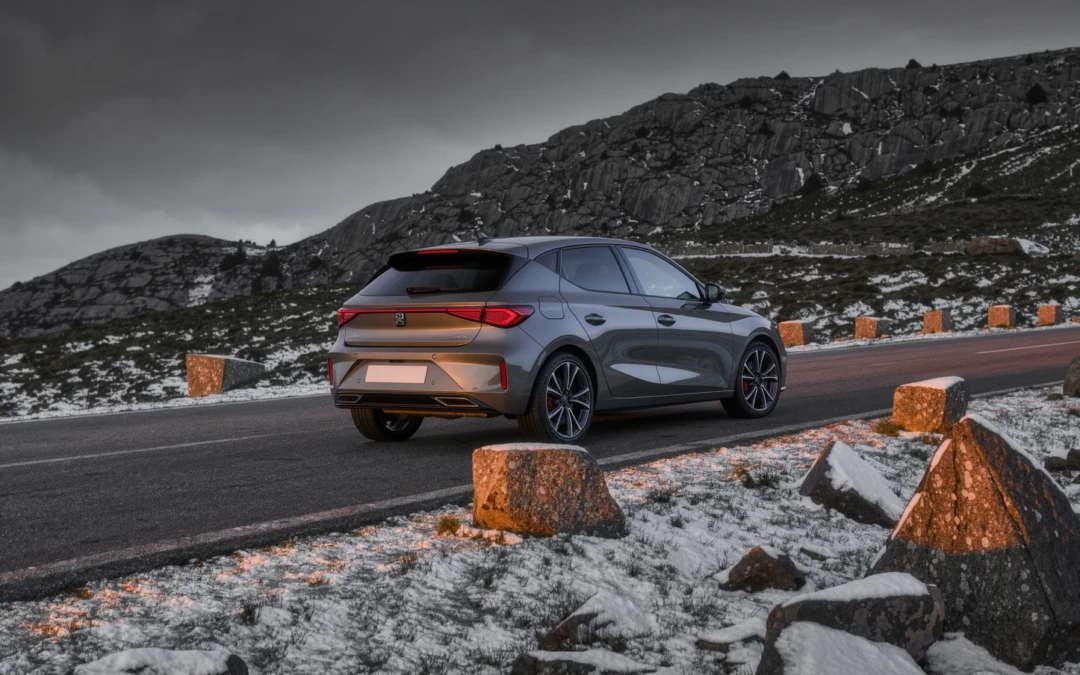
If you plan to drive to the Serra da Estrela in January, the first surprise is a negative one: there is no winter-tyre law in the Road Code. That does not mean there are no winter rules. The ones that exist are about lights and speed, and they are enforced.
What the Code says about winter
I searched the full consolidated text of the Código da Estrada, in the version updated up to Law 24/2025. It contains no article that makes winter tyres or snow chains compulsory, and none that bans them. The word snow appears only in the lights rule (art. 61). Road signs and instructions from the road operators can add local requirements; I could not read the consolidated signalling regulation, so I do not state what signs require. Check the operator’s information before a mountain trip.
Lights in bad weather (art. 61)
From dusk to dawn, and also during the day whenever weather or environmental conditions make visibility insufficient, in particular fog, heavy rain, falling snow, clouds of smoke or dust, drivers must use lights. Dipped beam is the rule where lighting gives at least 100 m of visibility, when the vehicle is within 100 m of the one ahead, and when approaching a closed level crossing. Full beam is used in the remaining cases. Fog lights are used when conditions require it, on vehicles that have them.
Fog lights are forbidden when the weather does not justify them. During the day, dipped beam is mandatory in signposted tunnels and on reversible-direction roads (art. 61, para. 4).
Speed and grip (arts. 19, 24, 25, 26)
- Reduced visibility is defined: when the driver cannot see the carriageway across its full width over at least 50 m (art. 19)
- You must adjust speed to weather and environmental conditions, the state of the road and the vehicle, so you can stop within the free and visible space ahead (art. 24)
- You must especially moderate speed on stretches that are wet, muddy or offer poor grip, on steep descents and on bends (art. 25)
- Driving so slowly that you cause unjustified hindrance is also an offence (art. 26)
Fines
- Wrong use of lights in conditions of poor visibility, or fog lights without justification (art. 61): €30 to €150
- Full beam when crossing other vehicles, people or animals, or within 100 m of the vehicle ahead (art. 61, para. 6): €60 to €300
- Not adjusting speed to weather, vehicle or road (art. 24): €120 to €600
- Not moderating speed on wet, muddy or low-grip stretches (art. 25): €120 to €600
- Driving so slowly that you hinder others (art. 26): €60 to €300
- Breakdown without proper action (art. 87): €60 to €300, or €120 to €600 on a motorway
Foreign drivers and rental cars
These rules apply to every driver on Portuguese roads. A rental car comes with the equipment the rental company chose, not with a legal winter kit, because the Code does not define one. If you rent in the mountains in winter, ask the desk what the car has and what the rental terms say about tyres and chains.
Mistakes I see most often
- Fog lights switched on in the rain or after the fog is gone
- Driving in falling snow with daytime running lights only, so the rear of the car is dark
- Keeping summer speed on a wet mountain road because the road looks clear
Do the math: The lights fine starts at €30. The speed fine starts at €120 and goes up to €600. A moment’s attention to the switch and the speedometer is free. If you skid because you did not moderate speed, the fine is the cheap part of the day.
FAQ
Are winter tyres mandatory in Portugal? Not under the Código da Estrada. I found no article that requires them.
Are snow chains mandatory? The Code has no general chain obligation. I could not verify sign-based requirements in the consolidated signalling rules, so follow any sign you meet and check the road operators.
When must I use lights in daytime? When weather conditions such as fog, heavy rain, falling snow, smoke or dust make visibility insufficient (art. 61), and in signposted tunnels.
Ivan’s Take
Do not read this as permission to drive on summer tyres on a frozen pass. The law is silent; the road is not. I check the weather, drive slower than the limit and keep my lights on. If I want chains in the boot, I buy them for my own peace of mind, not for the police.
Sources: Código da Estrada (DL 114/94), versão atualizada até Lei n.º 24/2025 – arts. 19, 24, 25, 26, 61.
Published:
More from this section
The AvtoGear weekly
Once a week: new tests, the best deals and one useful tip for your car. Nothing extra.
