








In short
- One rule decides everything: a part that is not approved for your car can void the road permit and your insurance cover.
- Safe upgrades: roof boxes within the roof load, approved LED bulbs, wraps, rear-window tint. Risky ones: underglow, front-window tint, no-name lights.
- The money angle: a €150 part that fails an inspection costs you the part, the refit and the re-test.
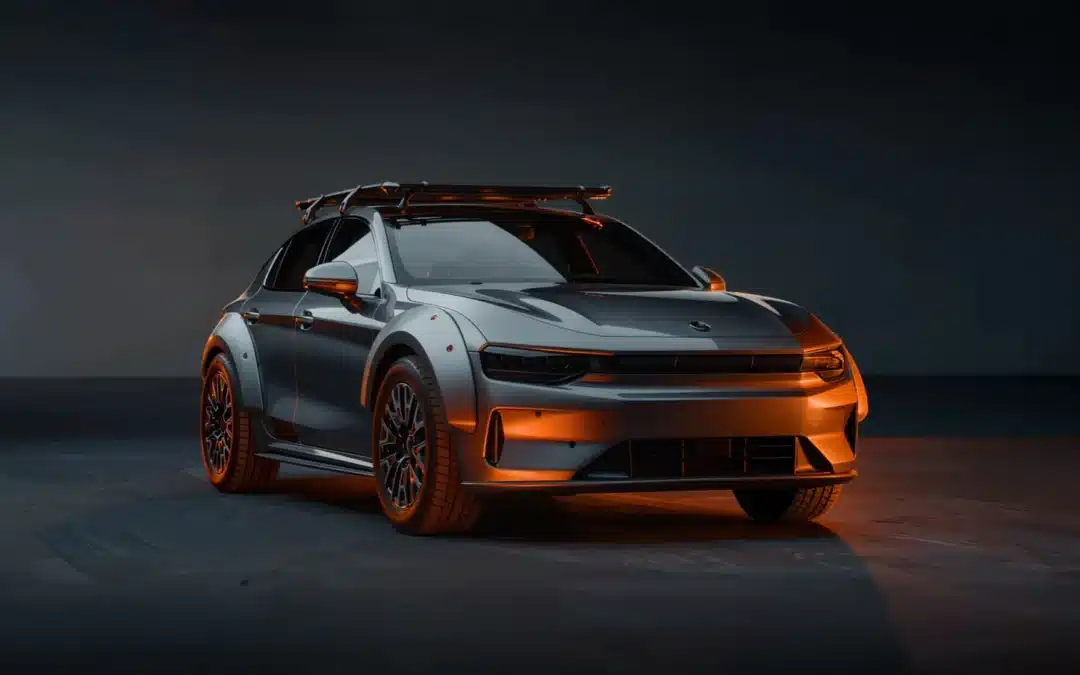
Want to change how your car looks without a fight at the next inspection? Good. The problem is simple: the internet sells everything, the law allows only part of it. I buy and sell car parts for a living, so I see what comes back when a part turns out to be illegal. Here is a plain map of what you can change on the outside of your car in Europe, what needs paperwork and what to leave alone.
The one rule behind everything
A road permit is tied to the car as it was approved. Change something that alters the approved type, endangers others or makes the car louder or dirtier, and the permit can lapse. In Germany this is written in §19 StVZO, and the lapse happens at the moment you fit the part, not when someone catches you.
What does that mean in practice? Two things. An inspector can refuse the car. And after an accident your insurer can ask whether the car was still legal. Countries differ in the details, but the logic is the same all over Europe. Check the national authority of the country where you drive.
Germany changed the paperwork in 2025
Since 20 June 2025 the old Teilegutachten (part report) can no longer be issued for new parts. Manufacturers now need a national part type approval, the Teiletypgenehmigung, from the KBA. For you this means fewer entries in the papers and a six-digit KBA number on the part.
- Parts with a Teilegutachten issued before 20 June 2025 can still be sold and fitted with an inspection until 19 June 2028.
- From 20 June 2028 such parts need an individual inspection under §21 StVZO.
- Existing ABE approvals stay valid.
Source for the dates is AUTO ZEITUNG. My advice: keep the document that came with the part in the glovebox. No paper, no proof.
Window tint: the clearest numbers
The UK gives us the cleanest official rule. For cars first used on or after 1 April 1985 the windscreen must let through at least 75% of light and the front side windows at least 70%. For older cars both must let through 70%. For the rear windscreen and rear passenger windows there are no rules.
Police and DVSA examiners measure with a light meter. Too dark means a prohibition notice, a penalty notice or a court summons. It is also illegal to fit or sell such glass. Rear tint is the safe upgrade. Front tint is the one that gets you stopped. Other countries set their own limits, so do not assume the UK numbers apply on the continent.
Headlight bulbs: where cheap LED hurts
This is the upgrade I would warn about first. A headlight housing is tested with a specific type of bulb. Swap a halogen bulb for a random LED and the beam pattern changes. Oncoming drivers get blinded, and your car may not be legal any more.
- Look for an ECE R37 approval or an approval that names your car.
- Osram sells H7 and H4 Night Breaker LED retrofits as approved for more than 200 models. Check the list for your car first.
- There is no approval for fog lamps with these bulbs, so leave them as they are.
- If the packaging says ‘not for road use’, believe it.
I could not confirm from official sources what exactly happens to the permit in every country, so ask TÜV, DEKRA or your national test centre before you buy.
Underglow and coloured light
In Germany the rules allow white light to the front, yellow indicators to the side and red to the rear. Underglow does not fit this. It falls under §49a StVZO, which forbids other lighting devices. Fine guides list around €20, but the bigger risk is the permit. Interior ambient light in the footwell or dashboard is a different story. Just make sure nothing shines outside when you open the door.
Wraps and colour changes
A wrap is the cheapest way to change the look and it protects the paint. Do you have to register the new colour? In Germany the legal text on changes does not list colour as something to report at once. ADAC advice, quoted by PC-Welt, says to have the new colour entered when the car is re-registered or other changes are entered anyway. Chrome foils can cause trouble at the inspection, and the foil must not hurt road safety. The ten-day deadline you may read on some sites I could not confirm, so I leave it out. One call to the registration office settles it.
Roof boxes and racks
This is the upgrade nearly everybody needs once a year. Rules that matter:
- Find the maximum roof load in the car manual. Rack, box and cargo all count against it.
- The box itself has its own limit, usually between 50 and 75 kg.
- Lights and number plate must stay visible.
- Fit the straps and mounting exactly as the maker says.
- There is no legal speed limit for a roof box, but KAMEI recommends 130 km/h at most.
A box counts as cargo. Badly secured cargo is a traffic offence in Germany. And a loaded roof raises the centre of gravity and the braking distance, so drive calmer.
Spoilers, body kits and other bolt-ons
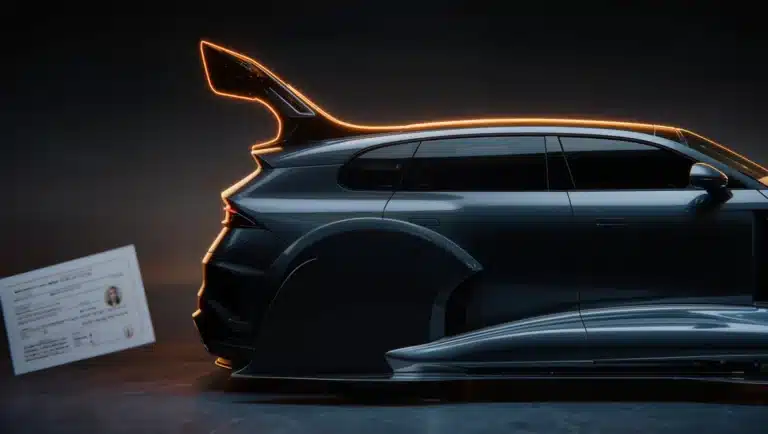
Anything that changes the shape of the car, its width, its lighting or its safety zone needs a document: an ABE, a type approval or an individual inspection. Cosmetic stick-on trims are usually harmless. Rigid parts at the front or sides are where inspectors look closely. If the seller cannot show a paper for your exact model, walk away.
How to check any part in 10 minutes
- Step 1: find the approval number, E-mark or KBA number on the part or in the listing.
- Step 2: check that the document names your make, model and year, not just a similar car.
- Step 3: ask the seller what happens if the part is refused at inspection. A serious seller answers fast.
- Step 4: call your test centre (TÜV, DEKRA, MOT station or your national equivalent) and ask if an entry or inspection is needed.
- Step 5: keep the paper with the car, plus a photo of it on your phone.
Pros and cons of the smart upgrades
- Pro: roof box, rear tint and a wrap are cheap compared with their effect and mostly reversible.
- Pro: approved bulbs give you real extra light without legal risk.
- Con: the paperwork takes an evening, and some countries want an entry or an inspection.
- Con: cheap look-alikes fill the market, so you have to check each listing yourself.
Quick check before you buy
- Does the part have an approval number or an E-mark for my car?
- Does the seller give me the paper in writing?
- Do I need an inspection after fitting?
- Does it change lights, width, height or sound?
- Will my insurer be told?
Mistakes to avoid
- Buying by photo and price only.
- Trusting ‘street legal’ in the product title. Anyone can write it.
- Throwing away the approval paper.
- Fitting the part first and asking later.
- Forgetting that a rule from another country does not travel with you.
Cheap parts bite hardest in the part nobody checks: lights. Everything else is mostly looks.
Do the math: Say you buy an unapproved lighting set for €150 and it fails the inspection. You pay for the original bulbs again (about €30 in my example), the fitting time and a second test visit. Even with only €50 of extra costs your ‘saving’ is gone, and that is before any fine. An approved part at €190 would have been cheaper. These are example numbers, not a price list.
FAQ
Can I wrap my car in any colour? Yes in principle, but check how your country handles the colour entry in the papers, and avoid anything that dazzles or copies emergency vehicles.
Is a roof box legal? Yes. Respect the roof load from the manual, the box limit and keep lights and plate visible.
Are LED bulbs allowed in my old headlights? Only if the bulb is approved for your car or for that headlight type. Otherwise the answer is no.
More practical guides for the outside of your car are collected in the Exterior & Styling section.
Ivan’s Take
My rule is simple: if the part comes with a paper for my exact car, I buy it. If not, I skip it, however nice it looks. A roof box and a wrap are the smart upgrades. Cheap LED bulbs and underglow are where people lose money.
Sources: GOV.UK – Tinted vehicle windows: the law; AUTO ZEITUNG – Teilegutachten abgeschafft; ADAC – Dachlast; auto motor und sport – Osram Night Breaker LED.
Published:
More from this section
The AvtoGear weekly
Once a week: new tests, the best deals and one useful tip for your car. Nothing extra.
