








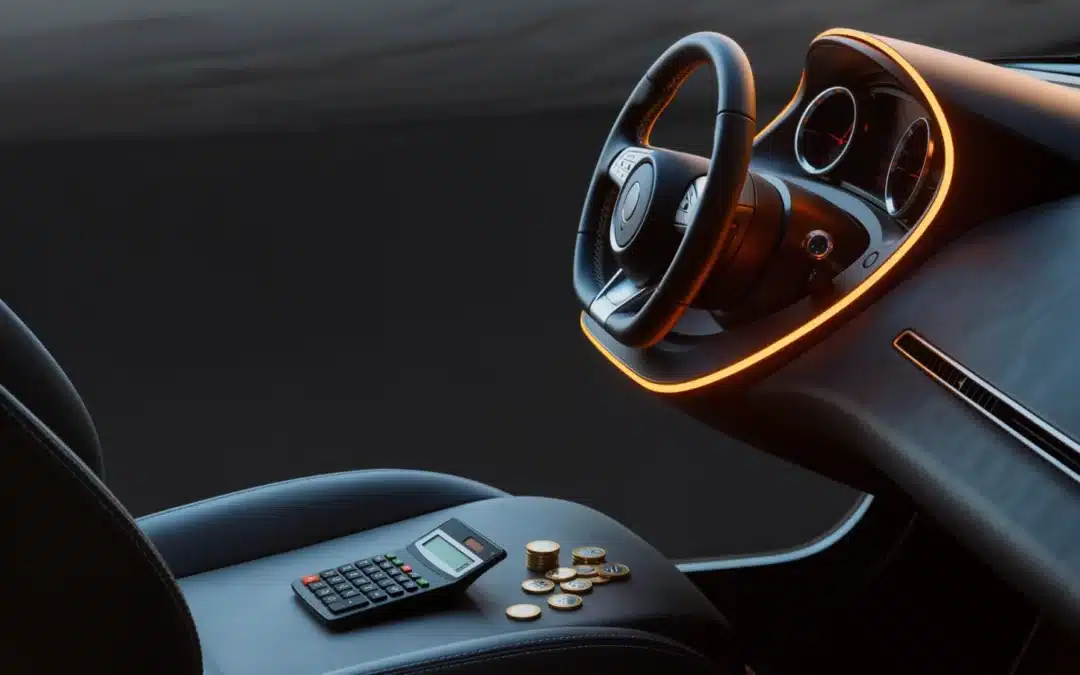
In short
- Since 1 January 2026 the German commuter allowance is 38 cents for every full kilometre of the one-way trip, from km 1. Until 2025 the first 20 km got 30 cents.
- It is a deduction, not cash. It lowers your taxable income, and only once you pass the €1,230 flat amount for work expenses.
- With 220 office days the commute alone passes that line from 15 km. Below it, the claim pays only with other work expenses.
Do you drive to work in Germany? Then the tax office gave you a raise. Small, but free, and only if you claim it. Many articles show big numbers. Most forget one line in the tax rules that eats a large part of the gain. I checked the figures against the ADAC and did the maths properly.
What changed
Until the end of 2025 the allowance (Entfernungspauschale, often called Pendlerpauschale) was 30 cents per kilometre for the first 20 km and 38 cents from km 21. Since 1 January 2026 it is 38 cents for every full kilometre. The new rate applies for the first time in the 2026 tax return, filed in 2027. Your 2025 return still uses 30 and 38 cents. The legal basis is section 9 of the Income Tax Act (EStG).
How the allowance works
- Only the one-way distance between home and your first place of work counts. Drive home for lunch? Still one trip a day.
- The distance is rounded down to full kilometres and measured along the shortest road connection.
- Only days you actually went to the workplace count. Weekends, public holidays, leave, sick days and home-office days are out.
- Car, motorbike, bike, e-bike, train, on foot or car pool: the rate is the same. No fuel receipts needed.
- Full time or part time does not matter. Self-employed people claim it as a business expense.
Limits and proof
Is there a cap? With your own car, no. With public transport the allowance is capped at €4,500 a year, but higher proven ticket costs can be claimed in full. Below €4,500 you normally need no proof. Claim more than 230 trips a year on a five-day week, or 280 on a six-day week, and the tax office wants a logbook or an employer certificate.
Does your employer pay toward a Deutschland-Ticket or give you a tax-free job ticket? Then you must declare it, and it reduces the allowance you can deduct.
The catch: the €1,230 flat amount
Every employee automatically gets €1,230 a year for all work expenses, no receipts needed. The commuter allowance only saves extra tax once your expenses go above that line. With 220 office days, 15 km is where commuting alone gets there: 15 × €0.38 × 220 = €1,254. Below 15 km the claim helps only if you have other work expenses, such as work tools, training or professional books.
And the money you get back is not the deducted amount. The allowance lowers your taxable income. Your real saving is that amount times your personal tax rate.
Home office and commuting
You can use the €6 a day home-office allowance and the commuter allowance in the same year, but normally not on the same day. Morning at home, afternoon meeting in the office? That day counts only for the commuter allowance. The home-office allowance is capped at €1,260 a year, or 210 days.
What foreign drivers must know
The allowance is part of German income tax. It only matters if you file a German tax return. If you do, it works the same way whatever plate is on your car. What counts is the one-way distance to your first workplace and the days you really went there.
Mistakes to avoid
- Counting both ways. The law counts one way only.
- Using 250 or 365 days. Leave, sick days and home office are out.
- Expecting €1 back for every €1 deducted. You get back your tax rate on it.
- Forgetting the €1,230 flat amount. Short commutes alone often stay under it.
- Not declaring a job ticket or an employer ticket subsidy. It has to be stated.
Do the math: 30 km commute, 220 office days, no other work expenses. Old rule (2025): 20 × €0.30 × 220 + 10 × €0.38 × 220 = €1,320 + €836 = €2,156. New rule (2026): 30 × €0.38 × 220 = €2,508. Extra deduction: €352, the maximum for anyone at 20 km or more. At a 30% tax rate that is about €106 back. Now 15 km: 2025 gave €990, under the €1,230 flat amount, so no effect. 2026 gives €1,254, only €24 above it, about €7 back at 30%. The 220 days and the 30% rate are my assumptions.
FAQ
Does the new rate apply to my 2025 tax return? No. It counts from the 2026 tax year, with the return filed in 2027.
Do I get more with a big car or an EV? No. The allowance depends on distance and days, not on the vehicle.
Is it paid out in cash? No. It lowers taxable income. Your refund depends on your tax rate and on whether you pass the €1,230 flat amount.
Where to check the official rules
The rule is in section 9 of the Income Tax Act (EStG) on gesetze-im-internet.de. The Federal Ministry of Finance and the ADAC explain the 2026 rate with examples.
Ivan’s Take
Is it worth claiming? Yes, it takes ten minutes. Is it a big relief? For a 15 km commute it is pocket money, from 20 km it is about €100 a year. I enter the exact distance and check the office days against my calendar.
Sources: ADAC: Pendlerpauschale 2026; EStG §9 (gesetze-im-internet.de); ADAC: Das ändert sich 2026 für Autofahrer.
Published:
More from this section

The AvtoGear weekly
Once a week: new tests, the best deals and one useful tip for your car. Nothing extra.
