








In short
- France has no dedicated rule for private dash cams. The data protection authority (CNIL) said in February 2025 that there is no specific legal framework and that it is preparing recommendations.
- No fine in the Code de la route is named for owning or mounting a dash cam. The road rules that matter are general: do not reduce your view, and do not keep a working screen in your field of view that is not a driving or navigation aid.
- Filming is one thing, publishing is another: Service-Public says a person recognisable and alone in the image can object to its publication.
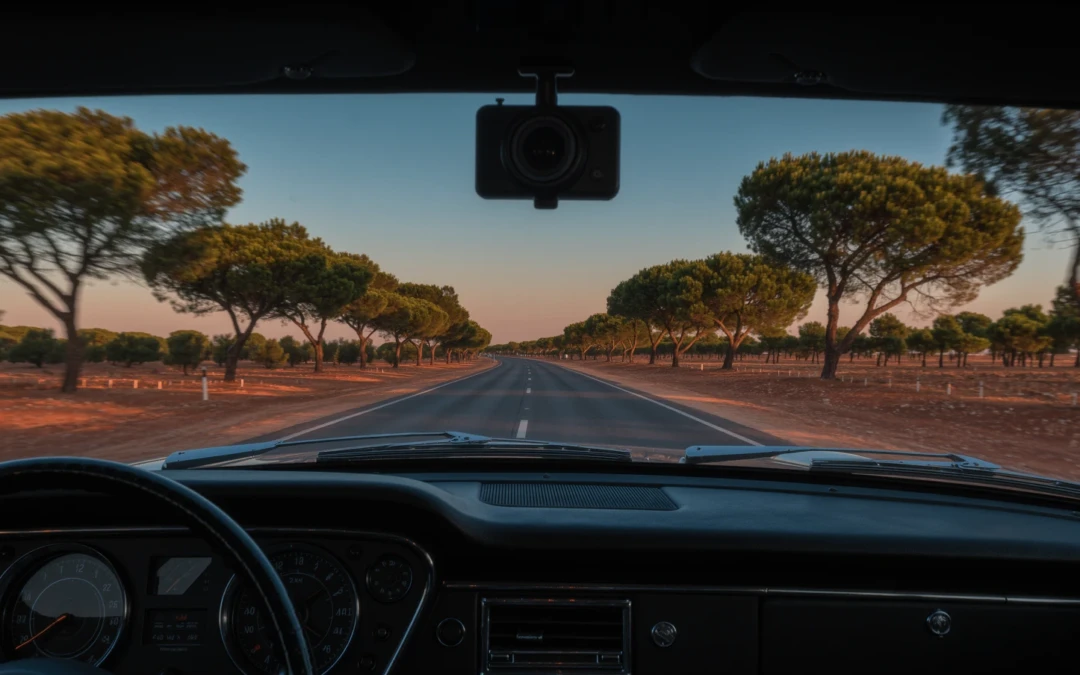
A dash cam is cheap and many drivers want one after an accident or a scrape in a car park. In France it sits in a grey zone. The state has not written a special law, so you have to read the general ones. I did that, and here is what the official pages actually say.
What the authorities say
On 26 February 2025 the CNIL announced the work programme of its “club conformité” for connected vehicles and mobility. The new topic was dash cams on vehicles used by private individuals. The CNIL gave two reasons: the many requests it receives about these devices, and the absence of a specific legal framework. It also said that, like any device that captures images, an in-car camera can harm the privacy of the people filmed, and that it wants to draw up recommendations with the sector. The work excludes cameras that film the inside of the car, notably in professional use.
The CNIL defines a dash cam as a video recording device, either built into the vehicle or bought separately and placed on the dashboard or the windscreen. I searched for a final CNIL recommendation for private drivers on 13 November 2026 and did not find one. So there is no official checklist yet. Anything that claims otherwise is not an official source.
The road rules that apply to the device
- Field of view: article R412-6 of the Code de la route says passengers, carried objects or opaque objects stuck on the windows must not reduce the driver’s freedom of movement or field of view. A camera that sits in the sweep of the wipers or blocks the road is a problem for that reason, whatever it records.
- Screens: article R412-6-2 bans placing in the driver’s field of view a working device with a screen that is not a driving or navigation aid, and it orders seizure of the device. A dash cam whose screen shows live video while you drive is the case to avoid. Turn the display off.
- Fines: I found no fine in the road code that is named for a dash cam, so I do not give you a number for owning or mounting one. The risk is in how you use it, not in having it.
- Registration papers: Service-Public’s page on modified vehicles lists the changes that must be declared. A dash cam is not among the items I read.
Filming people and publishing
Service-Public’s page on image rights says a person can object to the publication of an image where they are recognisable, even if it was taken in a public place. In a public place the consent of a person is needed when they are isolated and recognisable. The consent must be written and precise (which medium, which purpose, how long), and consent to being filmed is not consent to publication. There are exceptions linked to the right to information and freedom of expression. That page is dated 6 May 2022 and is marked as being updated, so check the current version.
In practice: recording the road for yourself is one thing. Putting a clip online where a driver or a passer-by can be recognised is another. The second is where drivers get into trouble.
Foreign drivers and rental cars
The CNIL pages I read do not distinguish drivers by nationality. If you bring your own dash cam, assume the same limits apply on French roads. If the rental car already has a camera, ask the company what it records.
Mistakes I see most often
- Fixing the camera low on the glass where it hides part of the road.
- Leaving the screen on, with live video in your field of view.
- Posting a clip with faces or readable details because it is “funny”.
Do the math: The maths: owning the camera has no named fine in the road code. The cost is elsewhere. A badly placed device can fall under the field-of-view rule, and a screen left on can fall under R412-6-2, where the device is seized. Costs nothing to avoid: mount it behind the mirror, switch the display off.
FAQ
Is a dash cam legal in France? No official text bans a private dash cam, and the CNIL says there is no specific framework. The general road and privacy rules still apply.
Can I post the footage online? Publishing an image where a person is recognisable can be challenged under image rights. Ask before you publish.
Will the CNIL give rules soon? It announced in February 2025 that it would prepare recommendations. I found no final version, so check cnil.fr.
Ivan’s Take
Buy one if you want it, but buy it with your eyes open. The state has not said “yes” or “no”. Put it behind the mirror, turn the screen off, and keep the footage for you and your insurer. Posting it online is where I would stop.
Sources: CNIL – « Club conformité » véhicules connectés et mobilité : programme de travail 2025 (26 février 2025); Service-Public – Droit à l’image et respect de la vie privée; Service-Public – Véhicule modifié et certificat d’immatriculation; Légifrance – Code de la route, articles R412-6 et R412-6-2.
Published:
More from this section

The AvtoGear weekly
Once a week: new tests, the best deals and one useful tip for your car. Nothing extra.
