








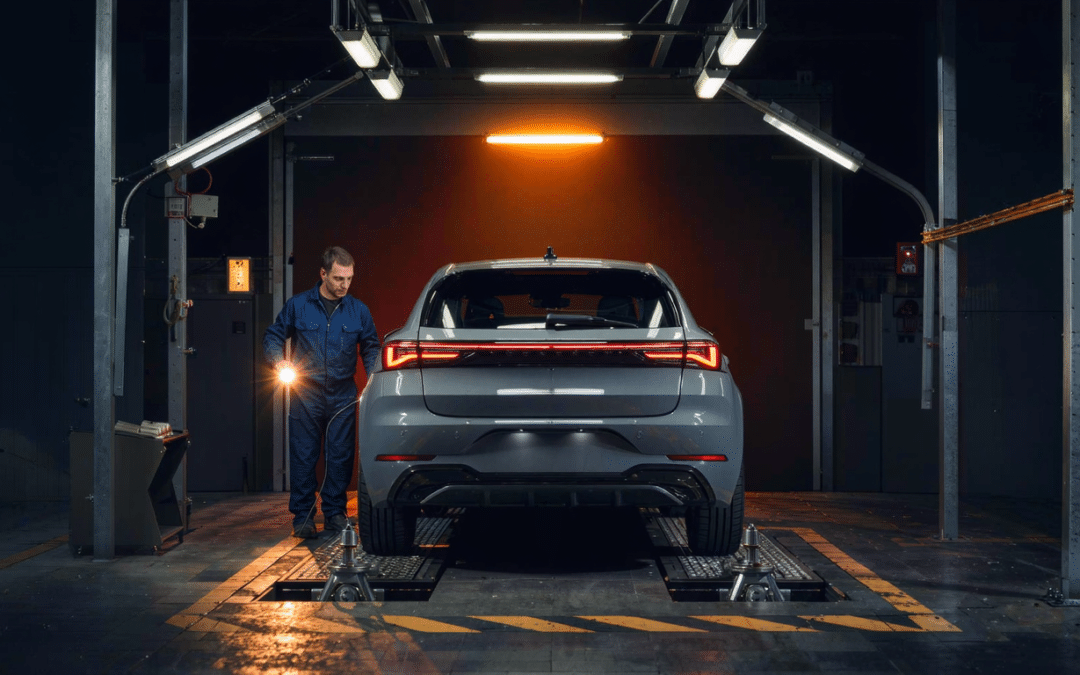
In short
- A passenger car must be inspected before the end of its 3rd and 5th year after first registration as new, then every year (Road Traffic Act, Art. 147(3) point 1).
- Driving a car that is due for inspection but has none: 100 lev, or €51.13, for the owner and also for the driver (Art. 181 point 1).
- Since 7 May 2026 the Road Infrastructure Agency checks this through the toll system on the paid road network.
You do not have to show an inspection paper on a Bulgarian road, because it is not on the list of Art. 100. But the duty is real, the fine hits two people, and since May 2026 a camera can write the report. Here is the schedule, the penalty and the points I could not confirm.
Who must be inspected
Art. 147(1) of the Road Traffic Act says that registered motor vehicles and the trailers they tow are subject to a mandatory periodic technical inspection. The conditions and the procedure are set by an ordinance of the transport minister.
The inspection covers the completeness and the condition of the equipment, parts, systems and features that matter for traffic safety, the environment, noise level and the silencer (Art. 147(6)). A commission of a chairperson and at least one technical specialist carries it out (Art. 147(8)).
How often
Art. 147(3) sets the periods. The ones a driver meets most often:
- Passenger cars (M1) and light goods vehicles (N1), except taxis, camper vans and ambulances: before the end of the third and the fifth year after first registration as new, then every year.
- Light taxis: every 6 months.
- Camper vans: every year.
- Motorcycles of categories L3, L4, L5 and L7, trailers of category O1, mopeds and light quadricycles (L1, L2, L6): every two years.
The fixed periods do not decide in two cases. A vehicle stopped from traffic after accident damage that affected safety, and a vehicle with a safety-related change in its construction or a change of category, must be presented for inspection (Art. 147(5)). In plain words: after a crash or a conversion, the calendar is not the deciding factor.
The registry and the certificate
The results of every inspection go into the information system of the Executive Agency „Automobile Administration“, in real time (Art. 147(9)). The agency keeps a register of inspections with the vehicle data, the result, the faults found and the date of the next inspection (Art. 147(11) and (12)). Its director can declare a certificate invalid, for example when a check shows that the vehicle was not presented for inspection (Art. 147(13)).
The fine
Art. 181 point 1 sets a fine or property sanction of 100 lev = €51.13 for the owner, or the user entered in the registration certificate, whose vehicle subject to inspection takes part in traffic without an inspection. The same penalty applies to the driver of such a vehicle. Two people can therefore be fined for one drive.
The Act text I read still shows lev. I converted at the official rate of 1.95583 lev for €1.
Who checks, and what changed in 2026
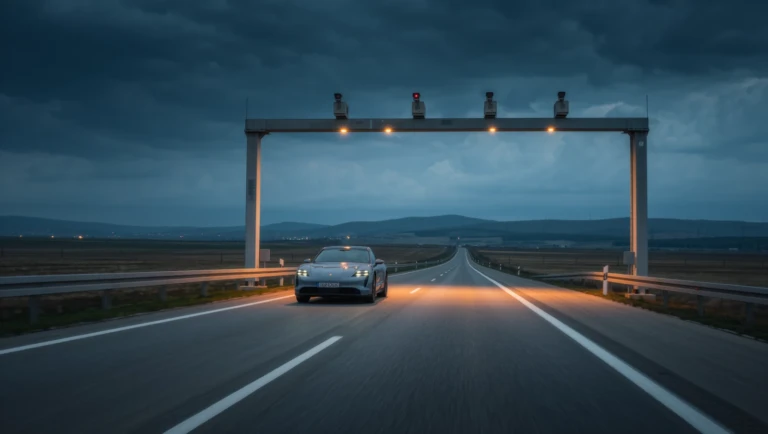
Since 7 May 2026 the Road Infrastructure Agency checks compliance with the inspection duty (Art. 167a(1) point 5). Its officials can access the Automobile Administration’s information system, and they draw up the reports for offences under Art. 181 point 1 (Art. 167a(2) point 9 and (2a)). The toll system produces a report for every offence it detects, with photos or video (Art. 167a(3a)). It works on the paid road network.
A 2025 amendment would have made an inspection depend on the owner having no unpaid fines. The Constitutional Court declared that paragraph, Art. 147(9a), unconstitutional (decision No. 3 of 2026, State Gazette issue 23 of 2026). A guide that still says a car can be refused an inspection for unpaid fines is out of date.
Foreign drivers and rental cars
Art. 147(1) speaks of registered vehicles, and the ordinance sets the procedure. I found no official text that says how Art. 181 point 1 applies to a car registered abroad, so I do not claim that it does or does not. A foreign car should in any case be in order under the inspection rules of its own country.
A rental car belongs to the company, and the company must keep it in order. If you drive far, ask at the desk when the car was last inspected. A car with a recent certificate saves you an argument.
Mistakes I see most often
- Counting the period from the day you bought the car, and not from its first registration as new.
- Waiting for the last day. A queue or a failed check can push you over the limit.
- Forgetting that a lent car can bring a fine to the owner and to the driver.
Do the math: Do the math: the fine is €51.13 for the owner and €51.13 for the driver. If you lend your overdue car to a friend and both are fined, that is €102.26 for one drive. Put the due date in your calendar a month ahead and the cost is zero.
FAQ
Do I carry the inspection certificate in the car? It is not on the Art. 100 list of documents. The results are held in the Automobile Administration’s register (Art. 147(9) and (11)).
How often does a car older than five years need it? Every year, under Art. 147(3) point 1.
Can unpaid fines block my inspection? A 2025 amendment tried to do that. The Constitutional Court declared it unconstitutional in 2026.
Ivan’s Take
I keep the inspection date next to the insurance date in my calendar. Both are the kind of thing a camera now finds for you. A hundred lev is not much, but it is the principle: an overdue inspection is a safety question first and a fine second.
Sources: Road Traffic Act (consolidated text, Ministry of Interior).
Published:
More from this section

The AvtoGear weekly
Once a week: new tests, the best deals and one useful tip for your car. Nothing extra.
