








In short
- Art. 33(1) ZOBS lets you use a phone while the vehicle moves only with equipment that allows communication without your hands. The law does not mention holders or navigation.
- Audio and video devices must not stop you hearing the sound signals of other road users, and you may not take “other actions that disturb your attention”.
- Money: breaking Art. 33 costs 200–400 KM (€102.26–€204.52); with an accident 400–2,000 KM (€204.52–€1,022.58), a ban and two points.
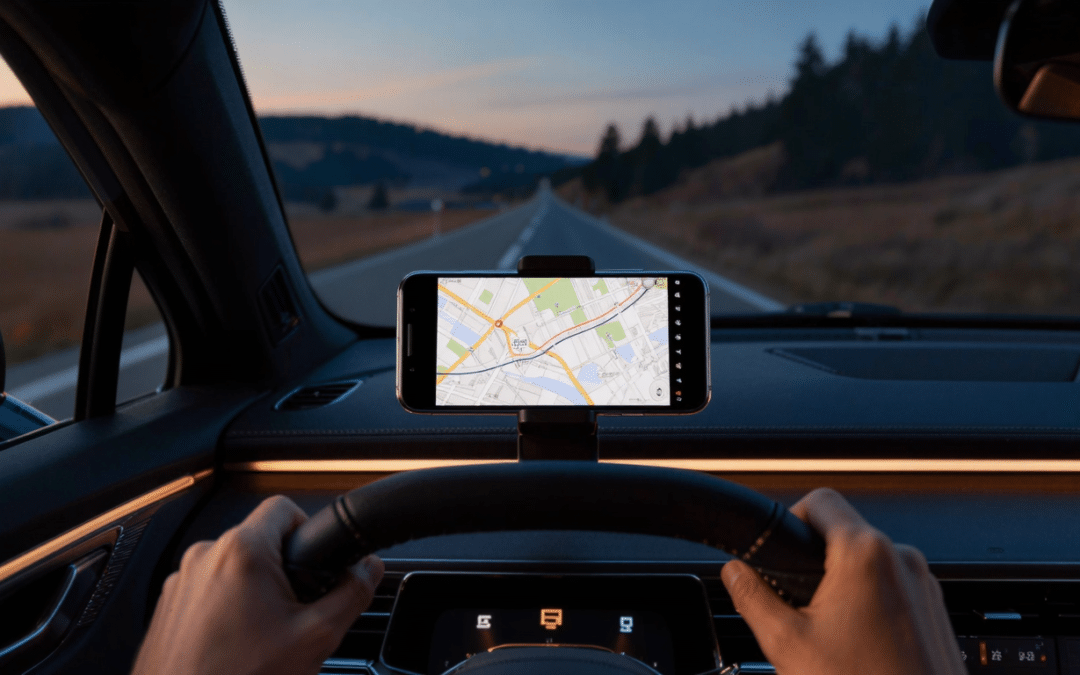
A phone holder on the dashboard and a navigation app are the first things most drivers set up. Both feel like part of the car. The law sees a phone. This article is about the legal way to use them in Bosnia and Herzegovina. The size of the fine has its own article; here I stay on what Article 33 allows.
What Article 33 says
Article 33 of the Law on the Basics of Road Traffic Safety in BiH (ZOBS, Official Gazette of BiH 6/06 and later amendments, the latest 35/26) has three paragraphs:
- Paragraph 1: while the vehicle moves on a public road, the driver may not use a mobile phone or other communication devices, unless he has and uses equipment that allows communication without engaging the hands. The driver also may not use audio or video devices in a way that he cannot hear the sound signals of other road users, nor take other actions that disturb his attention while driving.
- Paragraph 2: “moving” also covers a vehicle stopped to obey a traffic sign, to obey an order of an authorised person, to give way to priority vehicles, and in other cases where the driver must or is forced to stop on the carriageway.
- Paragraph 3: the rule on other communication devices does not apply to drivers of police, court police, military, border police, ambulance and fire vehicles on duty, and to taxi drivers on official duty.
What this means for a holder and hands-free
The text allows one thing clearly: communication with equipment that works without your hands. It does not define that equipment. It does not list Bluetooth, a car’s built-in system, a headset or a holder. I found no official definition in the law or in a rulebook.
The text says nothing about phone holders, where to place them, or whether a phone in a holder counts as “equipment”. The sound reading of the words is simple: the test is what you do with the phone while the car moves. A phone that you talk to without touching it fits the wording. A phone that you pick up, scroll or type on does not. That is my reading, not an official guideline.
Navigation: not named, but not free
Article 33 does not mention navigation devices or navigation apps. Two parts of the wording can reach them. If a navigation screen counts as a video device, the paragraph forbids use that stops you hearing sound signals. And the last clause forbids actions that disturb your attention. Typing an address on a moving car is that kind of action. I found no official statement on navigation, so set the route before you roll and let the voice guide you.
Fines
- Using a phone or device against Art. 33: 200–400 KM (€102.26–€204.52), Art. 235a(1)(1).
- The same offence when it causes an accident: 400–2,000 KM (€204.52–€1,022.58), a driving ban of one to six months and two penalty points, Art. 235a(2).
Passengers
Article 33 is addressed to the driver. Article 32 says a person carried in the vehicle may not disturb the driver in handling the vehicle. In practice: let the front passenger set the route or answer the message. That is the cheapest hands-free device you own.
Foreign drivers and rental cars
Article 33 and the fine line speak of “the driver”. Nothing in them depends on the number plate. A rental car’s built-in system, if it lets you talk without your hands, fits the wording of paragraph 1. I found no official text that treats foreign drivers differently.
Mistakes I see most often
- Picking up the phone at a red light. Paragraph 2 says a stopped vehicle at a signal still counts as moving.
- Typing a destination or switching a playlist with the phone in the holder. The holder does not change what your hand is doing.
- Headphones or earbuds that block the horn of a truck behind you. The paragraph is about hearing the signals of other road users.
Do the math: Do the math: the fine starts at 200 KM (€102.26). Setting the route before you leave and starting the call or the music hands-free costs you a minute. With a crash the range is 400–2,000 KM (€204.52–€1,022.58) plus a ban. I did not price holders here; whatever you pay for one, the fine is bigger.
FAQ
Is a phone holder legal in Bosnia and Herzegovina? The law does not mention holders. What counts is how you use the phone while the car moves.
Can I use my phone for navigation? Navigation is not named in Art. 33. Set the route while stopped in a safe place. Typing on the move is the kind of action the last clause is about.
Is a Bluetooth headset allowed? Equipment that allows communication without your hands is what paragraph 1 requires. You must still be able to hear the sound signals of other road users.
Where to check
ZOBS in the Official Gazette of BiH: Art. 32, 33, 235a, and the amendment 35/26. The police of the entity or canton can tell you how they read it on the road.
Ivan’s Take
My rule is simple: route set before the engine moves, phone in a holder you never touch, calls only through the car or a headset with one ear free. The law is short and vague about equipment, so I use the strictest reading. It costs me nothing and it keeps the 200 KM in my pocket.
Sources: ZOBS, Službeni glasnik BiH 6/06 … 88/23 (čl. 32, 33, 235a), konsolidovani tekst; Zakon o izmjenama i dopunama ZOBS, Službeni glasnik BiH 35/26; Centralna banka BiH, kurs 1 EUR = 1,95583 KM.
Published:
More from this section

The AvtoGear weekly
Once a week: new tests, the best deals and one useful tip for your car. Nothing extra.
