








In short
- Art. 28 of the 1968 technical decree says that lights and reflectors not listed in its annexes 6 and 7 may not be fitted on a vehicle.
- Lights with the same function must be the same colour and similar intensity; no red light to the front, no white or yellow to the rear (reversing lights excepted).
- I could not verify any official rule on approval of replacement LED bulbs, so I do not say that a given kit is legal. Ask first.
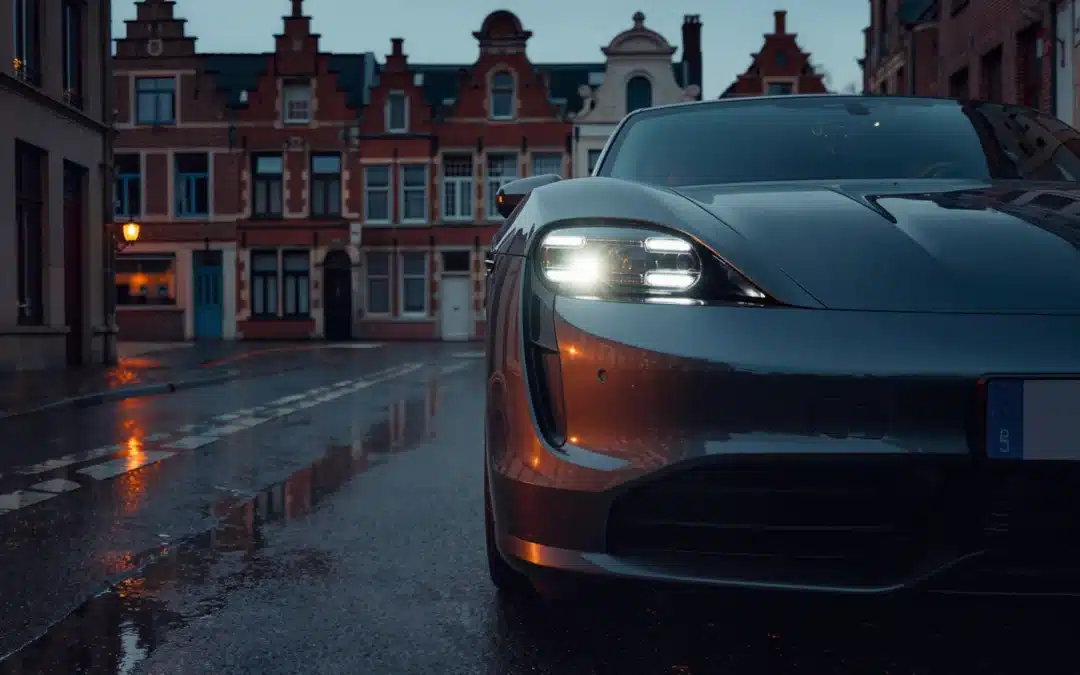
A set of white LED bulbs costs little and promises a sharper beam. Whether it is legal in Belgium depends on what the decree says about lights, and on something the decree does not answer in the part I could read: approval of the bulb itself. Here is what is written, and where I stop.
What I read
I read article 28 of the Royal Decree of 15 March 1968 (technical conditions for motor vehicles and trailers) on the official Justel database, updated to 21 March 2025. It covers lights and reflectors. The detailed technical tables sit in annexes that were not part of the page I could read. So I give the rules from the article itself and nothing from the annexes.
Only listed lights can be fitted
Paragraph 2, point 1 says that vehicles must permanently carry the lights and reflectors listed in annex 6 and comply with its provisions and with paragraph 3. Lights and reflectors listed in annex 7 may also be fitted, if they comply. Lights and reflectors mentioned in neither annex may not be fitted. A narrow exception exists for special-use lights.
This is the heart of the matter for accessories. An extra light bar, underglow strip or decorative lamp that does not fit a listed function is a problem, however good the LED.
Colour and symmetry
- Lights and reflectors with the same function and facing the same direction must be the same colour (point 5).
- Lights and reflectors in pairs must be placed symmetrically, and each pair must have roughly the same intensity (point 5). One bright LED and one tired halogen on the same car do not meet that.
- A vehicle may never show red lights or reflectors to the front, nor white or selective-yellow lights or reflectors to the rear (point 7). The text excepts white or selective-yellow reversing lights and the illumination of the rear number plate.
- Daytime running lights emit white light, and they must switch off automatically when the headlamps or front fog lights come on.
- Rear position lights and the rear plate light must come on together with the headlamps, and front position lights must be on whenever dipped beam, main beam or front fog lights are on (point 6).
Dipped beam and glare
The decree defines the dipped beam as the light that illuminates the road ahead without dazzling or bothering oncoming drivers and other road users. A bulb that scatters light upward does not meet it, whatever the pack says.
Blue flashing lights are reserved. The decree lists the vehicles that may carry them, such as emergency services, and lets the competent minister authorise others in exceptional cases. A blue accessory strip on a private car falls outside what the text allows.
What I could not verify
I found no sentence on approval marks for replacement bulbs, and I could not read the annex limits for intensity and colour. I also did not verify how technical inspection judges an LED conversion. For that reason I do not tell you that an LED kit in a halogen headlamp is legal or illegal. Ask the inspection station, and ask the seller for the approval documents of the exact kit for your exact car.
Fines
The degree of penalty for a lighting offence is set article by article in a separate decree that I did not read. The official table gives the scale for traffic-code offences: €64 at the first degree, €128 second, €191 third and €520 fourth on the spot, plus €10.67 admin fee in 2026, and court fines of €100 to €2,500 up to €5,000.
Foreign drivers and rental cars
The decree sets the conditions for vehicles in Belgium. I found no official text that exempts foreign-registered cars from the lighting rules. If your car has aftermarket lights that are legal at home, you take the risk here.
Mistakes I see most often
- Buying a kit because it is “road legal” on the box. The box is not an official source.
- Changing one headlamp only. Pairs must match in colour and intensity.
- Fitting extra lights without a listed function, such as light bars or underglow.
Do the math: A decent LED kit costs money, and a failed check means you pay twice: once for the kit, once to put the original bulbs back. Ten minutes asking the station and the seller costs nothing.
FAQ
Can I put LED bulbs in my halogen headlights in Belgium? I could not verify an official rule on this. The decree requires lights listed in its annexes, of the right colour, and a dipped beam that does not dazzle. Ask the inspection station before buying.
Can I add a light bar or underglow? Lights not listed in annexes 6 or 7 may not be fitted. Blue flashing lights are reserved for listed vehicles.
Do both headlights have to match? Yes. Lights with the same function and direction must be the same colour, and pairs must have about the same intensity.
Ivan’s Take
I like good light. But I do not trust the word “legal” on a box. The decree is strict on which lights exist, on colour and on glare. If the seller cannot show approval for my exact car, I put the money into quality original bulbs instead.
Sources: AR 15 mars 1968 (conditions techniques des véhicules), art. 28 feux et catadioptres, Justel; Infractions par degré 2026 (codedelaroute.be, Vias institute).
Published:
More from this section
The AvtoGear weekly
Once a week: new tests, the best deals and one useful tip for your car. Nothing extra.
